
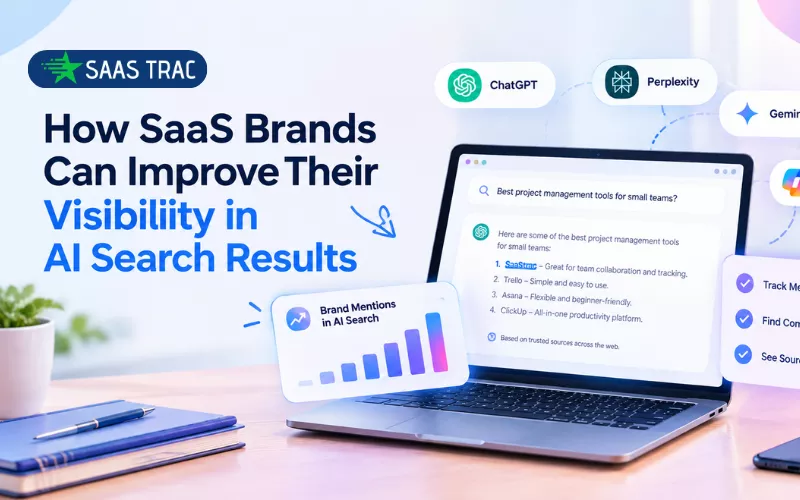
If you ask around, most individuals don’t search the same way they did two years ago. They launch Perplexity or ChatGPT, type a query, and accept the response that appears. No comparing pages, no 10 tabs open.
Additionally, a buyer won’t even be aware of your existence if your SaaS brand isn’t included in those responses.
This is already altering who is discovered and who is overlooked. Long before they visit a vendor’s website or schedule a demo, buyers shortlist products, compare prices, and ask for advice inside AI tools.
Brands that move early have a clear advantage, while those that wait may spend the next few years trying to catch up.
Find out what has changed, which tactics can truly increase your SaaS brand’s visibility in AI search results, and how to monitor your success over time.
Why Visibility in AI Search Results Is Important for SaaS Brands
Self – Generated
Old SEO meant picking a keyword, writing a page, building links, and waiting for Google to rank you.
AI search works differently. The model reads across multiple sources, pulls the parts that answer a question, and hands the users one answer. You’re no longer fighting for a spot on page one. You’re fighting to be one of the things the AI decides to mention.
| Traditional SEO | AI Search Visibility |
| Ranks a page on a results list | Gets quoted or named inside an AI answer |
| Wins on clicks and positions | Wins on mentions and citations |
| Built on keywords and backlinks | Built on clear writing and real expertise |
| Mostly aimed at Google | Spread across ChatGPT, Perplexity, Gemini, Copilot |
| Leans on domain authority | Leans on trust built across the whole web |
This also changes how you measure progress. AI answers shift with wording and vary from one assistant to the next.
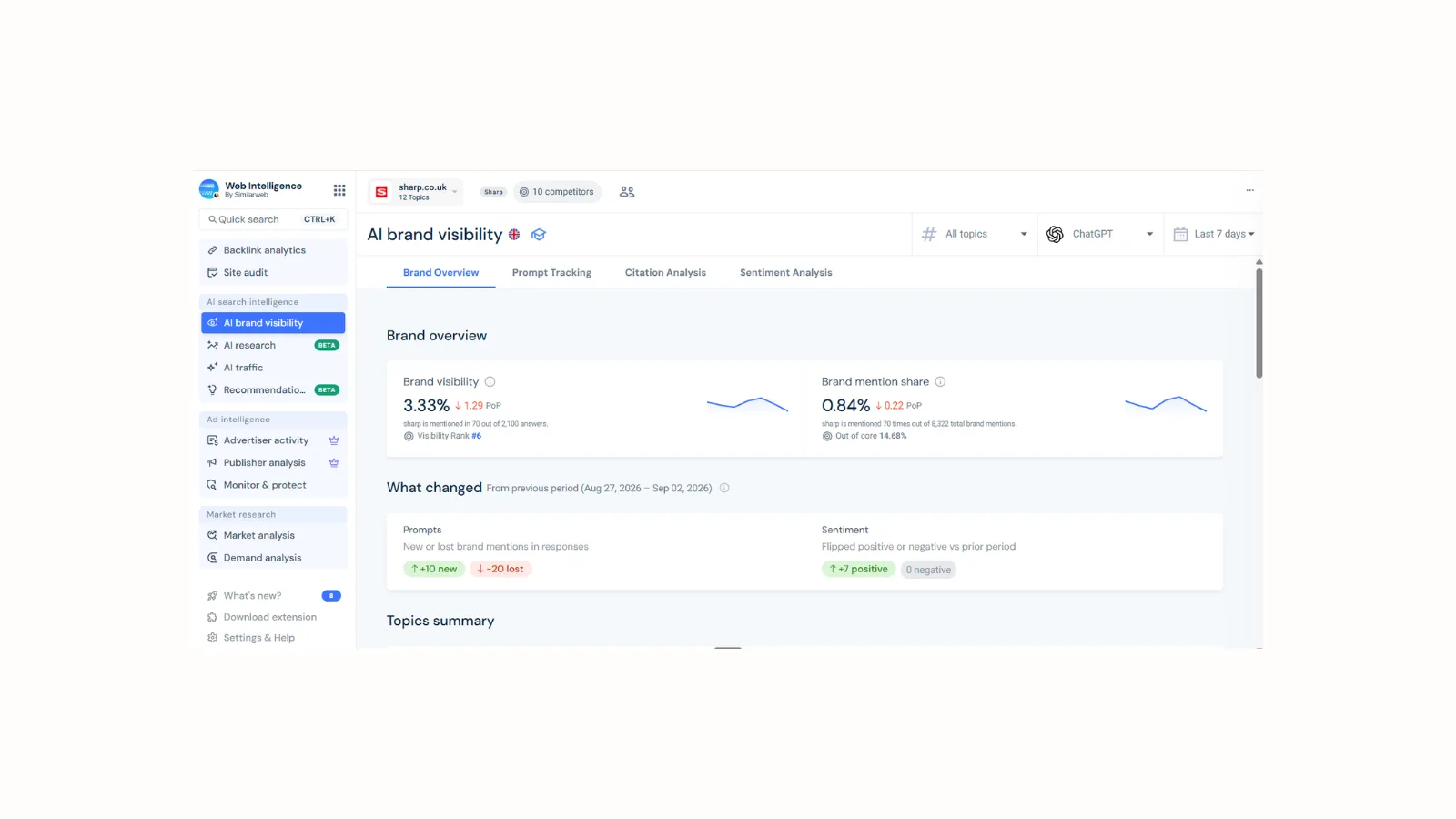
That’s why many SaaS teams now use a dedicated AI search optimization platform alongside their regular SEO stack. Similarweb, a company best known for its web traffic and competitive intelligence data, offers AI search tracking that shows how brands appear in answers from tools like ChatGPT, Perplexity, and Google’s AI Overviews. It sits well next to traditional SEO reporting because it measures something rank trackers can’t: whether AI assistants mention your brand.
So, instead of guessing, you can see:
- Which prompts in your category mention your brand
- Which competitors get named instead of you
- Which sources AI tools lean on when building answers
Those gaps show you where to put effort next.
How SaaS Buyers Are Searching Differently Now
These days, buyers hardly use the phrase “best CRM software”. Instead, they pose a question like, “Which CRM works for a 10-person sales team that’s already on HubSpot?” The AI answers it before the buyer ever visits a vendor’s site.
What decides whether your brand comes up is largely trust. AI models tend to favour brands that real customers talk about positively and consistently.
A few signals feed into that picture:
- Reviews on trusted software platforms
- Customer testimonials and case studies
- Honest discussions across the web
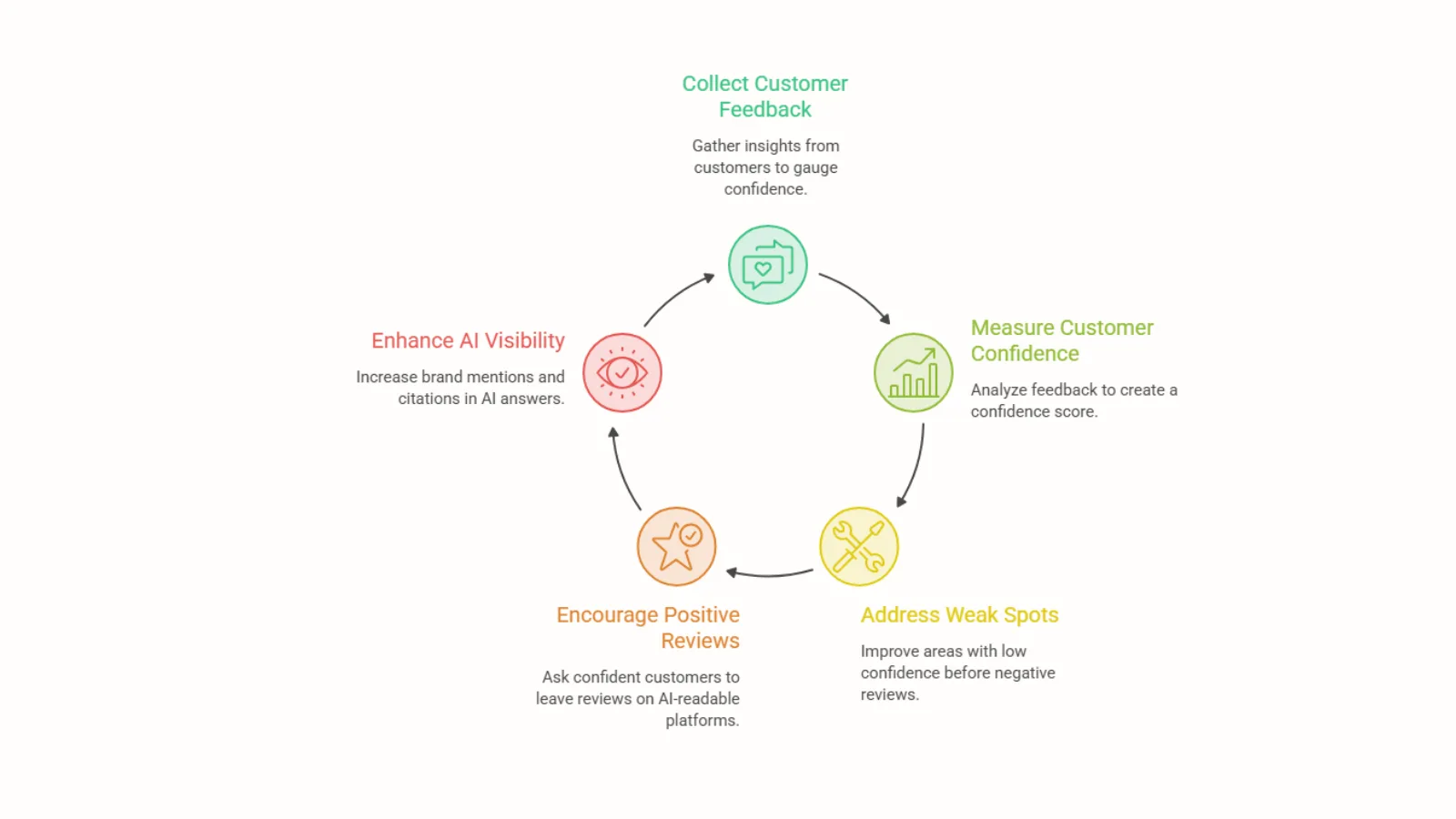
So, it’s worth knowing how confident your customers feel before they leave a public review. A customer confidence measurement platform like Confiscore helps SaaS teams collect structured feedback from clients and turn it into a clear score they can track.
It works differently from a standard star rating or NPS survey:
- No direct scoring: Customers don’t rate you out of five. They share feedback on specific attributes of your product or service
- Anonymous responses: Feedback stays anonymous, which makes it easier for customers to be candid
- Psychology-based scoring: Confiscore’s algorithm converts those responses into a single Confidence Score.
- Attribute-level breakdown: You see which parts of an experience build trust and which ones need work.
When you know where confidence stands, you can:
- Fix weak spots before they turn into bad reviews
- Ask your most confident customers for reviews on platforms AI tools read
Vineet Gupta, founder of 2xSaS, puts it this way:
“SaaS brands shouldn’t treat AI search like a new flavor of SEO. Otherwise, they will inevitably miss what’s going on. It’s not about rankings anymore. It’s about being a part of the answer the AI already gives buyers. The companies that pull this off are building real authority across the internet, just on their website.”
Proven Ways SaaS Brands Can Improve Their AI Search Visibility
Self – Generated
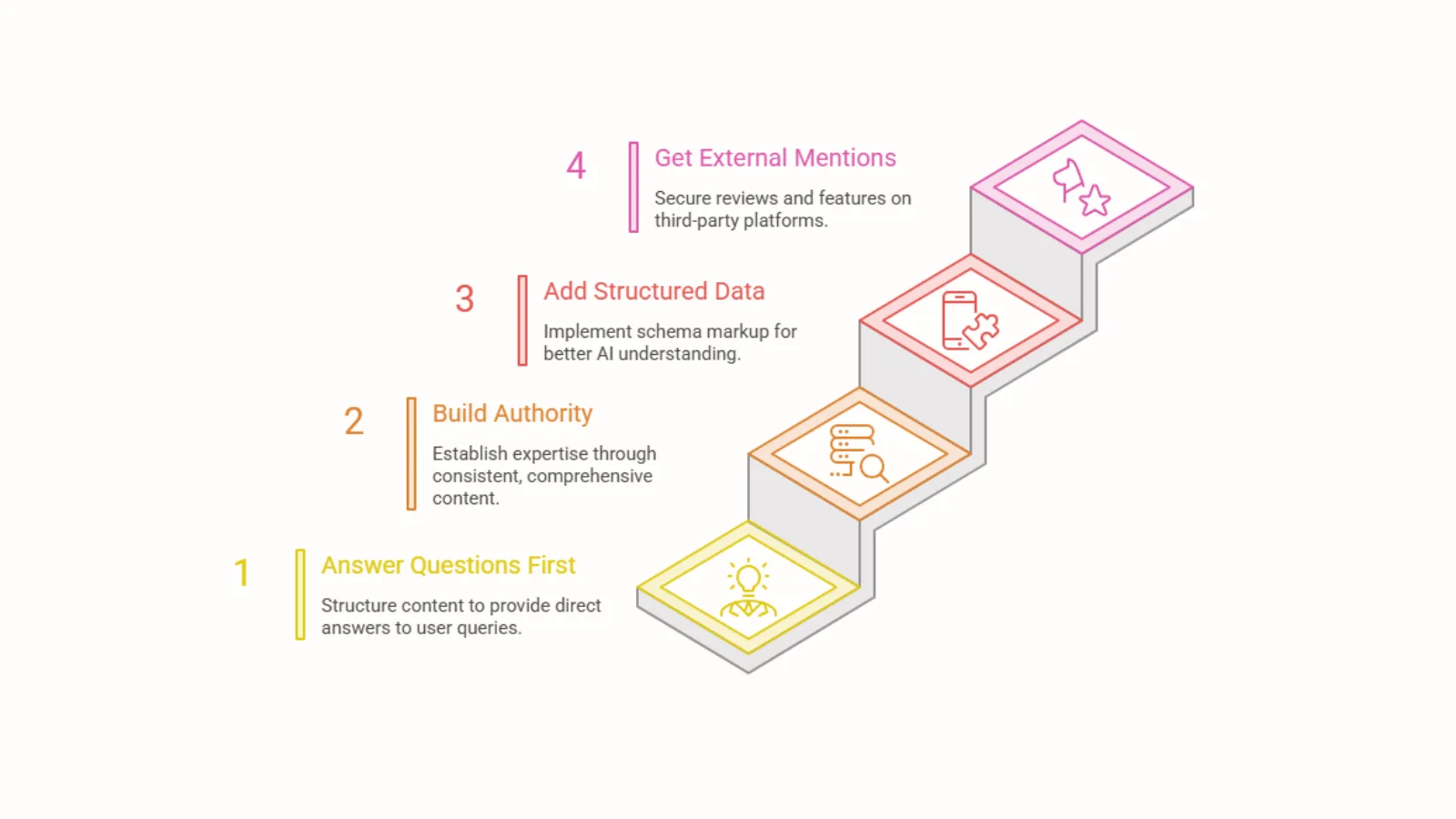
Write Content That Answers the Question First
AI tools are good at spotting a direct answer and lifting it out. A post that takes three paragraphs to get to the point loses. One that answers right away, then explains why, wins.
Question-style searches matter here too. According to a 2026 Google AI Overviews study, questions generated an AI response 64.7% of the time, but non-question queries only generated an answer 9.5% of the time. Your material should be prepared with solutions to the questions that buyers ask.
A few things that help:
- Put the answer first. Explain your reasoning after, not before
- Keep paragraphs short. Use headings that sound like questions people ask
- Add an FAQ section, and write the questions the way a person would type them
- Cut the fluff. Say plainly what the product does and who it’s built for
Every page on your site could end up being the source an AI model quotes from. Write like that’s the goal.
Build Real Authority Around Your Topic
AI models trust sources that keep showing up with solid information on a subject. You need a real body of work that proves you know the space, which includes:
- Publishing on your core topic regularly
- Linking related articles together so they read as one knowledge base
- Updating old posts instead of leaving them to rot
- Covering the topic from different angles: comparisons, guides, case studies, and data
One angle many SaaS brands overlook is industry-specific content. Buyers rarely ask an AI tool for “the best software” in general. They ask what works for their own line of work, like a dental clinic, a logistics company, or an independent insurance agency.
Industry roundups show how this works. A guide covering the essential software tools for insurance agents groups tools by the real jobs agents handle:
- Claims and policy management
- Lead tracking and client communication
- Compliance and record-keeping
Such targeted content is precisely what an AI assistant can quote when a buyer poses a specific question about their sector.
For your own brand, find the industries that use your product most, answer their specific questions, and aim to get featured in trusted roundups for them. This kind of authority takes months of steady work.
Add Structured Data So AI Tools Understand Your Pages
Schema markup provides precise information about a page’s content and author to search engines and AI crawlers.
A few schema types do the majority of the work for a SaaS site:
- Search engines are informed about your identity and activities by your organization schema
- Product schema covers pricing, features, and reviews
- FAQ schema makes your Q&A content easy to pull out and quote directly
- Article schema helps identify the author and when something was published
It doesn’t guarantee a mention, but it removes guesswork for the systems reading your site.
Get Mentioned Outside Your Own Website
AI tools use industry magazines, forums, and review sites. You’re losing out on visibility if your brand only appears on its own domain. PR and community involvement are important in this situation:
- Become reviewed and listed on top sites such as TrustRadius, Capterra, and G2
- Write guest blogs for magazines that members of your field read
- Participate in Reddit and Quora posts where your category is mentioned
- Request honest evaluations from satisfied clients on several sites
Asking at the appropriate time, such as shortly after a customer reaches a milestone, is essential to receiving those ratings regularly. Your channels will cooperate rather than pull in different directions if you build a customer engagement automation stack that doesn’t feel robotic:
- Emails, texts, and support share one customer view
- Happy customers get spotted at the right moment
- Review requests sound human
The more honest and positive mentions your brand earns, the more reason AI tools have to quote you.
How SaaS Brands Can Track and Sustain Their AI Search Visibility
Keep an Eye On Where You Show Up
These tools show how often your brand comes up in AI answers.
| Tool | What It Helps You Track |
| Perplexity’s citation reports | Which sources get cited most for topics in your industry |
| Otterly.AI/Peec AI | Brand mentions across ChatGPT, Perplexity, and Gemini |
| Google Search Console | Impressions and clicks coming from AI Overviews |
| Manual prompt testing | Asking AI tools your own industry questions and reading the answers yourself |
Check this monthly. Note where you show up, where competitors get the mention instead, and which of your pages earn citations.
Mistakes That Hurt Your Visibility
 A few things trip up SaaS brands repeatedly:
- Writing for keywords instead of people, which leaves no clean line to quote
- Ignoring everything outside your own site
- Publishing shallow content instead of in-depth guides
- Skipping schema markup
- Treating this like a one-time fix instead of ongoing work
Self – Generated
Turn AI Search Visibility Into a Long-Term Advantage
AI search isn’t killing SEO. It’s just changing what visibility means, and an AI mention now carries as much weight as a page one ranking used to.
Getting there takes clearer writing, real subject knowledge, proper structured data, and honest mentions from places beyond your own website.
If your SaaS brand starts now, buyers will hear about you sooner or later, whether they ask Google or an AI assistant.
Start today. Ask a few AI tools the questions your buyers would ask, see who gets named, and note the gaps. That one exercise alone will tell you more than another keyword report ever could.
Ready to see which tools can help your brand get found? Explore and compare top-rated SaaS products on SaasTrac and choose the right stack for AI search growth.