

Insurance professionals manage a wide range of responsibilities, from handling claims and policies to communicating with clients, tracking finances, managing leads, and staying compliant.
When these activities are spread across spreadsheets, emails, shared folders, and disconnected applications, even simple processes can require unnecessary manual work. The right insurance software can centralize information, automate routine tasks, and help teams manage their operations more efficiently.
Different tools serve different purposes. Some focus specifically on claims or agency management, while others support customer relationships, accounting, compliance, marketing, or internal collaboration.
Here are nine software tools insurance organizations can consider in 2026.
What Is Insurance Software?
Insurance software refers to digital platforms that help insurance professionals manage different parts of their daily operations.
Depending on the system, software may support claims handling, policy management, client communication, lead tracking, producer licensing, reporting, accounting, workflow automation, and internal collaboration.
Rather than expecting one platform to handle every function, many organizations build a technology stack that combines specialized insurance platforms with broader business tools.
Benefits of Using Insurance Software:
The right software can improve several areas of insurance operations.
1. Reduce Manual Work:
Automation can handle repetitive tasks such as claim assignments, reminders, status updates, data entry, follow-ups, and notifications. This allows employees to spend more time on work that requires direct attention.
2. Keep Information Organized:
Centralized systems make it easier to access claims data, client information, documents, policy details, financial records, and communications without searching across several locations.
3. Improve Workflow Consistency:
Defined workflows help teams follow consistent processes while making it easier to track responsibilities, deadlines, and next steps.
4. Improve Reporting:
Reporting tools can provide clearer information about claims, sales activity, financial performance, team productivity, and other operational areas.
5. Support Growth:
As organizations add employees, clients, policies, or claims volume, manual processes can become difficult to maintain. Software can provide more scalable workflows and centralized systems.
Best Software Tools for Insurance Professionals:
1. Claims Management: VCA Software
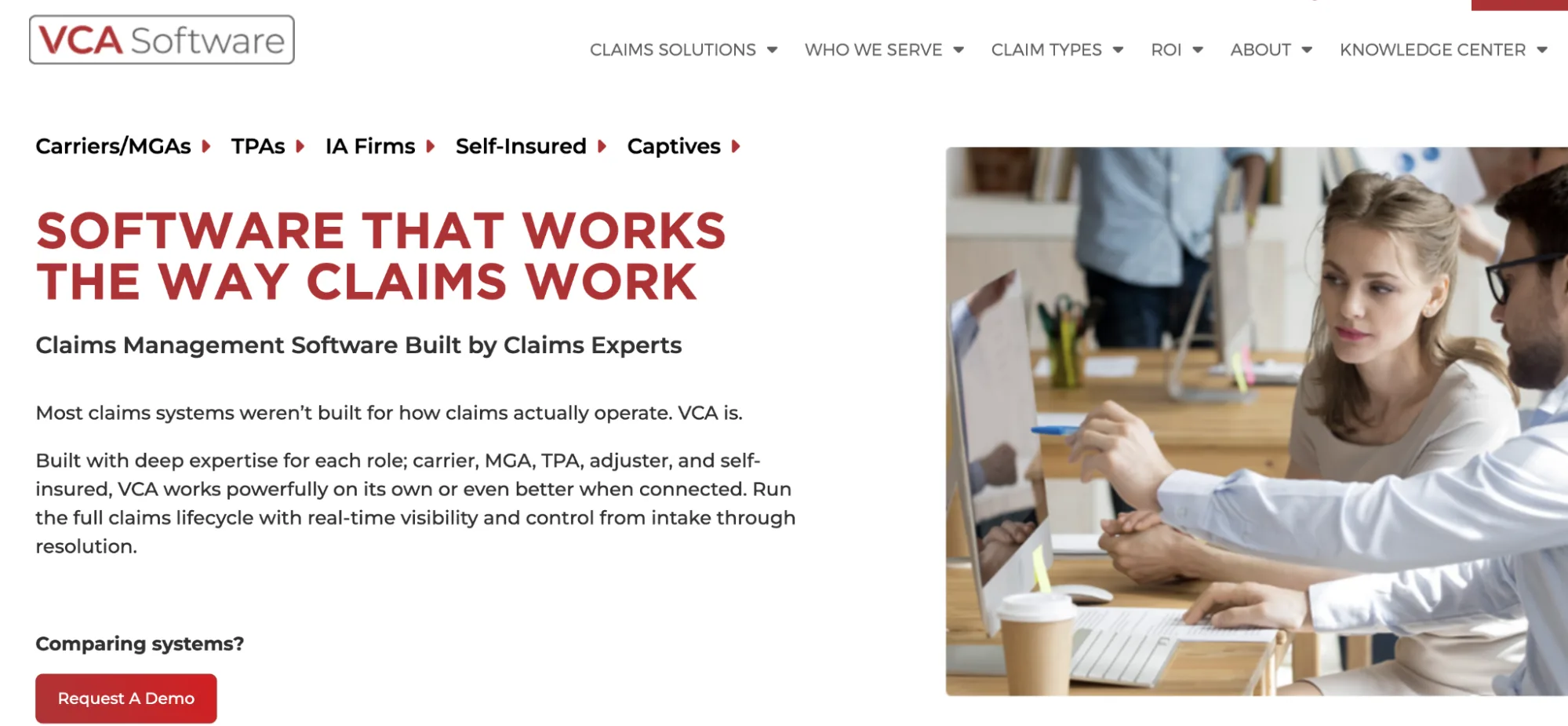
VCA Software is a claims management platform designed for organizations such as TPAs, independent adjusting firms, insurance carriers, MGAs, captives, and self-insured companies. It helps manage the claims process by bringing claim information, documents, assignments, financial data, communication, and reporting into one system.
Claims teams often rely on multiple systems for policy data, estimating, accounting, payments, document storage, and communication. When these tools are disconnected, employees may need to enter the same information more than once or manually transfer data between platforms.
Using integration-friendly claims management software can help connect these systems, reduce duplicate data entry, and keep claim information moving more efficiently between the tools involved in the claims process. This can give adjusters and managers a more consistent view of claim data without constantly switching between separate platforms. It can also make it easier to maintain accurate records and support faster handoffs between different stages of a claim.
VCA’s ClaimsCore platform supports key claims activities such as intake, automated assignment, document management, claim diaries, reserve and payment tracking, time and expense tracking, invoicing, reporting, and digital payments. The platform also supports configurable workflows, fields, rules, file layouts, and authority levels, which can help organizations adapt the system to different claim types and internal processes.
VCA can also connect with systems and services such as QuickBooks, Bill.com, Sage, XactAnalysis, CoreLogic, Encircle, Amazon S3, email platforms, and policy applications. API capabilities are available for organizations that need additional custom integrations.
Useful for:
Claims management, system integrations, claim assignment, workflow automation, reporting, payments, document management, and claims data.
2. Agency Management: Applied Epic
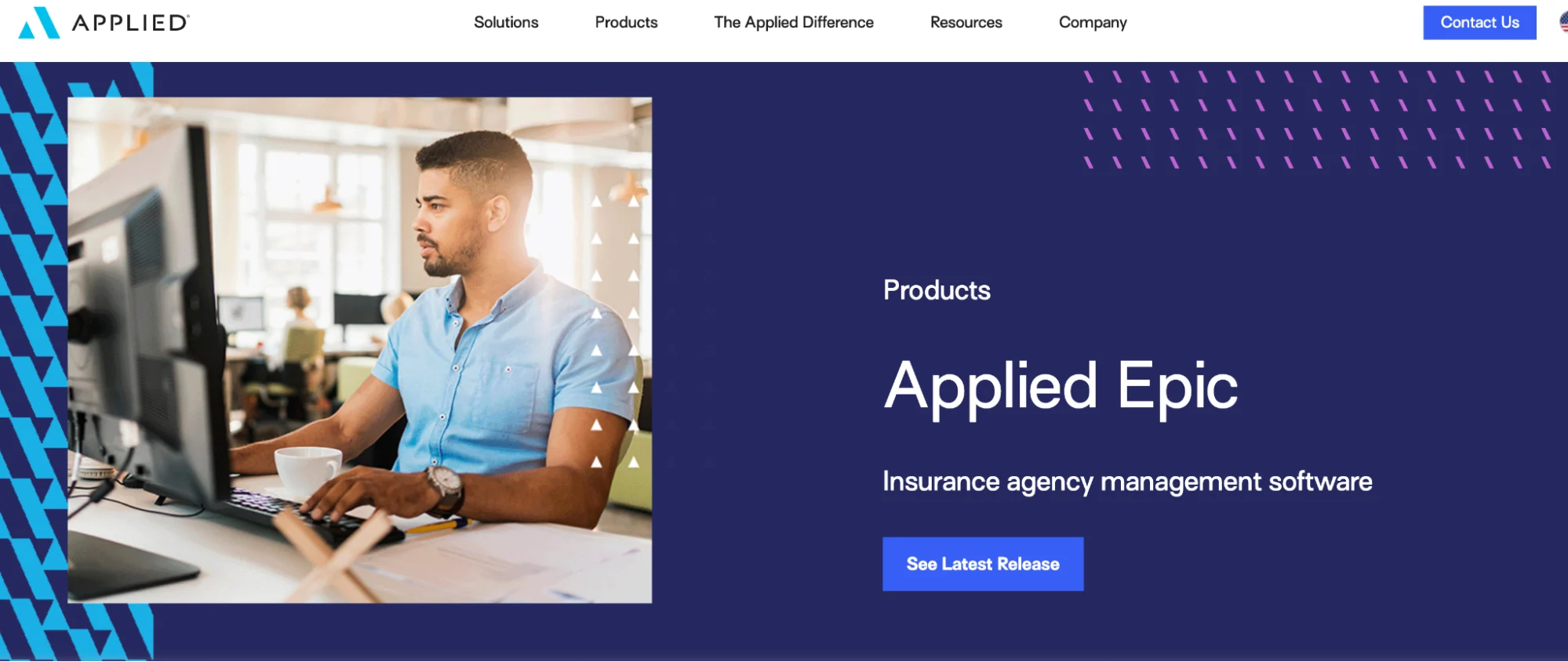
Applied Epic is an agency management system designed for insurance agencies and brokerages. It brings several operational functions together, including client management, policy administration, accounting, sales, reporting, and workflow management.
The platform can help agencies reduce the need to manage policy and customer information across multiple separate systems.
Applied Epic also supports integrations with other insurance and business applications, making it useful for agencies that need their management system to connect with a broader technology stack.
Useful for: Agency operations, policy management, accounting, reporting, client records, and workflow automation.
3. Customer Relationship Management: AgencyZoom
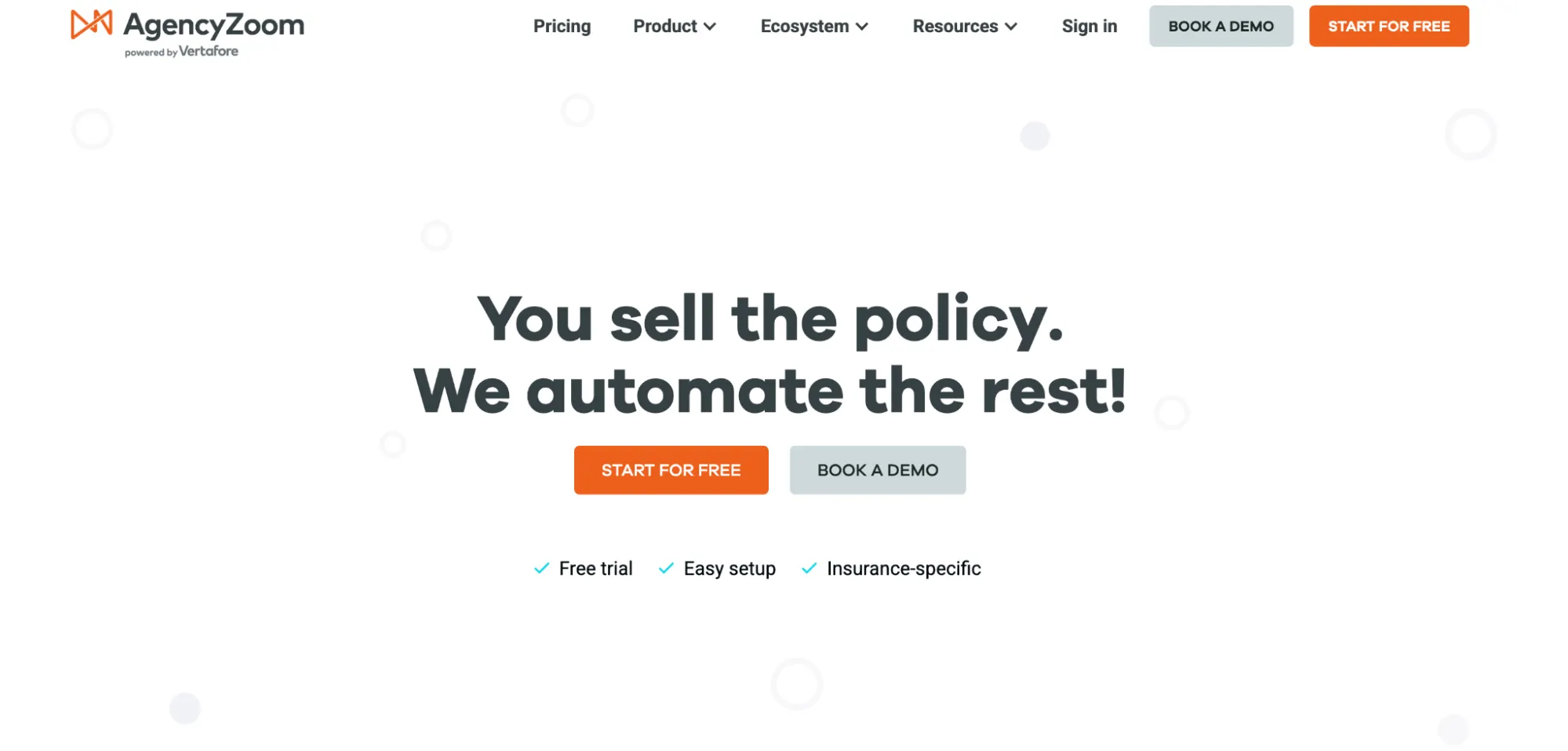
AgencyZoom is an insurance-focused CRM designed to help agencies manage prospects and existing customers.
The platform supports lead tracking, sales pipelines, automated follow-ups, renewals, customer engagement, and performance monitoring. Agencies can use it to create a more structured process for handling leads from initial contact through conversion and later renewal opportunities.
Automation can also help reduce the need to manually remember every follow-up or client communication.
Useful for: Lead management, CRM, sales automation, renewals, client communication, and performance tracking.
4. Project and Workflow Management: ClickUp
Not every insurance workflow belongs inside an agency or claims management system.
Teams may also need to organize marketing projects, employee onboarding, operational improvements, internal tasks, content production, or other projects involving several employees.
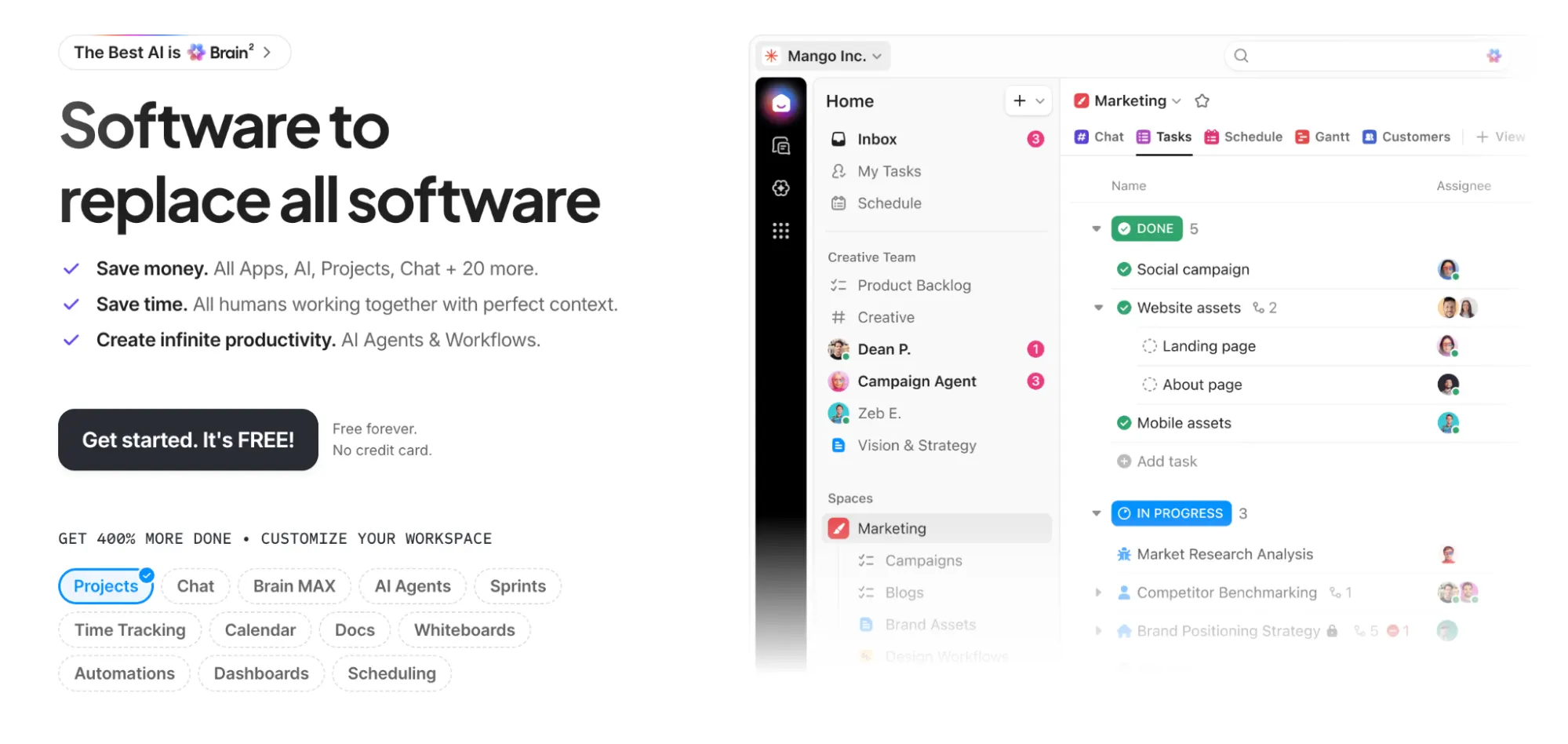
ClickUp provides task management, deadlines, assignments, workflow automation, documentation, and collaboration tools in one workspace.
Teams can create recurring processes, assign responsibilities, monitor progress, and keep project-related information organized.
Useful for: Internal projects, recurring tasks, operational workflows, deadlines, team assignments, and project tracking.
5. Digital Advertising: Google Ads
Google Ads can help insurance agencies reach potential customers who are actively searching for insurance products or services.
Search campaigns allow agencies to target keywords related to specific policies, insurance types, or local services. Other campaign formats can support broader awareness or remarketing strategies.
Because insurance keywords can be competitive, agencies should focus on lead quality, conversion rates, and customer acquisition costs rather than judging campaign performance based only on traffic.
Useful for: Paid lead generation, local advertising, search visibility, remarketing, and campaign testing.
6. Email Marketing: Mailchimp
Email marketing can help insurance organizations maintain communication with prospects and existing customers.
Mailchimp provides tools for creating email campaigns, organizing contacts, segmenting audiences, setting up automated email sequences, and measuring engagement.
Insurance agencies can use these capabilities for newsletters, educational content, policy-related communications, renewal campaigns, and lead nurturing.
Segmentation also allows different messages to be sent to different customer groups rather than sending the same content to every contact.
Useful for: Email campaigns, newsletters, segmentation, automated follow-ups, and engagement tracking.
7. Accounting: QuickBooks
Insurance businesses need accurate financial records for expenses, invoices, payments, taxes, and general financial reporting.
QuickBooks provides accounting tools for bookkeeping, invoicing, expense tracking, reconciliation, and financial reporting.
It can also integrate with a range of third-party applications, which can reduce duplicate data entry when financial information needs to move between accounting and operational systems.
Useful for: Bookkeeping, expenses, invoicing, financial reporting, reconciliation, and accounting integrations.
8. Producer Compliance: AgentSync
Managing producer licensing and appointments can become complicated when insurance organizations operate across multiple states or work with large numbers of producers.
AgentSync focuses on insurance producer management and compliance. It supports licensing, appointments, onboarding, renewals, terminations, and ongoing compliance processes.
The platform can help organizations maintain more accurate producer records while reducing the amount of manual work required to check licensing and appointment information.
Useful for: Producer licensing, appointments, onboarding, renewals, compliance monitoring, and distribution management.
9. Team Collaboration: Slack
Insurance teams often need a faster way to coordinate internal work than long email chains.
Slack provides real-time messaging, channels, file sharing, and application integrations. Teams can organize conversations around departments, projects, clients, or specific workstreams.
This can be particularly useful for organizations with remote teams or employees working across multiple offices.
Sensitive policyholder, claims, or financial information should still be handled according to the organization’s security and privacy requirements.
Useful for: Internal communication, team channels, file sharing, project discussions, and application integrations.
How to Choose the Right Insurance Software:
The best software stack depends on how an organization operates and where its largest process problems occur.
Before selecting a new platform, identify where employees are spending unnecessary time and where information is difficult to access.
For example, an organization may need:
- Better claims workflow management
- Stronger integrations between existing systems
- A centralized agency management platform
- More structured lead tracking
- Easier financial reporting
- Better producer compliance management
- Improved internal task management
- More consistent client communication
- Better reporting and analytics
Integration is especially important when multiple applications are involved.
A new platform can create additional work if employees constantly have to copy information between systems. Before choosing software, consider whether it offers native integrations, APIs, data import and export options, and compatibility with the applications already used by the organization.
Build a Connected Insurance Technology Stack:
There is rarely a reason for every insurance function to be handled by the same application.
A claims platform can manage the claims lifecycle, an agency management system can organize policy and customer information, a CRM can support sales activity, accounting software can manage finances, and specialized compliance tools can handle producer licensing.
The important part is how these systems work together.
A well-planned insurance technology stack should reduce duplicate work, make information easier to access, and give employees clearer processes to follow. Before introducing another platform, organizations should consider what problem it solves, what information it needs to exchange with other systems, and how it will fit into existing workflows.