

Social media is one of the richest sources of insight into your customers, competitors, and industry. Every day, millions of conversations happen across Instagram, LinkedIn, Facebook, TikTok, X, Reddit, YouTube, review sites, forums, and online communities. Social listening helps brands make sense of these conversations and turn them into useful business insights.
By tracking keywords, mentions, hashtags, reviews, and customer conversations, businesses can understand what people really think about their brand, products, competitors, and industry. In 2026, social listening is no longer just a marketing activity. It plays an important role in customer experience, brand reputation, product feedback, competitor research, campaign analysis, and crisis detection.
What is social listening?
Social listening is the process of monitoring and analyzing online conversations related to your brand, products, competitors, customers, and industry. It helps businesses understand not only what people are saying, but also the sentiment, patterns, and trends behind those conversations.
Unlike social media monitoring, which mainly focuses on tracking mentions, social listening tools go deeper. It helps teams analyze customer sentiment, identify recurring themes, detect emerging trends, and translate online conversations into insights that can guide business decisions.
Companies use social listening tools to track and analyze:
- Brand mentions
- Customer sentiment
- Competitor activity
- Industry trends
- Brand reputation
- Customer support conversations
- Influencer activity
- Lead generation opportunities
- Campaign performance
- Potential PR crises
Manually tracking these conversations across every platform would be nearly impossible, even for large teams. That’s why many brands use social listening tools such as Sprinklr Insights, Brandwatch, Sprout Social, Hootsuite, Meltwater, and BuzzSumo.
How to get started with social listening
Before choosing a social listening tool, businesses should first define what they want to track and how they plan to use the insights. A clear strategy makes it easier to choose the right platform and get more value from the data.
1. Choose the right keywords
Start by tracking the terms that matter most to your brand and industry. These can include:
- Brand names
- Product names
- Campaign hashtags
- Industry keywords
- Competitor names
- Common misspellings
- Executive names
- Trending topics
2. Monitor the right platforms
Different audiences use different platforms. For example:
- LinkedIn is useful for B2B conversations
- TikTok is important for younger audiences and consumer trends
- Reddit is valuable for community-led discussions
- X is often used for real-time news and reactions
- Instagram is important for consumer brands and visual content
- YouTube is useful for video-based reviews, tutorials, and product conversations
A good social listening strategy should cover the platforms where your customers, competitors, and industry conversations are most active.
3. Measure customer sentiment
Tracking mentions alone is not enough. Brands also need to understand whether conversations are positive, negative, or neutral. Sentiment analysis helps teams identify how people feel about a product, campaign, service experience, or brand decision.
4. Study your competitors
Social listening tools can also help brands understand competitor performance. Teams can track competitor mentions, compare share of voice, analyze audience reactions, and identify what type of content or campaigns are gaining attention.
5. Share insights across departments
Social listening insights are useful beyond the social media team. The best organizations share these insights with:
- Marketing teams
- Sales teams
- Product teams
- Customer support teams
- PR and communications teams
- Customer experience teams
This helps businesses turn customer conversations into better campaigns, product improvements, support experiences, and reputation management decisions.
Best social listening tools in 2026
Here is a list of the top social listening tools to consider in 2026.
1. Sprinklr Insights:
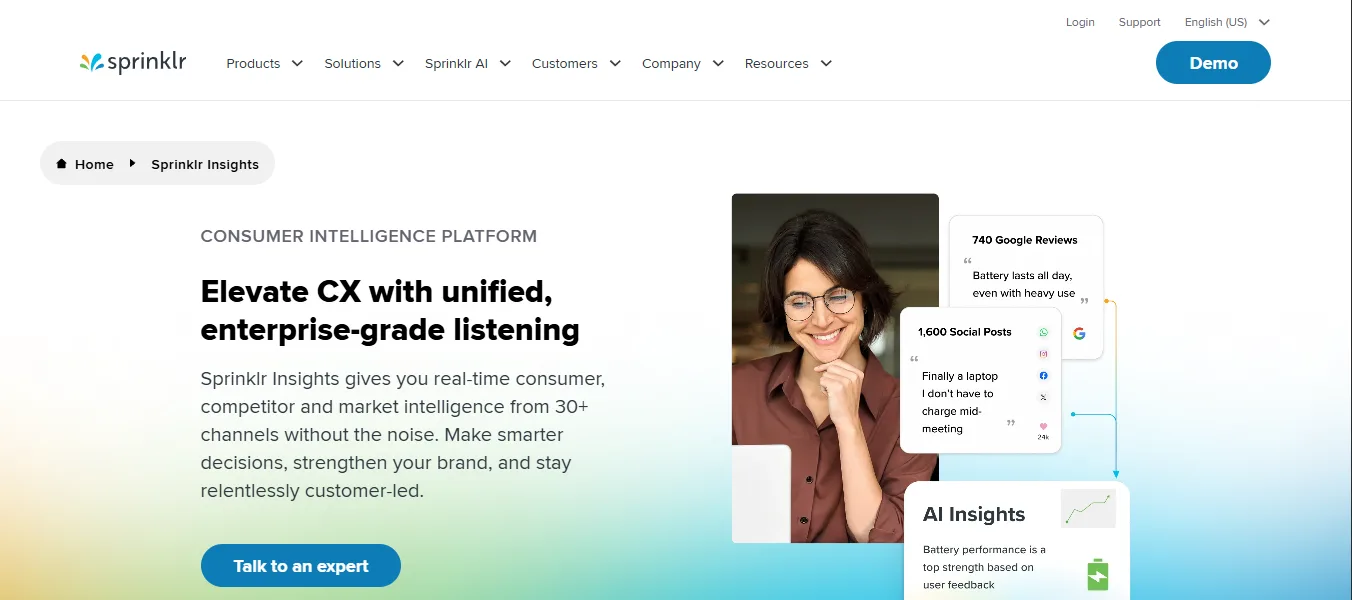
Best For: Brands that need to monitor social conversations, analyze customer sentiment, track emerging trends, and understand competitor activity across digital channels.
Sprinklr Insights is an advanced social listening and customer intelligence platform built to help teams understand what customers are saying across social media, blogs, forums, review sites, and online communities. It allows brands to monitor conversations in real time and identify the topics, trends, and sentiment shifts that matter most.
The platform uses AI-powered analysis to turn large volumes of unstructured conversations into clearer insights. Teams can track brand mentions, detect potential reputation risks, monitor competitor conversations, and understand how audience perception changes across markets.
Sprinklr Insights is especially useful for brands that want to go beyond basic mention tracking. It helps social, marketing, CX, and insights teams connect customer conversations with broader business decisions, from campaign planning and product feedback to brand reputation and competitive analysis.
2. Sprout Social:
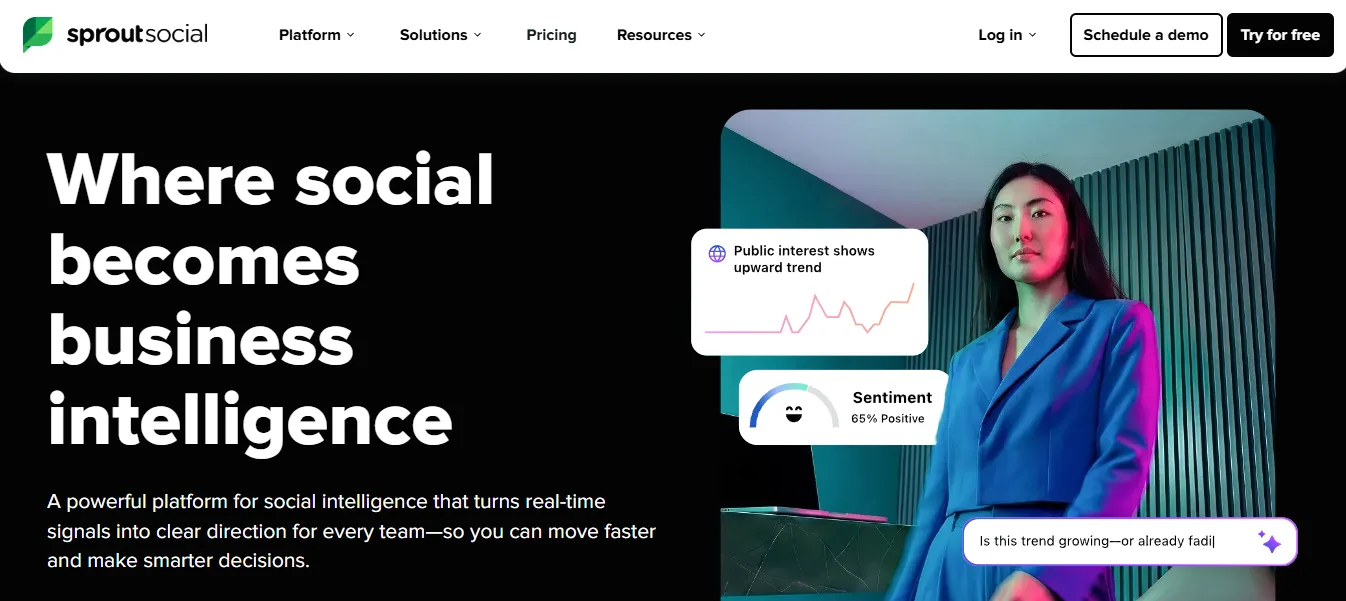
Best For: Teams that need social media management, engagement, reporting, and listening in one platform.
Sprout Social is a popular social media management platform with built-in social listening capabilities. It helps businesses manage publishing, engagement, analytics, and audience insights from a single interface.
Its listening features allow teams to analyze trends, track brand mentions, understand audience sentiment, and monitor conversations around competitors or industry topics. Sprout Social is a strong option for teams that want both day-to-day social media management and listening insights in one tool.
3. Hootsuite:
Best For: Agencies and businesses managing multiple social media accounts.
Hootsuite is one of the most recognizable names in social media management. Over the years, it has expanded beyond scheduling and publishing to include analytics, engagement, and social listening features.
With Hootsuite, businesses can track keywords, hashtags, mentions, and social conversations through customizable dashboards. It is useful for teams that need a familiar platform to manage several social accounts while keeping an eye on brand conversations and campaign performance.
4. Brandwatch:
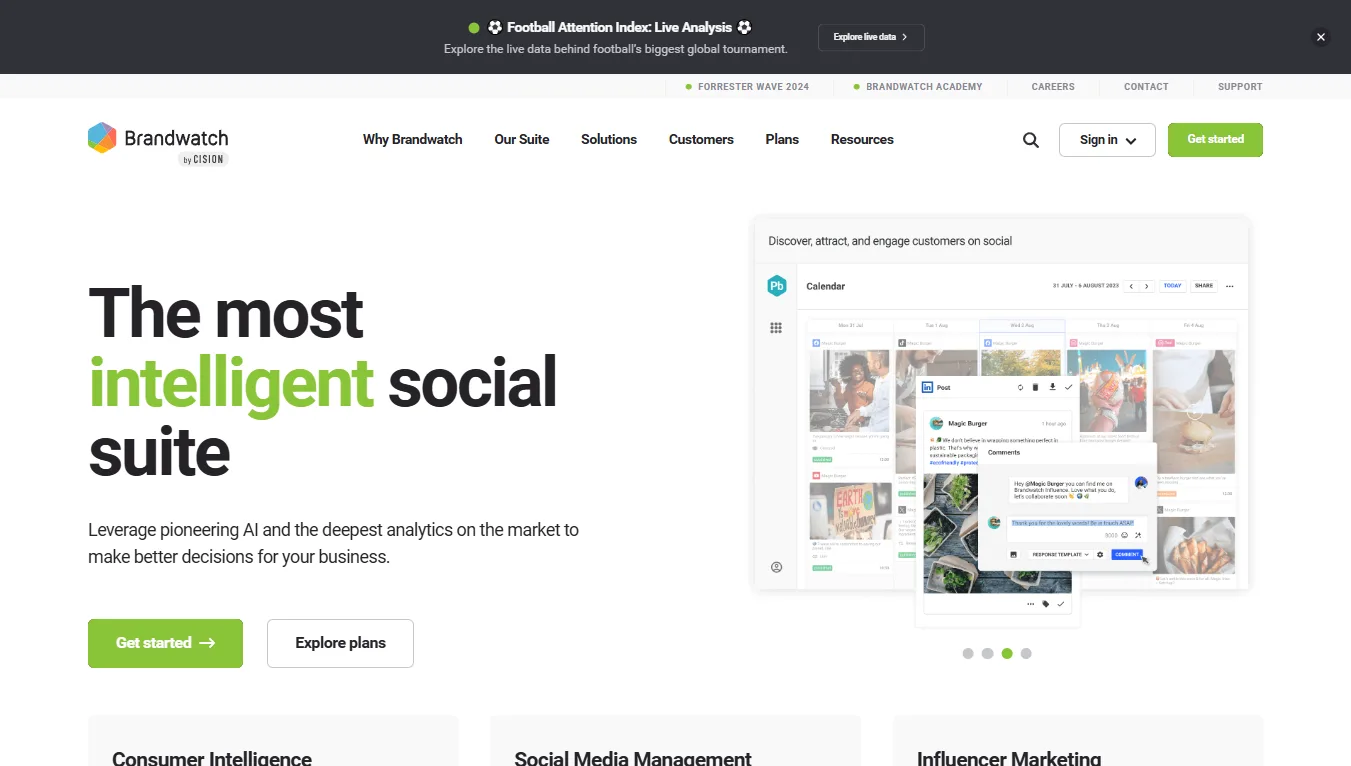
Best For: Enterprise brands, PR teams, and market research organizations that need deep consumer intelligence.
Brandwatch is one of the strongest platforms for social listening and consumer intelligence. It gives businesses access to large volumes of online data, helping them analyze trends, audience behavior, and brand perception over time.
The platform is often used by enterprise brands, PR agencies, and research teams that need detailed insights into customer conversations, market shifts, competitor activity, and long-term consumer trends.
5. Brand24:
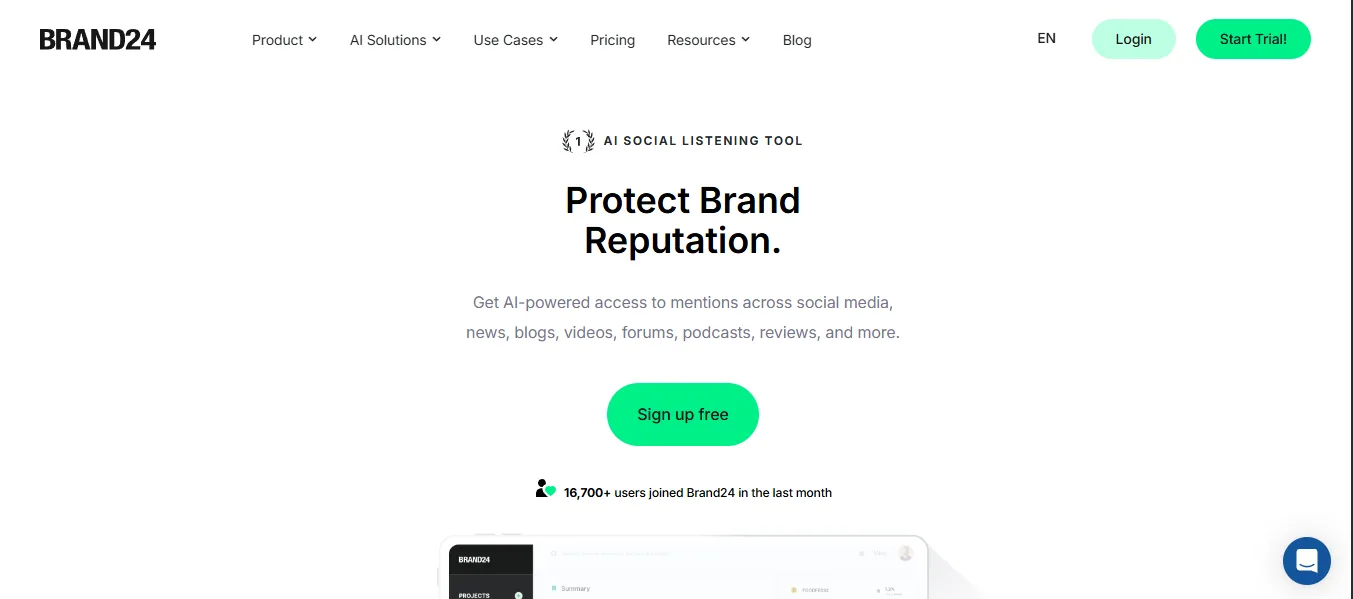
Best For: Teams that need fast, real-time brand monitoring and reputation tracking.
Brand24 is a social listening tool focused on real-time monitoring, alerts, and reputation management. It helps businesses track brand mentions, keywords, hashtags, and online conversations across social media, blogs, forums, podcasts, and review sites.
One of Brand24’s strengths is its speed. The platform can notify users quickly when important mentions appear, making it useful for brands that want to react faster to customer feedback, PR issues, or trending conversations.
6. Meltwater:
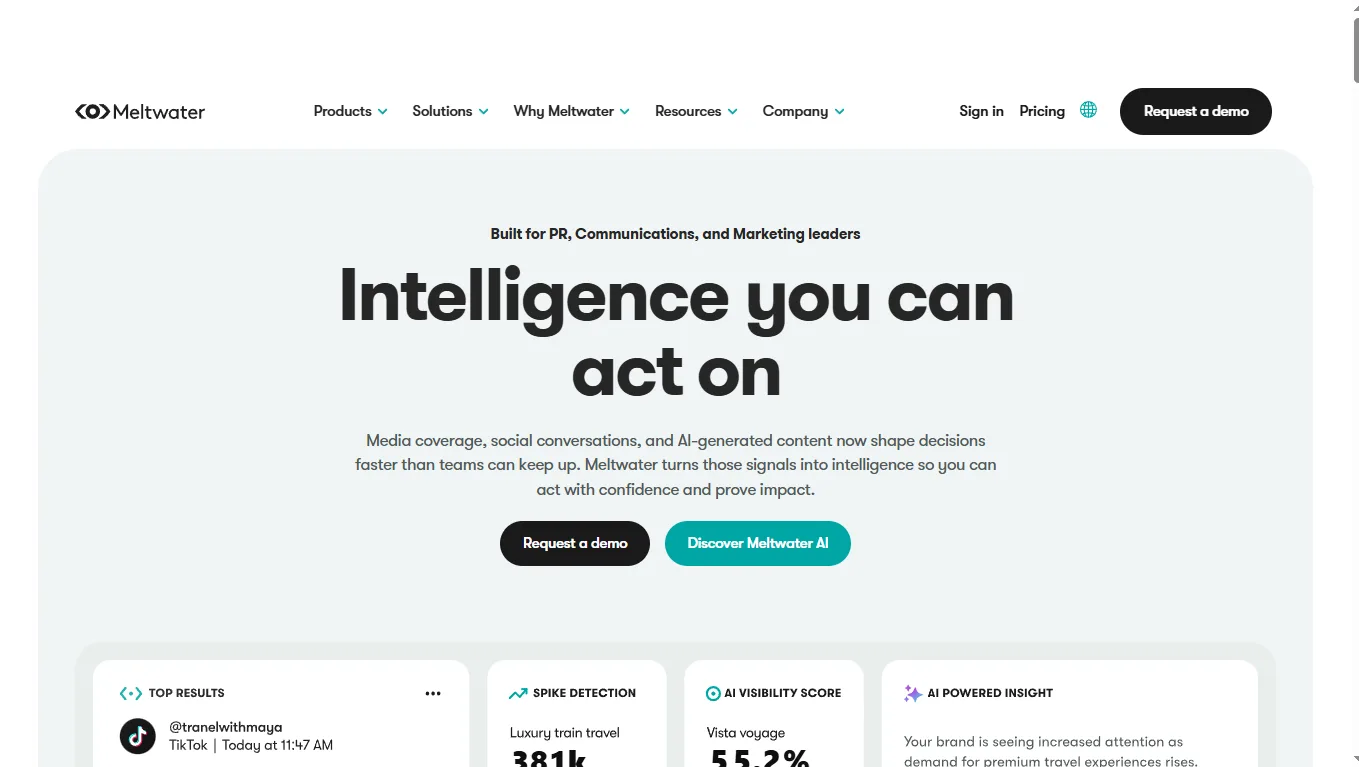
Best For: PR, communications, and corporate affairs teams tracking media and social conversations.
Meltwater combines social listening with media intelligence. Unlike tools that focus only on social media, Meltwater also tracks news outlets, blogs, broadcast media, print media, and online discussions.
This broader coverage makes it helpful for PR teams, communications departments, and companies that need to understand how their brand is being discussed across both traditional and digital media.
7. BuzzSumo:
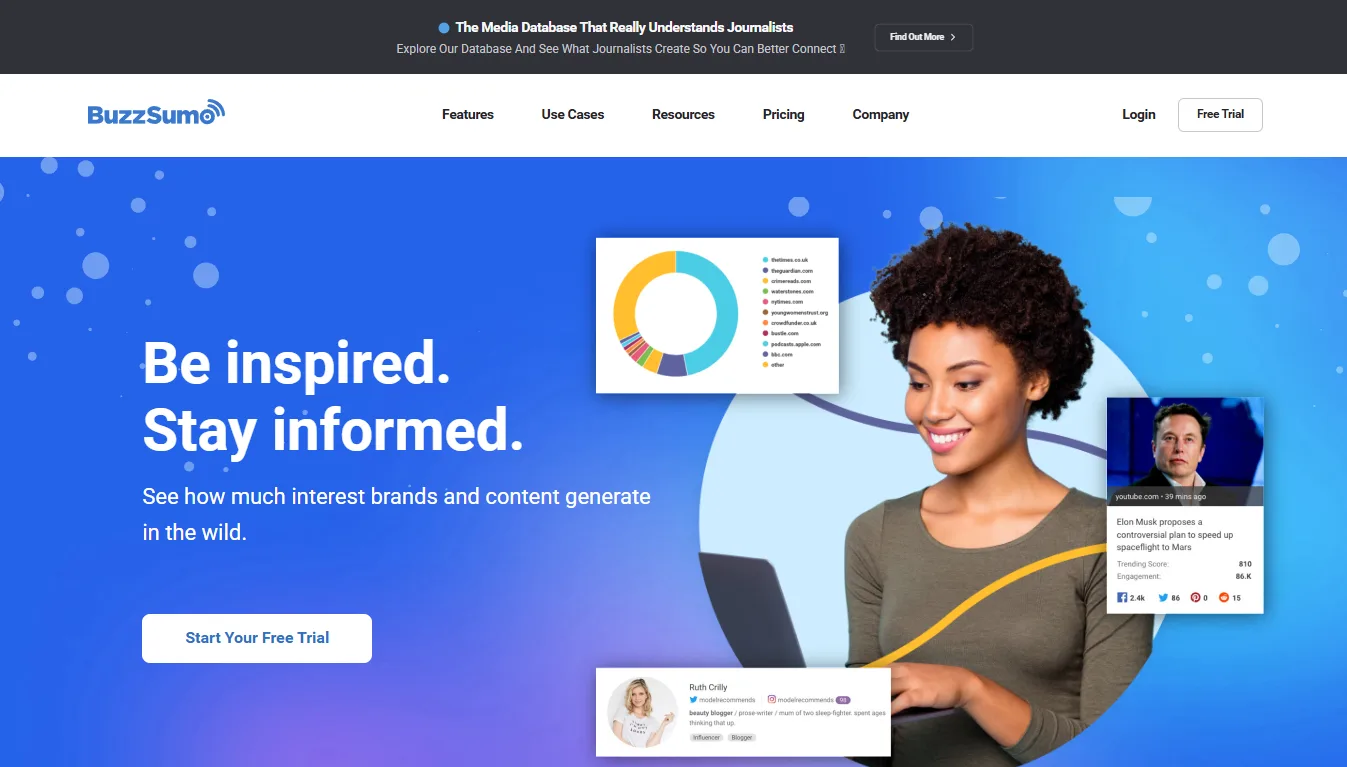
Best For: Content marketers, SEOs, and teams researching trending topics and influencers.
BuzzSumo is not a traditional social listening platform, but it is highly useful for content research, trend analysis, influencer discovery, and competitor content tracking.
The platform helps brands find trending topics, analyze high-performing content, identify influencers, and understand what type of content is gaining engagement in their industry. It is especially useful for content marketing and SEO teams.
8. Keyhole:
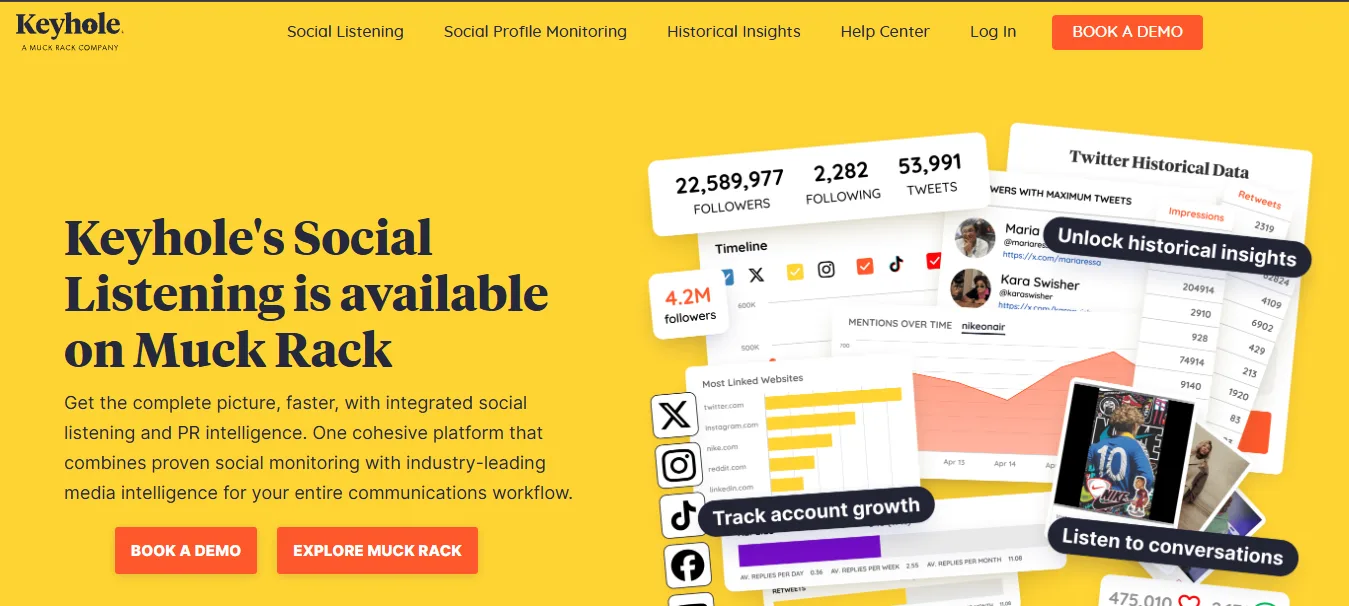
Best For: Brands tracking hashtags, campaigns, influencers, and live events.
Keyhole is known for hashtag tracking, campaign analytics, influencer monitoring, and real-time event tracking. It helps marketers measure campaign performance, monitor engagement, and understand how audiences are interacting with specific hashtags or social campaigns.
The platform is especially useful during live events, launches, influencer campaigns, and branded hashtag campaigns where real-time visibility matters.
9. Awario:
Best For: Small and mid-sized teams looking for affordable social listening and brand monitoring.
Awario is an affordable social listening tool that helps businesses track brand mentions, keywords, competitors, and customer conversations across the web and social media.
In addition to monitoring and listening, Awario also offers lead generation capabilities through Awario Leads. This can help teams identify potential customers who are already discussing relevant products, services, or pain points online.
10. YouScan:
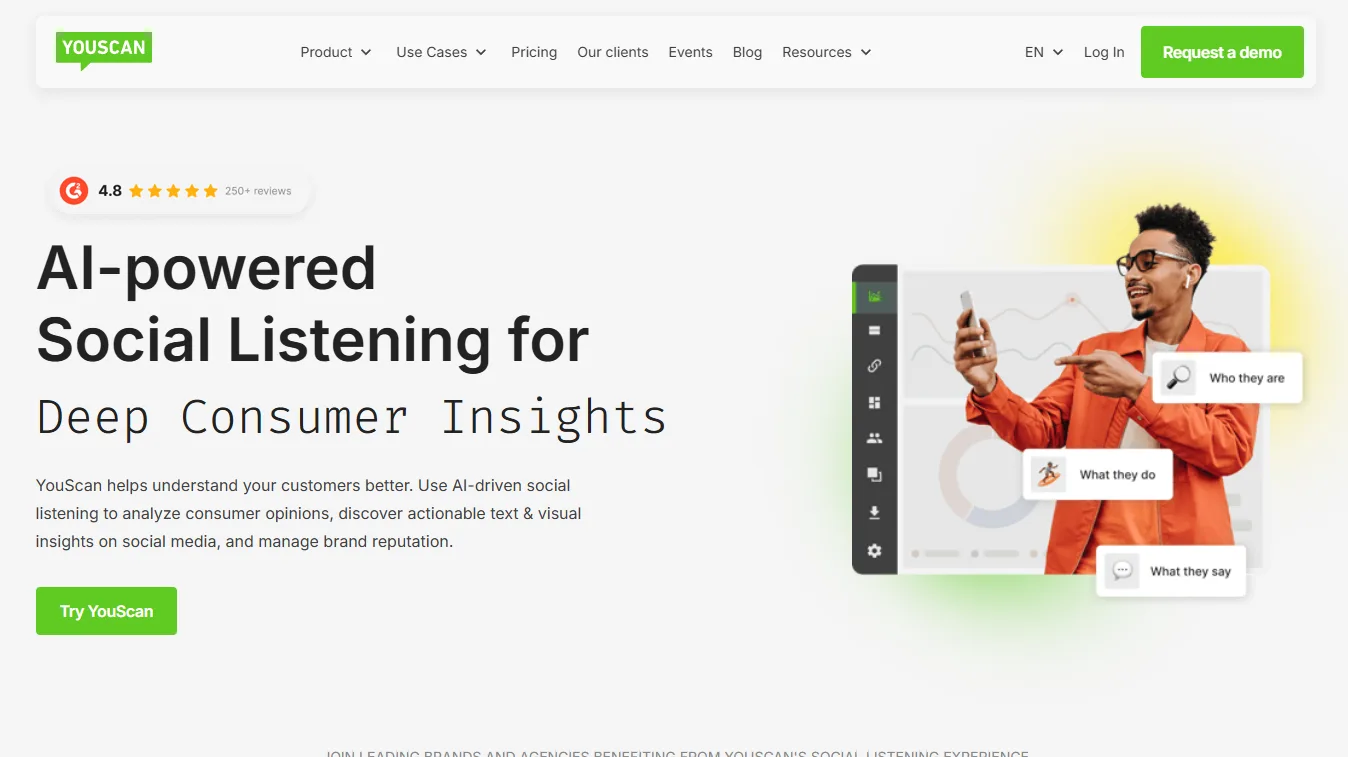
Best For: Brands that need visual social listening and image-based monitoring.
YouScan stands out for its visual listening capabilities. The platform uses AI to analyze images, logos, objects, scenes, and visual brand mentions across social media.
This is useful for brands that want to understand how their products appear in user-generated content, events, influencer posts, or lifestyle images. As visual content continues to grow, this type of monitoring can help brands uncover insights that text-only listening tools may miss.
Final thoughts:
Social listening has become an important part of modern marketing, customer experience, and brand strategy. Brands can no longer rely only on surface-level metrics such as followers, likes, and shares. They need to understand what customers are saying, how sentiment is changing, what competitors are doing, and which trends are emerging in the market.
The right social listening software can help brands:
- Make better marketing decisions
- Improve customer experience
- Protect brand reputation
- Discover emerging trends
- Identify sales and lead opportunities
- Track campaign performance
- Monitor competitor activity
- Respond faster to potential crises
The best tool depends on your goals, team size, budget, and data needs. Some platforms are better for enterprise consumer intelligence, while others are better for content research, campaign tracking, reputation monitoring, or visual listening.