
Most HR teams don’t lack tools. They lack tools that actually talk to each other. AI HR Software Platforms promise to fix that, but not every platform delivers on the premise, especially when you’re dealing with UK employment law, GDPR requirements, and a workforce that spans desk-based and frontline roles. After reviewing dozens of options across feature depth, real feedback from users, and actual deployment patterns, the bias and fairness gaps in AI-driven recruiting stood out as a recurring concern. This guide breaks down the six platforms worth your attention right now.
How was this ranking put together?
Platforms were assessed using publicly available sources, including user reviews, case studies, feature documentation, and ratings from trusted directories. Only options with a demonstrated track record in human resources software made the final list.
→ See the full research breakdown
- SenseHR – Best for SMEs and mid-market teams in construction, healthcare, and manufacturing
- Zelt – Best for unified HR and IT operations management
- BambooHR – Best for mid-market companies wanting an all-in-one HR ecosystem
- BrightHR – Best for small business HR compliance and health and safety
- HiBob – Best for distributed workforce management and employee engagement
- Zenefits – Best for small to medium businesses wanting mobile-first HR
Why AI HR Software Platforms Are Worth a Closer Look
Picking the wrong HR platform doesn’t just slow your team down. It creates real compliance exposure, especially under UK GDPR and evolving employment law standards. AI-driven recruiting tools can also introduce bias if the underlying models aren’t regularly audited, and that’s a legal risk most HR directors can’t afford to ignore.
Connecting a new platform to legacy HRIS or payroll systems adds another layer of technical challenge. The right AI HR Software Platforms reduce time-to-hire, meaningfully increase automation rates, and directly support stronger retention numbers across distributed teams.
Comparing the 6 Best AI HR Software Platforms
Note: All data in this table is sourced from review platforms and the official websites of the listed companies.
| Company Name | Years Operating | Headquartered In |
| SenseHR | Est. 2022 | Epworth, England |
| Zelt | Est. 2020 | London, United Kingdom |
| BambooHR | Est. 2008 | Draper, Utah |
| BrightHR | Est. 2015 | Manchester, United Kingdom |
| HiBob | Est. 2015 | New York, NY |
| Zenefits | Est. 2013 | San Francisco, CA |
1. SenseHR – Best for HR Teams Needing Flexibility Without Enterprise Pricing
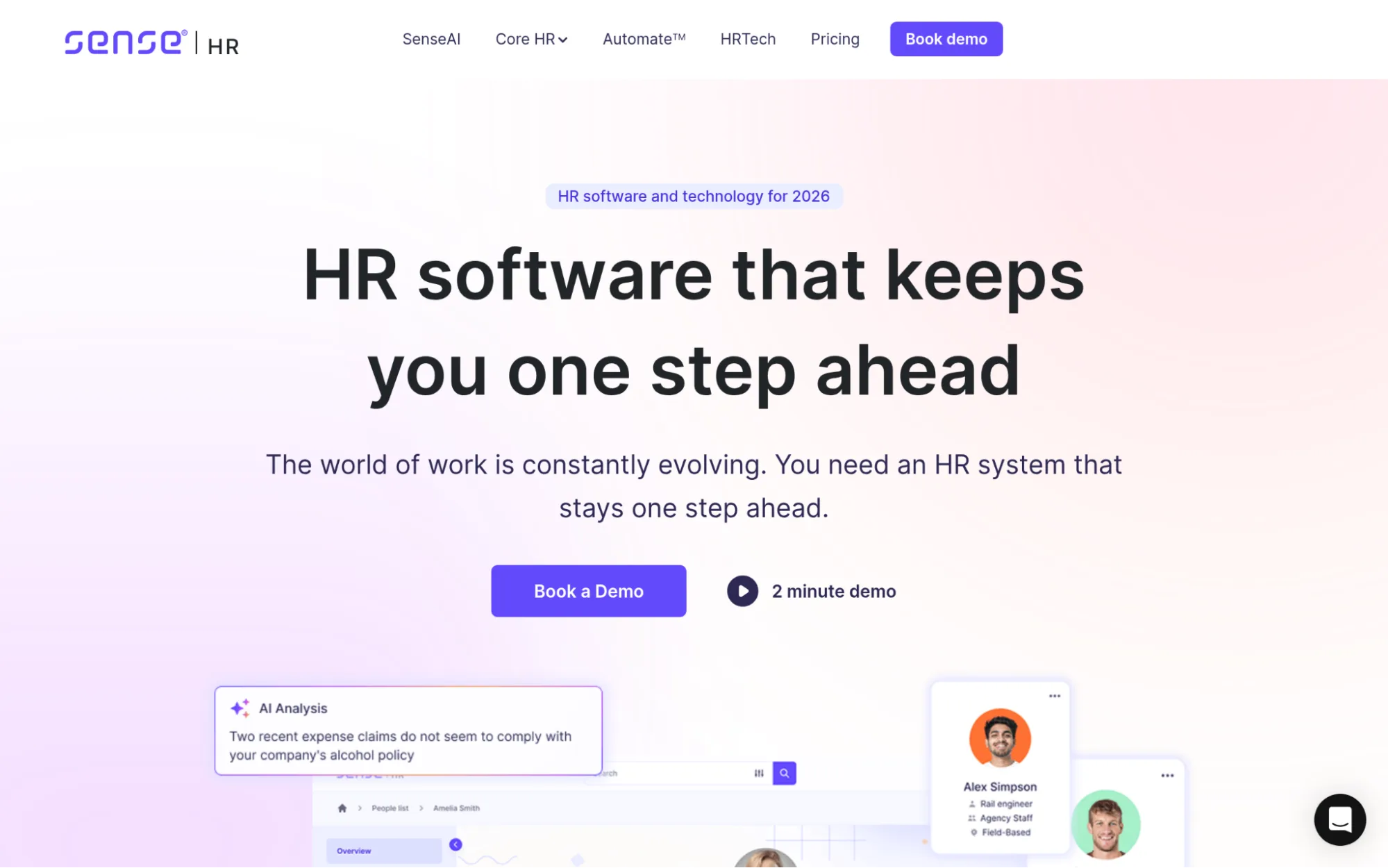
How Is SenseHR Different in Its Industry?
SenseHR covers the full range of people management functions, from employee record-keeping and holiday tracking to document storage with e-signature support and time and attendance monitoring. Built by a team with HR systems experience going back to 2005, the platform leans hard into customization. HR teams can design their own workflows and automate processes that other platforms force into rigid templates.
The addition of AI co-pilots for HR admins and wearable hardware for frontline workers (yes, actual hardware) sets SenseHR apart from most software-only competitors in this space.
What Sets SenseHR Apart for AI HR Software Platforms?
SenseHR addresses the persistent problem of frontline worker visibility, a gap most HR platforms quietly ignore, by pairing software with wearable time and attendance hardware that actually syncs with the platform. That kind of end-to-end thinking is rare for a team of this size, and it signals a product built for operational reality, not just office environments.
What Users Are Actually Saying:
From the reviews, users respond well to the breadth of features included at the base price, without the usual paywall surprises. The customization depth gets mentioned repeatedly as a genuine differentiator, not a marketing claim. And for SMEs in sectors like construction or hospitality, the combination of workflow flexibility and hardware integration lands as genuinely practical.
2. Zelt – Best for Unified HR and IT Operations
How Is Zelt Different in Its Industry?
Zelt pulls together payroll, benefits, IT device management, and people operations into one platform, which sounds straightforward until you realize how rarely any platform actually executes all four well. Founded in 2020 by HR tech investors and product leaders, Zelt targets the specific pain of managing too many disconnected tools. The platform handles everything from expense tracking and goal management to device security and holiday bookings.
Customers reportedly reduce their related software spend by up to 50% after consolidating onto Zelt. That’s not a small number for a growing mid-market team.
What Sets Zelt Apart for AI HR Software Platforms?
Zelt solves the tool sprawl problem that quietly drains HR team productivity, where separate systems for payroll, IT, and people ops create data gaps and manual reconciliation work. That focus on consolidation, backed by strong automation and employee self-service, means HR teams spend less time managing software and more time on actual people work.
What Users Are Actually Saying:
Zelt holds a 4.7 on both G2 and Trustpilot, which is consistent enough to signal genuine satisfaction rather than a review campaign. Users highlight the clean design and intuitive experience frequently, and the Xero App Store’s 5.0 rating suggests particularly strong adoption among finance-linked teams. From what the reviews show, customers at organizations like Shakespeare’s Globe and Mumsnet value the simplicity of having one system that actually works across departments.
3. BambooHR – Best for Mid-Market Companies Wanting a Connected HR Ecosystem
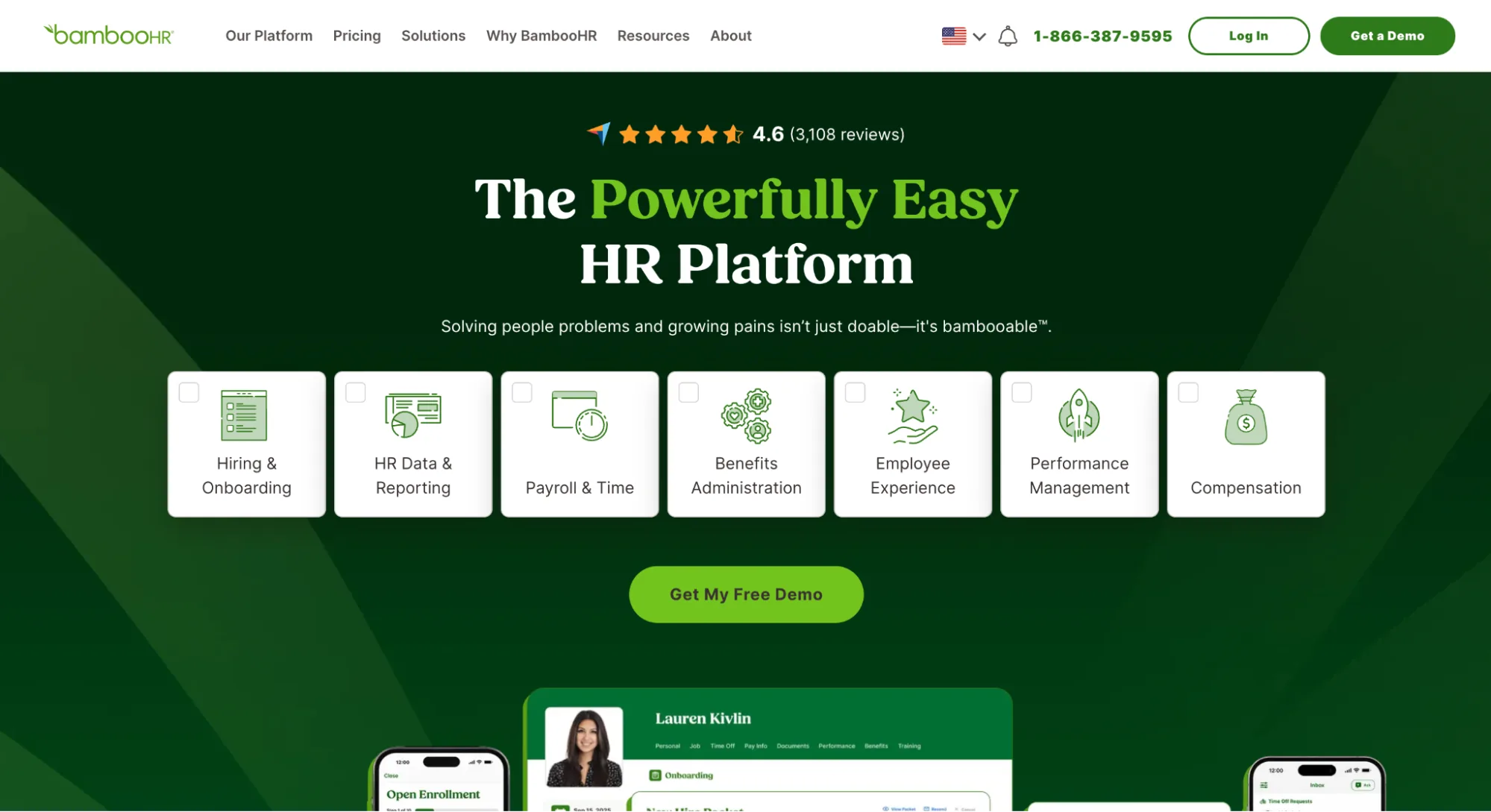
How Is BambooHR Different in Its Industry?
BambooHR has been in the market since 2008 and now serves more than 34,000 customers across 190 countries. That kind of reach comes from building a genuinely connected platform, not just a feature list. The system covers applicant tracking, payroll, time off, benefits administration, performance management, and compensation planning, all running on a unified data model.
The embedded AI doesn’t feel bolted on here. It’s woven into workflows in a way that reflects years of refinement. Clients include Quora, Le Creuset, and MasterClass, which gives the platform credibility across both creative and corporate environments.
What Sets BambooHR Apart from AI HR Software Platforms?
BambooHR addresses the fragmentation problem that plagues growing companies, where hiring data lives in one tool, payroll in another, and performance management in a third, by consolidating all people data into a single native ecosystem. That unified data model means AI features have cleaner inputs, which translates to better recommendations and fewer manual corrections for HR teams.
What Users Are Actually Saying:
BambooHR won the Cloud Awards Best HR Tech recognition for 2025 and 2026, which lines up with what users consistently say about the platform’s reliability and depth. Reviews tend to highlight the setup experience and reporting capabilities as standout strengths. For a platform serving 3 million employees globally, the consistency of positive sentiment across that scale is genuinely impressive.
4. BrightHR – Best for Small Business HR and Health and Safety Compliance
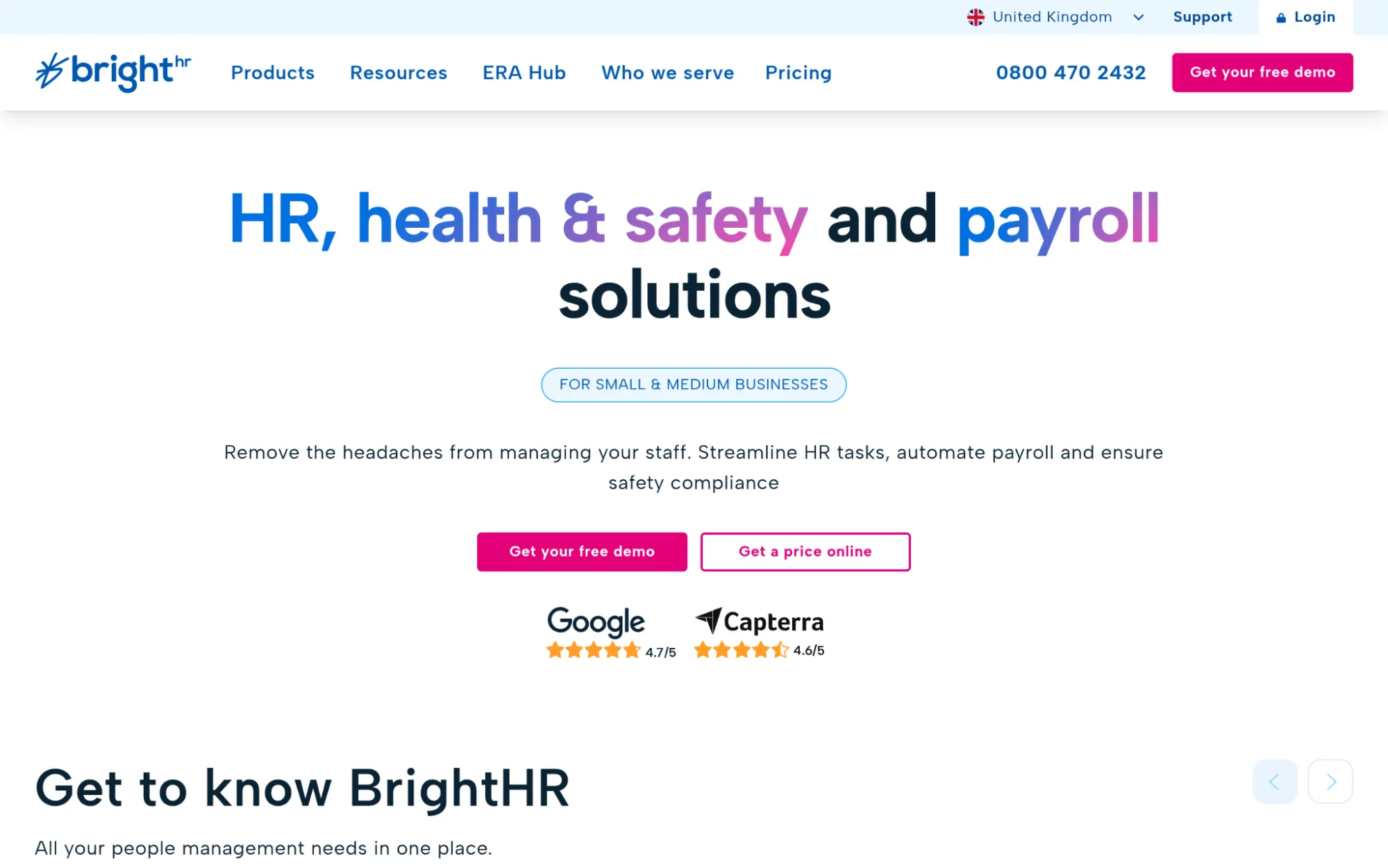
How Is BrightHR Different in Its Industry?
BrightHR targets small business owners with an all-in-one platform that bundles HR software with health and safety tools, 24/7 employment law advice through BrightGuru, and e-learning through BrightLearn. Founded in 2015 and based in Manchester, the company now serves 120,000 businesses across the UK, Ireland, Canada, New Zealand, and Australia.
The pricing is roughly 9 times lower than competitors’, and their expense tracker reportedly saves businesses an average of $2,200 per year. For small teams navigating UK employment law without an in-house legal team, that support layer matters a lot.
What Sets BrightHR Apart for AI HR Software Platforms?
BrightHR fills the gap for small business owners who need HR compliance support but can’t afford a dedicated HR department or employment law firm on retainer. Pairing affordable software with on-demand employment law advice is a combination that most small-business HR platforms don’t attempt, let alone pull off well.
What Users Are Actually Saying:
BrightHR took home Prolific North SaaS Company of the Year in 2024, which reflects the kind of industry recognition that comes from sustained positive results. From what the reviews show, small business owners specifically appreciate the 24/7 access to employment law advice, which reduces the anxiety around HR decisions that could carry legal consequences. The TrustRadius award for Relationship in HR Management also points to strong ongoing support, not just a good sales process.
5. HiBob – Best for Distributed Workforce Management and Employee Engagement
How Is HiBob Different in Its Industry?
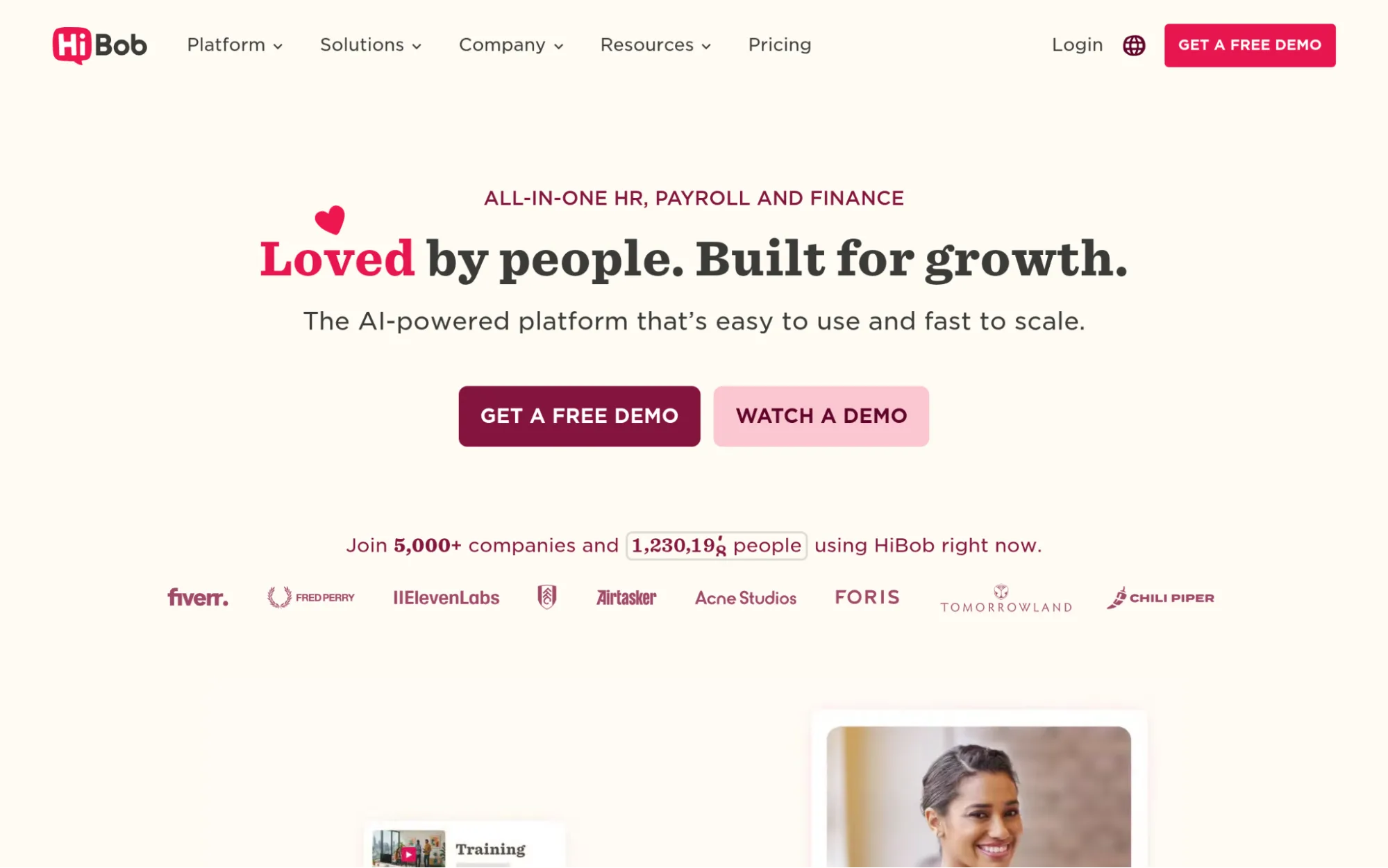
HiBob launched in 2015 and has built a platform specifically designed for modern distributed teams, combining important HR functions with a strong emphasis on employee engagement and recognition. The system covers employee setup, time-off requests, timesheets, performance evaluations, compensation, and analytics. With integrations into Microsoft Teams and Slack, and support for more than 4,400 global customers, the platform feels genuinely designed for how hybrid teams actually operate today.
The 2024 acquisition of Pento and the 2025 acquisition of Mosaic signal that the product plan is still actively expanding.
What Sets HiBob Apart from AI HR Software Platforms?
HiBob takes on the challenge of keeping distributed employees engaged and connected, a problem that becomes harder as teams grow across geographies and time zones, by embedding recognition and engagement tools directly into the HR workflow rather than treating them as add-ons. That approach helps HR teams move the needle on retention without adding another separate tool to the stack.
What Users Are Actually Saying:
HiBob ranked number one in the mid-market HRMS category for experience and vendor satisfaction in the 2025-2026 Sapient Insights HR Systems Survey, which is the kind of recognition that reflects real user input rather than marketing spend. The Time “200 Best Inventions” selection and consecutive Forbes Cloud 100 appearances in 2023 and 2024 reinforce that credibility. From what the reviews show, users particularly value the intuitive design and the depth of engagement features compared to more transactional HR systems.
Zenefits – Best for Small to Medium Businesses Wanting Mobile-First HR
How Is Zenefits Different in Its Industry?
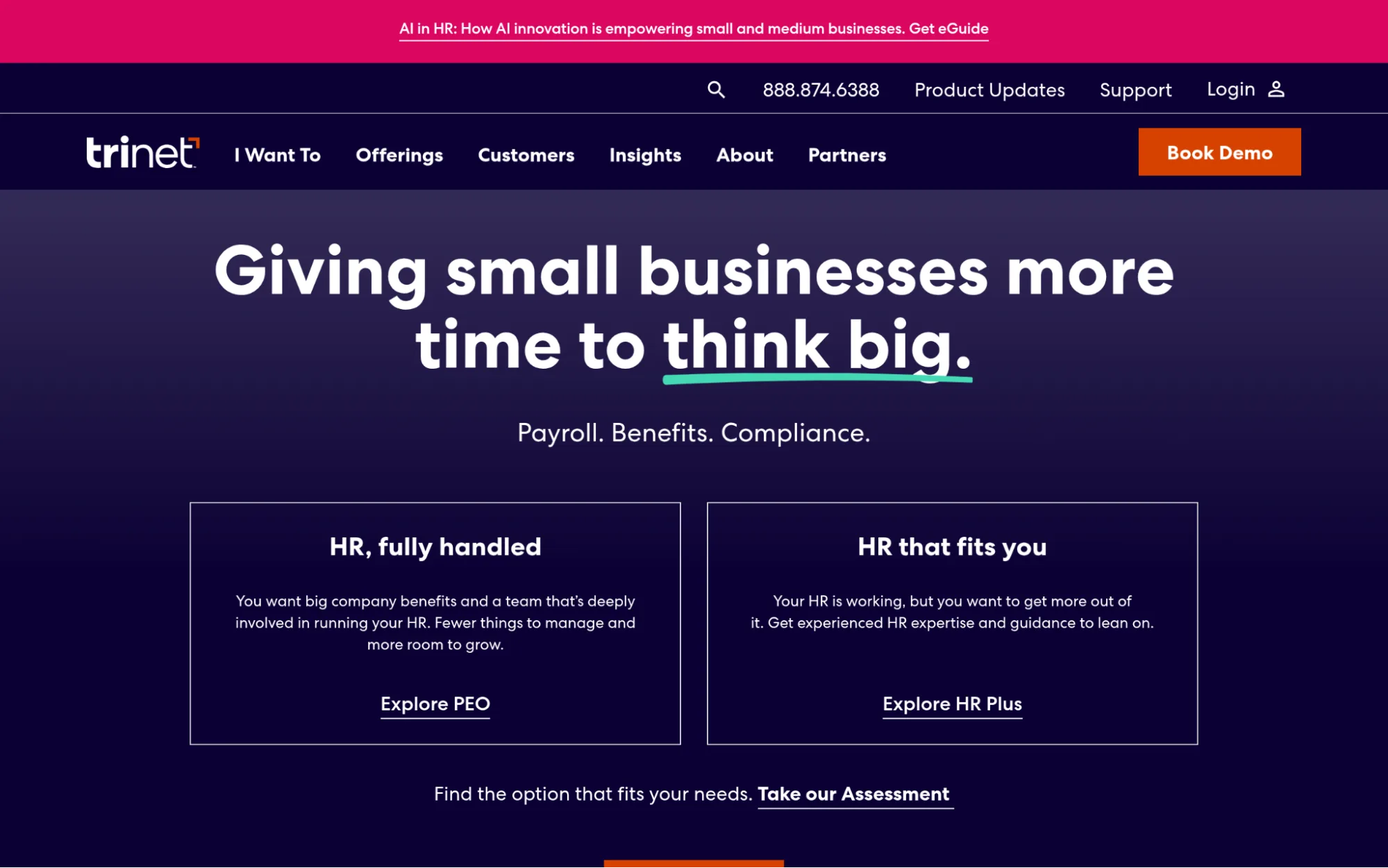
Zenefits entered the market in 2013 and genuinely changed how small businesses thought about HR software. The platform pioneered the mobile-first, all-in-one HR experience at a time when most HRIS tools were clunky desktop applications. Today it covers payroll, employee benefits, PTO tracking, time management, and automated tax compliance, with tight integrations across dozens of best-of-breed providers.
The 2022 acquisition by TriNet added scale and infrastructure. Serving 10,000 customers, Zenefits remains a practical choice for SMBs that want modern HR without building a complex tech stack from scratch.
What Sets Zenefits Apart for AI HR Software Platforms?
Zenefits tackles the all-mobile HR challenge head-on, giving small and medium business employees the ability to manage HR tasks entirely from their phones, which matters as workforces become less desk-dependent. That mobile-first design philosophy, combined with PEO and HRIS services on one platform, reduces the number of vendor relationships a small business HR team has to manage.
What Users Are Actually Saying:
Zenefits earned Skilljar’s Customer Education Award, which points to a platform that invests in helping users actually get value from the product rather than just selling access to it. From what the reviews show, users respond positively to the clean interface and the convenience of managing payroll, benefits, and compliance from one place. The main theme across reviews is that the platform works well for teams that want simplicity without sacrificing needed HR functionality.
Methodology Behind These Picks
Gathering Baseline Information and Metrics
The research process started by pulling together a broad list of AI HR Software Platforms with meaningful presence in the UK market. Sources included HR technology directories, G2 and Trustpilot ratings, Capterra listings, and official product documentation. Each platform’s feature depth, founding history, team size, and geographic focus were cataloged before any comparative judgment was made.
The goal at this stage was breadth, not elimination, so platforms across different size categories and HR specializations were included in the initial pool.
The Shortlist Cut
Platforms without enough verifiable public information were removed early. Review patterns were analyzed for consistency across multiple platforms rather than relying on ratings from a single source. Where review counts were low or sentiment appeared inconsistently distributed, those options were flagged and examined more closely.
Platforms that had experienced ownership or product disruption without clear evidence of recovery were also cut at this stage. The aim was to keep only options that showed stable, sustained performance rather than brief spikes in positive attention.
Fact-Checking the Picks
Claims made on official product websites were cross-referenced against what users actually reported in reviews and case studies. Where a platform’s marketing language described capabilities that didn’t appear in user accounts, those gaps were noted and weighted in the evaluation. Customer examples and named clients were verified against publicly available sources where possible. This step helped separate platforms that deliver on their stated capabilities from those whose positioning outpaces their actual product.
Authority Signals and Industry Standing
Industry award recognition, analyst mentions, and appearances in credible HR technology publications were factored in as supporting evidence rather than background signals. Platforms with recognition from sources like Sapient Insights, Gartner-adjacent publications, Forbes Cloud 100, and regional business awards (such as Prolific North) carried additional weight. These signals don’t replace user evidence, but they do indicate that a platform has been examined and validated beyond its own marketing.
AI HR Software Platforms Track Record
Each platform was assessed for demonstrated history in the human resources software space specifically. This included reviewing dedicated feature pages for AI capabilities, confirmed case studies showing measurable HR outcomes, and verified feedback describing real-world results. Platforms were prioritized that showed evidence of active product development, including recent acquisitions, updated AI features, and expanding integrations, rather than platforms coasting on older reputations without visible development.
Picking the Right AI HR Software Platforms for You
Choosing an AI HR platform isn’t just about feature checklists. It’s about finding a system that fits how your HR team actually works, what your workforce looks like, and where your compliance risks sit. Here’s what to focus on during evaluation.
- Industry and Domain Experience: Look for platforms with proven deployments in your sector. A hospitality company and a professional services firm have very different HR workflows, and the right platform should reflect that.
- Features and Service Options: Check whether AI tools are native to the platform or added on through third-party integrations. Native AI with access to unified data produces better outputs than bolted-on modules with fragmented inputs.
- Pricing Structure: Per-user pricing models scale predictably, but watch for feature tiers that lock standard HR functions behind premium plans. Some platforms include everything upfront; others charge separately for payroll, analytics, and compliance tools.
- Results Measurement: Ask vendors specifically about time-to-hire reductions, HR process automation rates, and employee engagement score improvements from existing customers. Vague claims about performance improvements aren’t enough.
- Industry Knowledge and Compliance: For UK companies, employment law compliance and GDPR data handling aren’t optional considerations. Prioritize platforms with demonstrated experience managing these requirements, not ones where it’s listed as a future plan item.
The Verdict
The right AI HR Software Platforms decision comes down to fit, not rankings. BrightHR and SenseHR serve UK-based small and mid-market teams well, with BrightHR leading on compliance support and SenseHR standing out for workflow flexibility and hardware integration. HiBob and BambooHR are stronger choices for distributed or growing mid-market teams. Zelt wins on consolidation, and Zenefits remains reliable for mobile-first SMBs. As AI capabilities in HR continue to mature, platforms with unified data models will pull further ahead.