

Selling software to a global audience seems simple enough, until tax registration, VAT remittance, and chargeback liability all land on your desk at the same time. The 5 best merchant of record platforms for SaaS businesses solve that by acting as the legal seller on your behalf, handling compliance, payments, and billing so you don’t need to build or maintain that infrastructure yourself. The platforms below cover a range of business sizes and pricing models, from solo indie developers to scaling SaaS teams.
Choosing a merchant of record for SaaS
A merchant of record (MoR) takes on the legal and financial responsibility for each transaction it processes, including tax collection, remittance, and chargeback liability. For SaaS companies, that means you can sell into new countries without registering as a taxable entity in each one. The right platform depends on your pricing model (subscriptions, usage-based, one-time), your expected transaction volume, and how much technical flexibility your team needs.
1. Fungies.io
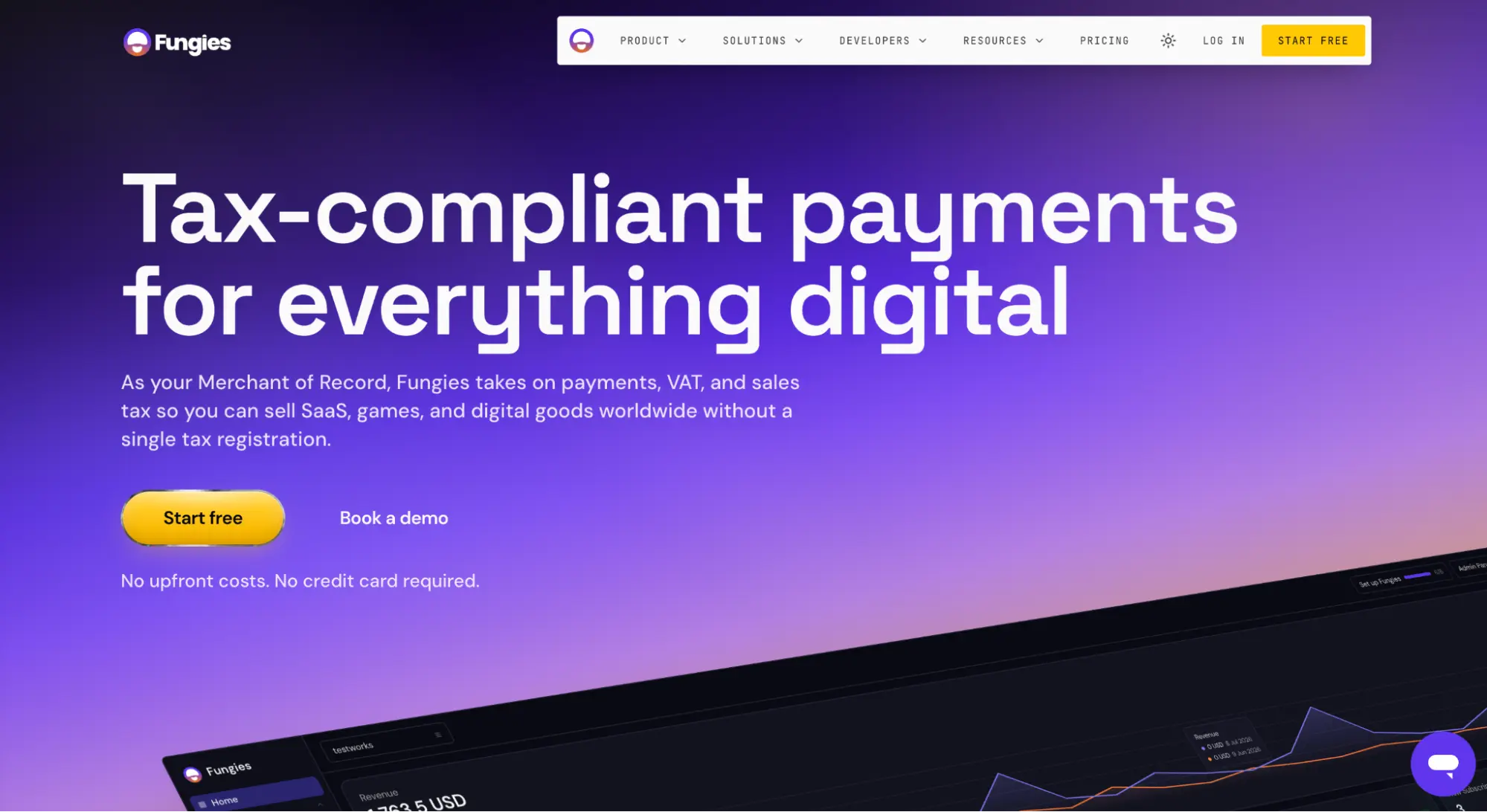
Fungies.io is a merchant of record built for SaaS companies and digital businesses selling globally. It covers payments, VAT and sales tax compliance, subscription management, checkout, invoicing, and fraud protection across 150+ countries, all inside one platform without requiring a separate tax tool or billing layer.
The platform supports recurring, usage-based, seat-based, and hybrid pricing models with flexible billing intervals, free trials, and automated payment retries. Businesses can go live with a branded storefront on a custom domain in under 15 minutes, and the no-code storefront means no development work is required before you start accepting payments. Developer tooling includes CLI and MCP integrations that let AI coding agents configure the payment stack directly.
Pricing is 5% + $0.50 per transaction with no monthly fees, no setup fees, and no minimums. Fungies covers 250+ payment methods, handles chargebacks and refund disputes as the legal seller, and gives merchants a single dashboard for transactions, revenue, and compliance tracking.
2. Paddle
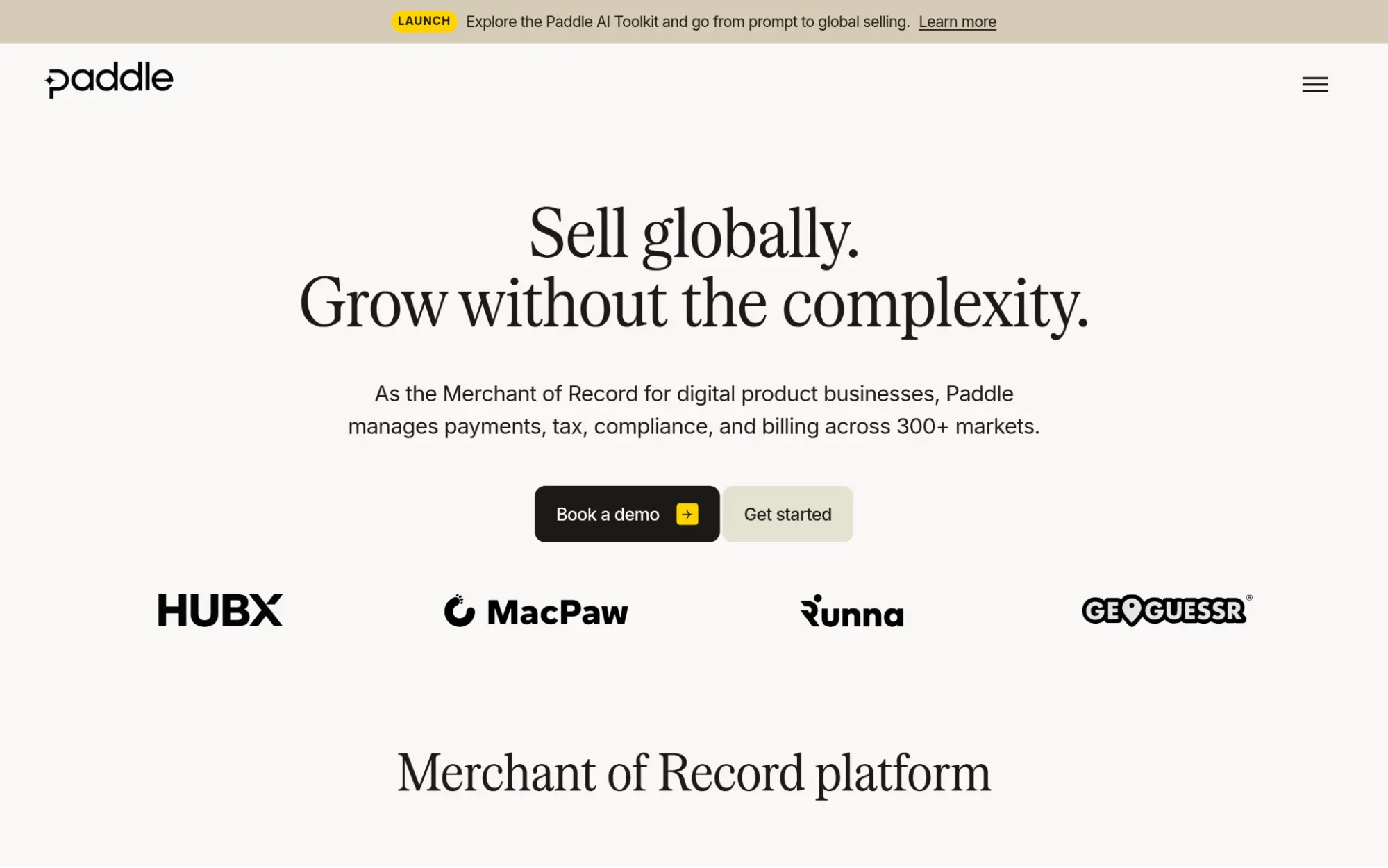
Paddle is a mature merchant of record platform founded in 2012 and now valued at $1.4 billion. It operates across 300+ markets and in 2024 processed over $1 billion in payments while collecting more than $100 million in sales taxes for roughly 4,000 customers. That scale translates to a well-tested compliance infrastructure.
The product suite includes subscription billing, checkout, invoicing, in-app purchase support, churn recovery (Retain), fraud protection, and revenue analytics (Metrics). It’s a genuinely full-stack offering, and the case studies show real results, Renderforest reported 3x ARR growth and MacPaw a 200% revenue increase after switching to Paddle.
Pricing sits at 5% + $0.50 per transaction, the same rate as several competitors on this list. The main trade-off is that Paddle’s depth and product breadth make it a heavier platform; teams with simpler needs may find the feature set more than they require right now.
3. creem
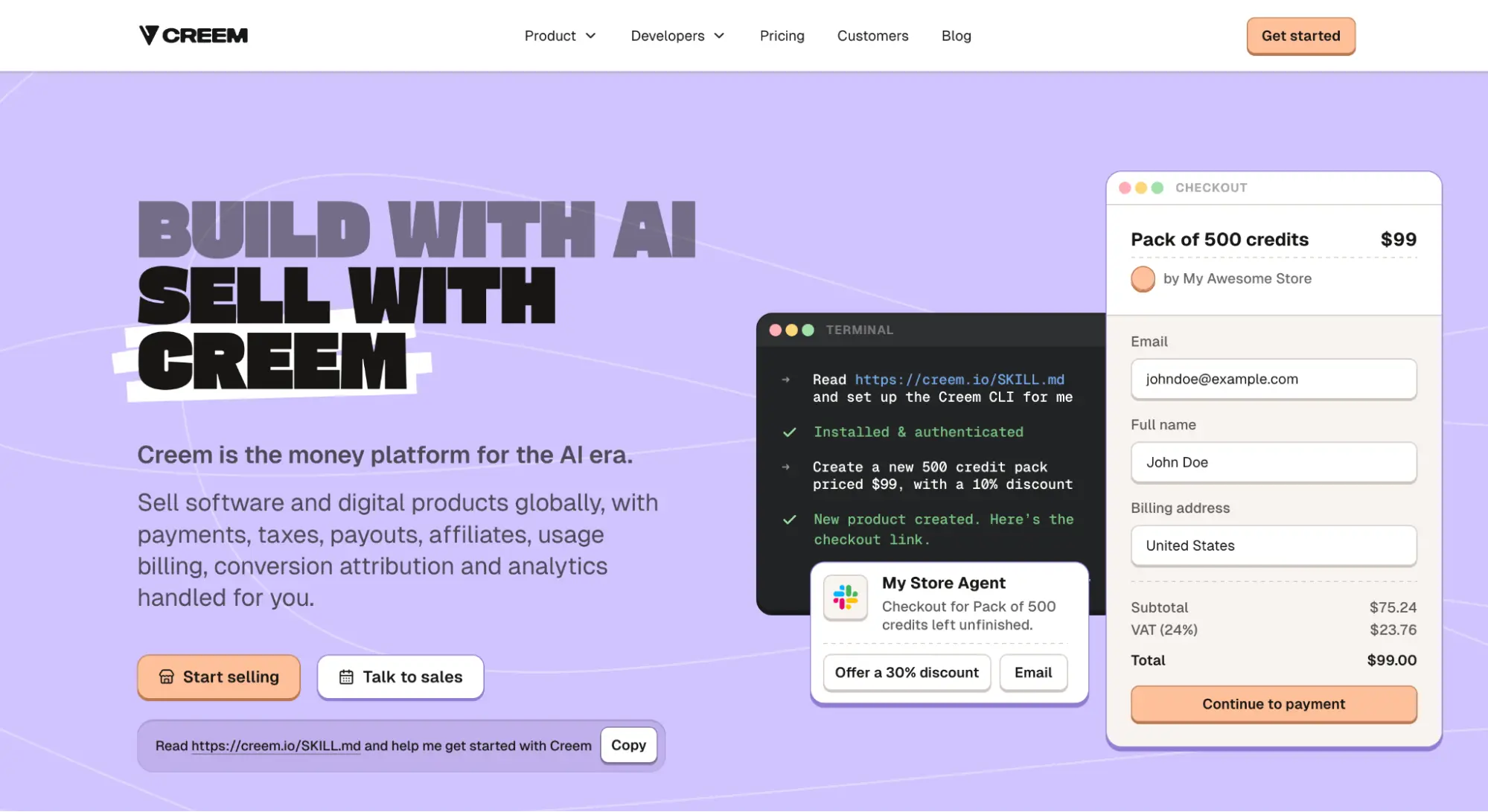
Creem is a merchant of record built by two former Google and Adyen engineers, Gabriel Ferraz and Alec Erasmus, with a deliberately lean model: no sales team, no enterprise pricing, and a flat 3.9% + $0.40 per transaction. It’s priced below most competitors, and that’s intentional. Creem targets indie hackers, micro-SaaS founders, and solo creators who want global tax coverage without negotiating a contract.
The platform handles VAT, GST, and sales tax in 190+ countries, automatic remittance included. It supports subscriptions, one-time payments, license keys, downloads, discount codes, and revenue splits (useful for co-founder or partner arrangements). Stablecoin payouts are also available, which not many MoR platforms offer at all. Since launching in September 2024, Creem has grown to over 20,000 stores and more than 1,000 active merchants.
Creem is a small team, 10 people total, and is still early-stage. Additional fees apply for revenue splits (2%), affiliate transactions (2%), abandoned cart recovery (5%), and non-EU payouts ($7 or 1%). Teams expecting high-touch support or enterprise-grade reliability guarantees should factor that in.
4. Dodo Payments
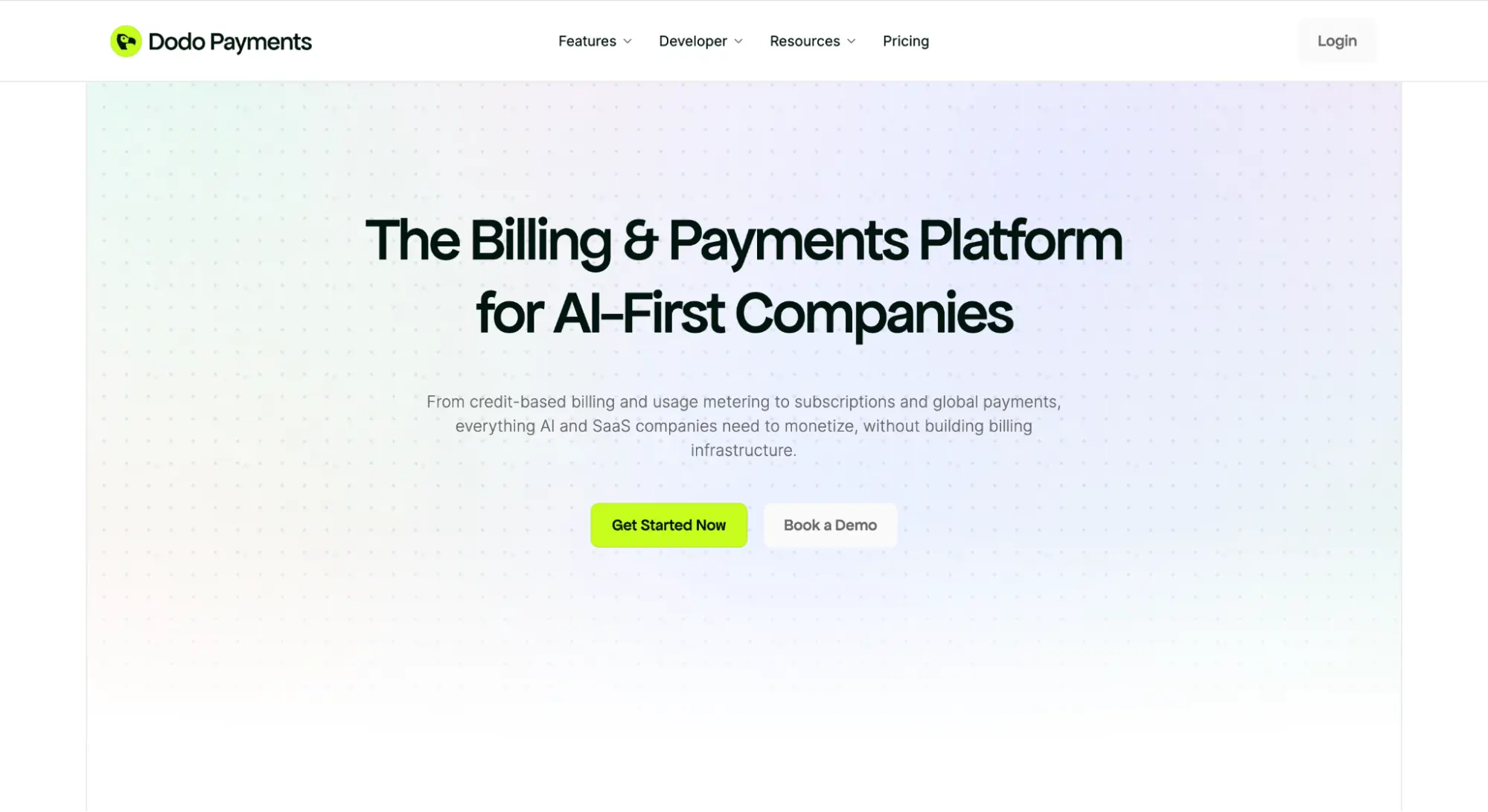
Dodo Payments launched in 2024 and focuses on SaaS and AI companies that need global monetization from day one. Its standout feature is Sentra, an AI assistant that connects directly into VS Code, letting developers configure billing without leaving their code editor. That’s a genuinely different approach from dashboard-first platforms.
The platform supports credit-based billing, usage-metered billing, subscriptions, and one-time payments across 150+ countries and 40+ payment methods. Built-in tax compliance, fraud protection, and chargeback handling are included. Early case studies include Draftly growing from zero to $25K MRR and CatDoes launching in 60+ countries. Pricing sits at 4% + $0.40 per transaction with no fixed costs on the base plan.
As a 2024 company with 62 employees and $1.1 million in pre-seed funding, Dodo Payments is still building out its ecosystem. The platform has clear strengths for developer-led and AI-native teams, but businesses with complex billing histories may want to assess migration support carefully before committing.
5. Polar
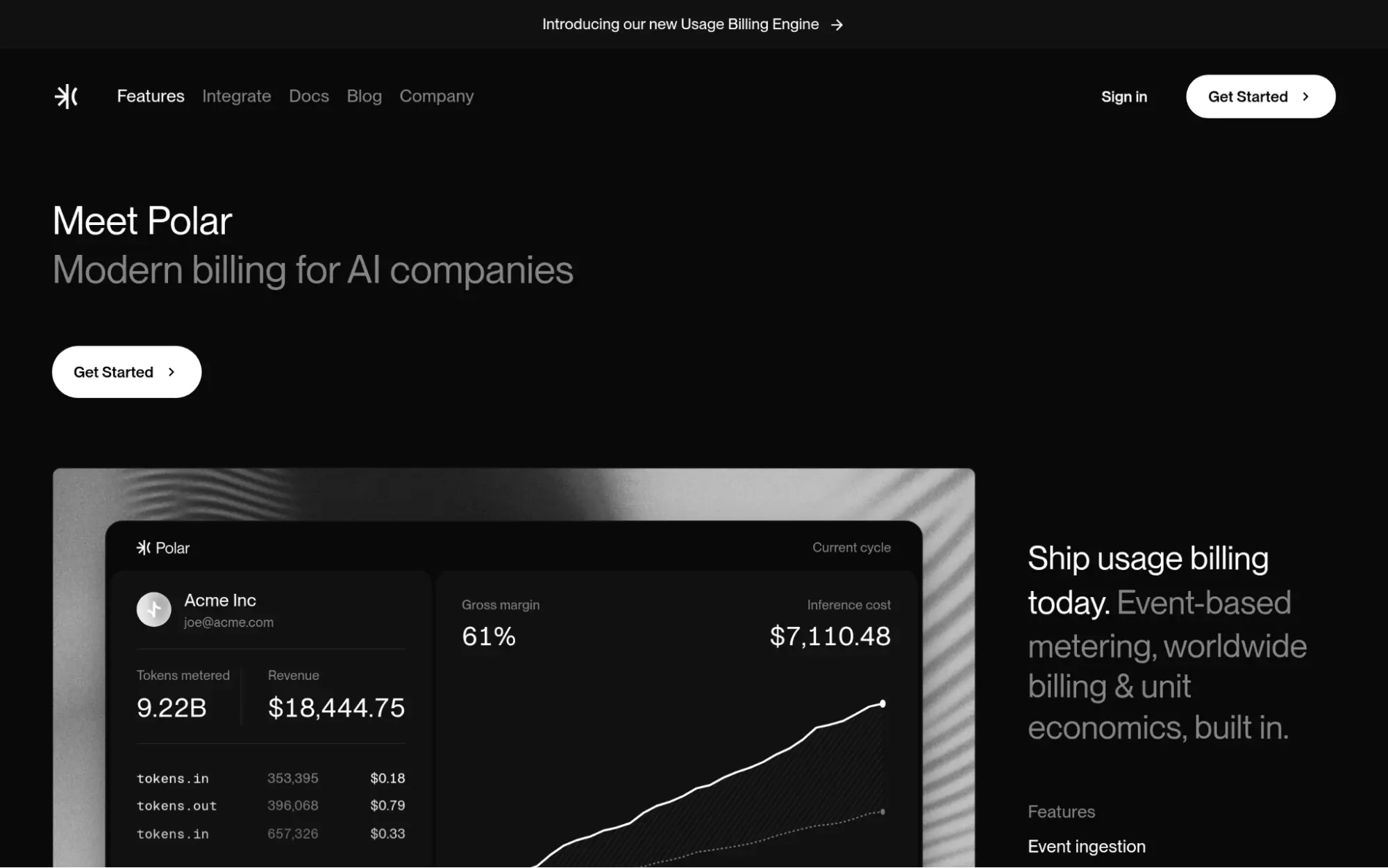
Polar is a merchant of record designed for AI startups that charge for tokens, agent runs, GPU seconds, API calls, and compute, usage models that most billing platforms don’t handle with real precision. The platform ingests events in real time and builds unit economics dashboards from the same data stream, so billing and analytics sit in one place rather than two.
It supports subscriptions, seat-based pricing, credits, trials, and discounts alongside its usage billing foundation. As MoR, Polar handles sales tax and VAT compliance and billing operations including dunning and customer accounts. Users include Tailwind Labs and Midday, with endorsements from teams at Vercel and FastAPI. Polar raised a $10 million seed round in June 2025, led by Accel.
Pricing scales from a free Starter plan to a Scale plan at $400/month, with transaction fees varying by tier. The company runs a team of 2 to 10 people. That lean structure suits its open-source, community-driven model, but teams that need dedicated account management may find the support model thin.
Key capabilities to compare
The practical differences between these platforms come down to four things: pricing structure, tax coverage, billing model support, and team size as a proxy for support depth.
On pricing, Creem (3.9% + $0.40) and Dodo (4% + $0.40) are the cheapest per transaction. Fungies.io and Paddle both charge 5% + $0.50. Polar’s cost depends on the plan tier and can climb if you’re on Scale.
Tax coverage runs broad across all five platforms, 150 to 190+ countries, so it’s more of a baseline than a differentiator. Where they split apart is in which billing models they support natively. Polar and Dodo are built for usage-based and credit-based pricing. Creem and Fungies.io are stronger on subscriptions and one-time purchases. Paddle covers the full range but with more technical overhead.
Matching platforms to your business model
Solo developers and micro-SaaS founders will likely find Creem or Dodo Payments the best starting point. Low per-transaction fees, no monthly minimums, and straightforward setup matter most at that stage. The developer-first features in Dodo (Sentra, VS Code integration) work especially well if the founder is also the engineer.
AI startups billing on tokens or compute should look at Polar first. Its real-time event ingestion and usage billing precision are purpose-built for that model; most other platforms add it as an afterthought.
Subscription-first SaaS teams with international customers have the most options, Fungies.io, Paddle, and Creem all handle recurring billing well. The decision usually comes down to whether a team wants a larger established vendor (Paddle), a lean no-fee entry point with global coverage, or a developer-oriented newer platform.
Bottom Line
The 5 best merchant of record platforms for SaaS businesses aren’t interchangeable; they’re tuned for different team sizes, pricing models, and growth stages. Usage-heavy AI companies have different needs than subscription SaaS teams building their first global checkout. Matching the platform to your actual billing model matters more than chasing the lowest transaction fee, since the wrong infrastructure will cost time to migrate away from later. Any of the five platforms on this list can remove the tax compliance burden. The differences lie in depth, pricing structure, and how well the developer experience fits the way your team actually works.