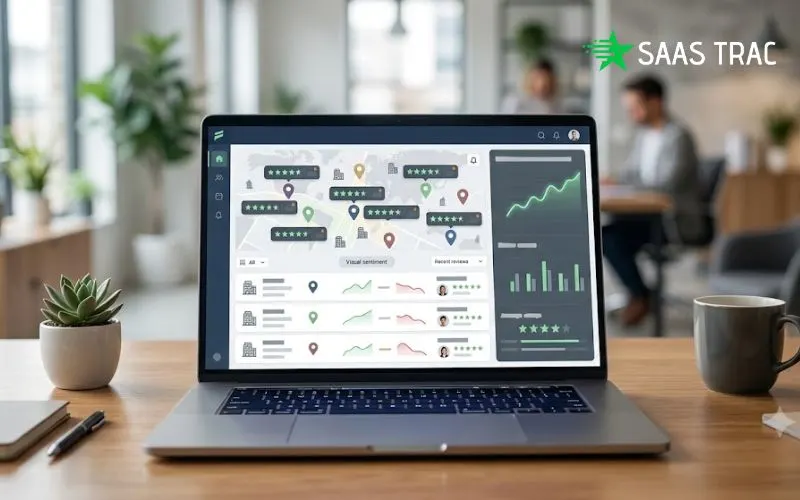
Your star rating drops overnight, and you don’t even know which location caused it. That’s the reality for multi-location brands without the best online reputation management software keeping watch. Managing reviews across dozens of platforms at once, responding fast enough to prevent damage, and keeping a steady flow of authentic feedback is genuinely hard to do manually. After reviewing platforms across industries, the tools that actually work share a few things: smart automation, real-time alerts, and AI that saves hours. This guide covers the five strongest options available right now.
The vetting process for this list
Each platform on this list was examined through publicly available information gathered from official websites, user review platforms, and documented case studies. Only tools with a track record of performing in the SaaS and multi-location space made the cut. The research leaned on feature documentation, verified user comments, and real-world deployment examples.
→ See the full research breakdown
- Reviewly AI – Best for multi-location businesses and agencies requiring Google review management
- MagicReview – Best for review collection and reputation management
- Repmanager – Best for multi-location reputation management
- Reputation – Best for enterprise reputation and customer experience management
- Rayyan – Best for systematic literature reviews and academic research collaboration
The Difference the Right Online Reputation Management Software Makes
Picking the wrong tool in this space doesn’t just slow you down. It leaves you blind to reputation issues that are already costing you customers. Managing reviews across dozens of platforms without missing a single signal requires infrastructure that most manual processes simply can’t support. Responding to negative reviews fast enough to actually prevent damage means you need automation working in the background, not someone checking dashboards once a day.
The right software changes your average star rating across all platforms because it keeps feedback flowing consistently. It improves your review response rate and average response time because intelligent workflows replace slow manual processes. And it generates net new review volume per month because automated outreach reaches customers at exactly the right moment.
The 5 Best Online Reputation Management Software: Quick Comparison
Note: All data in this table is sourced from review platforms and the official websites of the listed companies.
| Company Name | Years Operating | Headquartered In |
| Reviewly.ai | Est. 2022 | Phoenix, Arizona |
| MagicReview | Est. 2020 | Not disclosed |
| Repmanager | Est. 2024 | Netherlands |
| Reputation | Est. 2006 | San Ramon, California |
| Rayyan | Est. 2020 | Cambridge, MA |
-
Reviewly AI – Best for Multi-Location Businesses and Agencies Requiring Google Review Management
What Is Reviewly.ai’s Main Function?
Reviewly.ai is a Google review management platform built to automate both the collection and response side of reputation management. The platform launched the industry’s first SMS review generation system, which operates in 100+ countries, pairing that reach with AI-driven sentiment detection to read how customers feel before suggesting personalized review language. Businesses can capture feedback instantly through QR codes, NFC tags, and Review Plates, making the whole process feel natural. Clients like Jersey Mike’s and JW Marriott are already running on it.
What’s Reviewly.ai’s Edge in Online Reputation Management Software?
Reviewly.ai solves the scale problem that breaks most multi-location review strategies, particularly the gap between wanting consistent reviews across every branch and actually getting them without a manual follow-up process. The combination of SMS outreach in 100+ countries with white-label agency support is genuinely rare and hard to match in this category.
From the User Reviews:
Reviewly.ai is known for its practical approach to automating what used to be a time-intensive process. The white-label capability gets particular attention from agencies looking to build recurring revenue without building a platform from scratch. The breadth of collection methods, from QR codes to NFC tags, is honestly what keeps users from outgrowing the platform quickly.
-
MagicReview – Best for Review Collection and Reputation Management
What Is MagicReview’s Main Function?
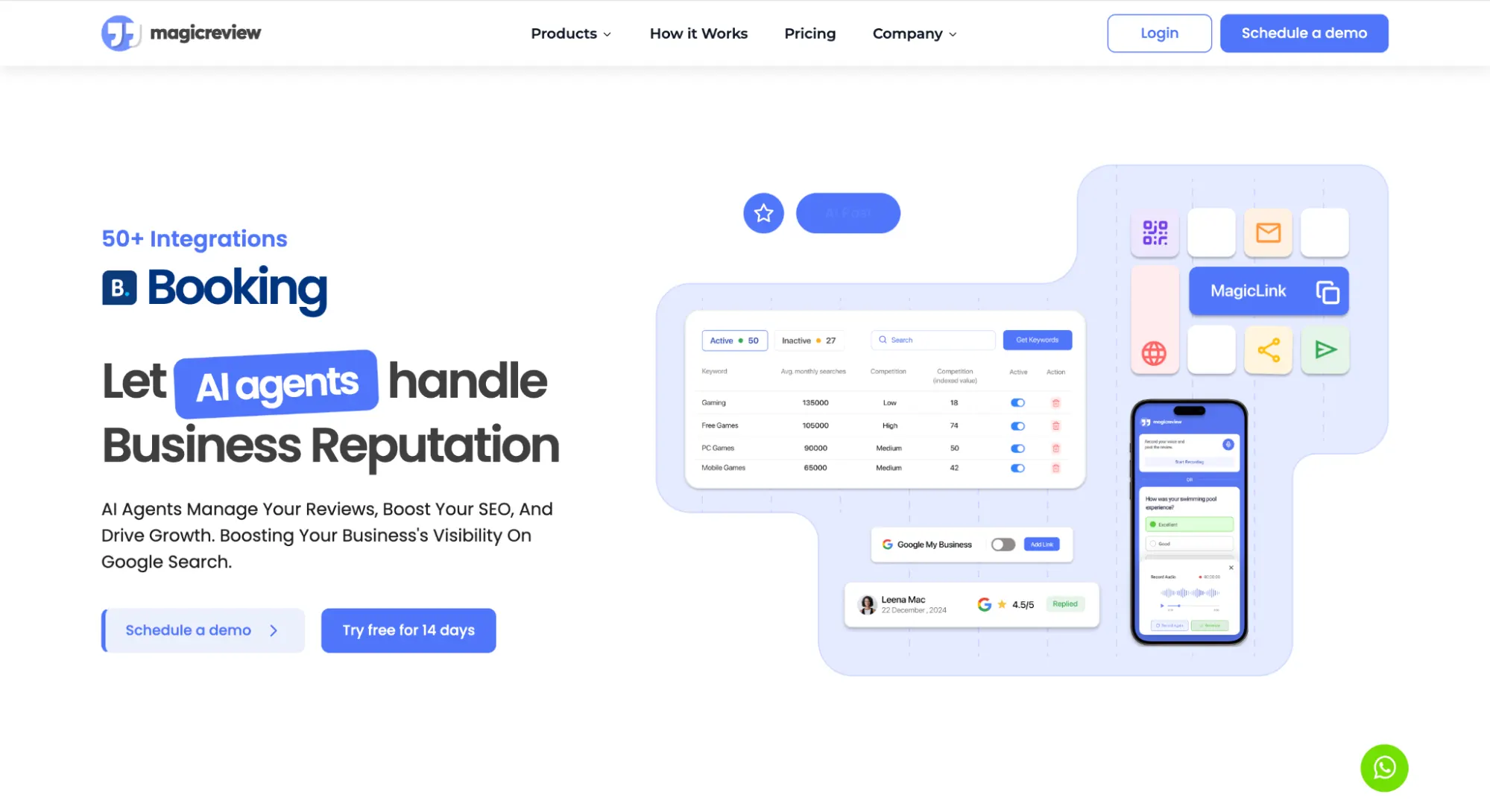
MagicReview is a review collection platform that uses AI and QR codes to separate positive feedback from constructive criticism before either one goes anywhere public. The smart routing sends glowing reviews toward public posting while directing negative feedback into a private form for the business owner. The AI layer also generates SEO-friendly review suggestions, which means customers who want to leave a review but don’t know what to write get a helpful nudge. It currently serves 30+ businesses across different industries.
What’s MagicReview’s Edge in Online Reputation Management Software?
MagicReview addresses the awkward gap between collecting honest feedback and controlling what actually surfaces publicly, a challenge that catches many small businesses off guard. That kind of smart routing is a practical answer for brands that want authentic reviews without boosting negative sentiment before it can be addressed internally.
From the User Reviews:
MagicReview is described as a functional and accessible option for businesses that want results without a steep learning curve. The AI-generated suggestions for customers are a standout detail that others in this category tend to skip. The 30+ business count is modest, but the satisfaction among early adopters appears genuine.
-
Repmanager – Best for Multi-Location Reputation Management
What Is Repmanager’s Main Function?
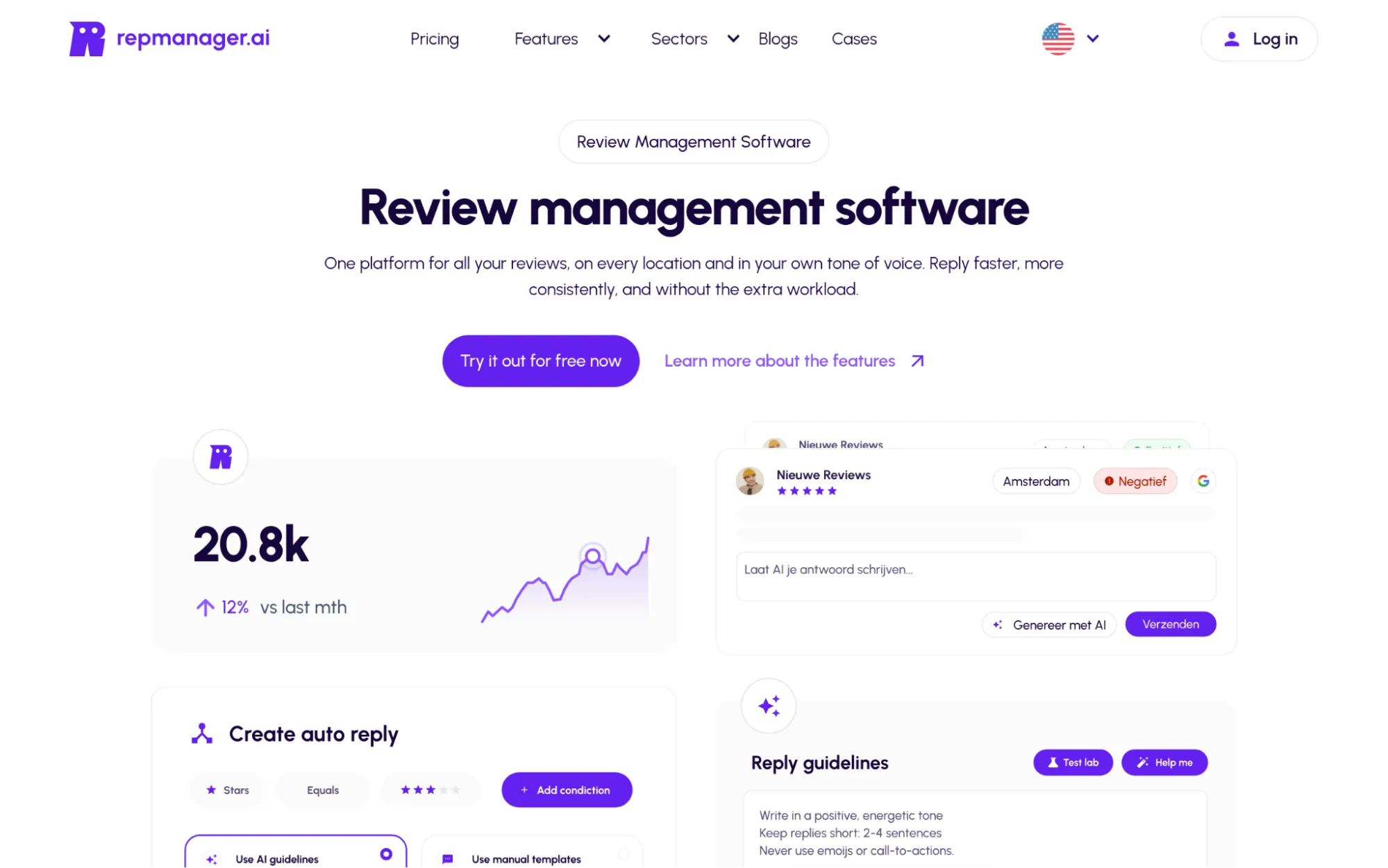
Repmanager is a Google review management platform built for businesses running multiple locations, with everything funneled into one dashboard. Franchises, retail chains, automotive dealers, and hospitality brands are the sweet spot here. The AI handles sentiment analysis and generates personalized response suggestions, but it keeps the human in the loop rather than fully automating responses. Teams can send review invitations through email, WhatsApp, or QR codes, and pricing starts at just $10/month (seriously approachable for a multi-location tool).
What’s Repmanager’s Edge in Online Reputation Management Software?
Repmanager addresses the specific frustration of franchise operators who are juggling separate dashboards for every location and losing track of sentiment patterns across the business. The ability to train custom AI models on your own brand voice is a detail that matters more at scale, and that kind of flexibility is rare at this price point.
From the User Reviews:
Beta users rated Repmanager 4.8 out of 5 stars, which is a strong signal for a platform that launched in 2024. The simplicity of the dashboard and the quality of AI response suggestions get the most consistent praise. Case studies from real businesses like Van de Hare Barbers confirm that the platform works outside controlled conditions.
-
Reputation – Best for Enterprise Reputation and Customer Experience Management
What Is Reputation’s Main Function?
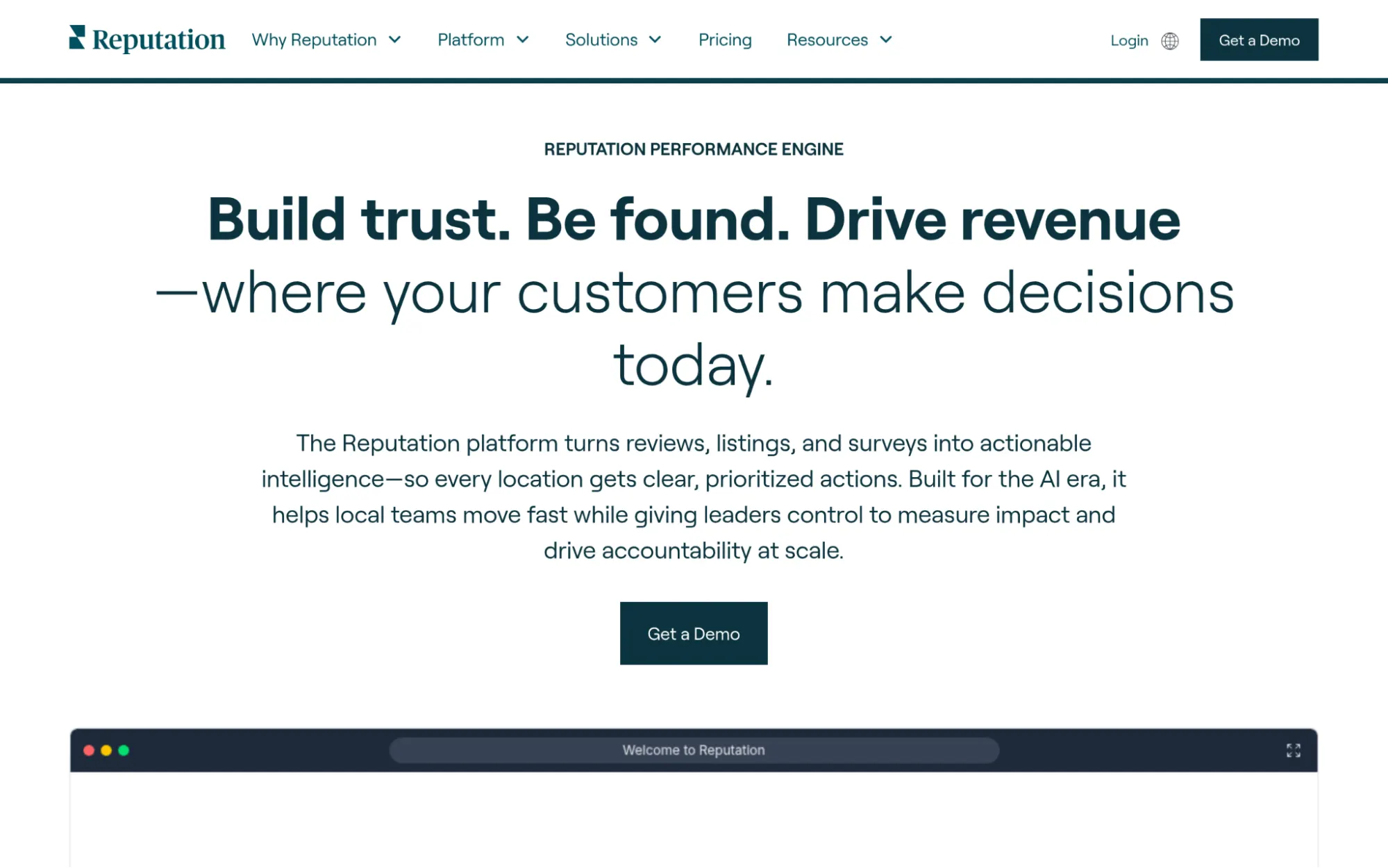
Reputation is a full-scale B2B SaaS platform covering everything from review monitoring and social media tracking to customer surveys and operational feedback loops. They work across 77 industries and serve roughly 750 enterprise customers, including Banner Health, BMW, Ford Motor Company, and General Motors. The platform ranked #1 in 26 G2 reports and has earned placement in both Gartner’s Magic Quadrant and the Forrester Wave for Customer Feedback Management (that’s enterprise-tier recognition). With a team of 716 people and operations since 2006, they carry a lot of depth in this space.
What’s Reputation’s Edge in Online Reputation Management Software?
Reputation solves the challenge that enterprise brands face when reputation management needs to connect directly to operational decisions, not just sit in a marketing dashboard. That kind of cross-department connection is what separates enterprise-grade tools from everything else on this list.
From the User Reviews:
Enterprise users consistently point to Reputation’s breadth as its defining strength. The platform’s analyst recognition from Gartner and Forrester shows up frequently in reviews as a trust signal, and it clearly appeals to buyers at large organizations. For a brand managing thousands of locations, the depth here is genuinely hard to replicate elsewhere.
-
Rayyan – Best for Systematic Literature Reviews and Academic Research Collaboration
What Is Rayyan’s Main Function?
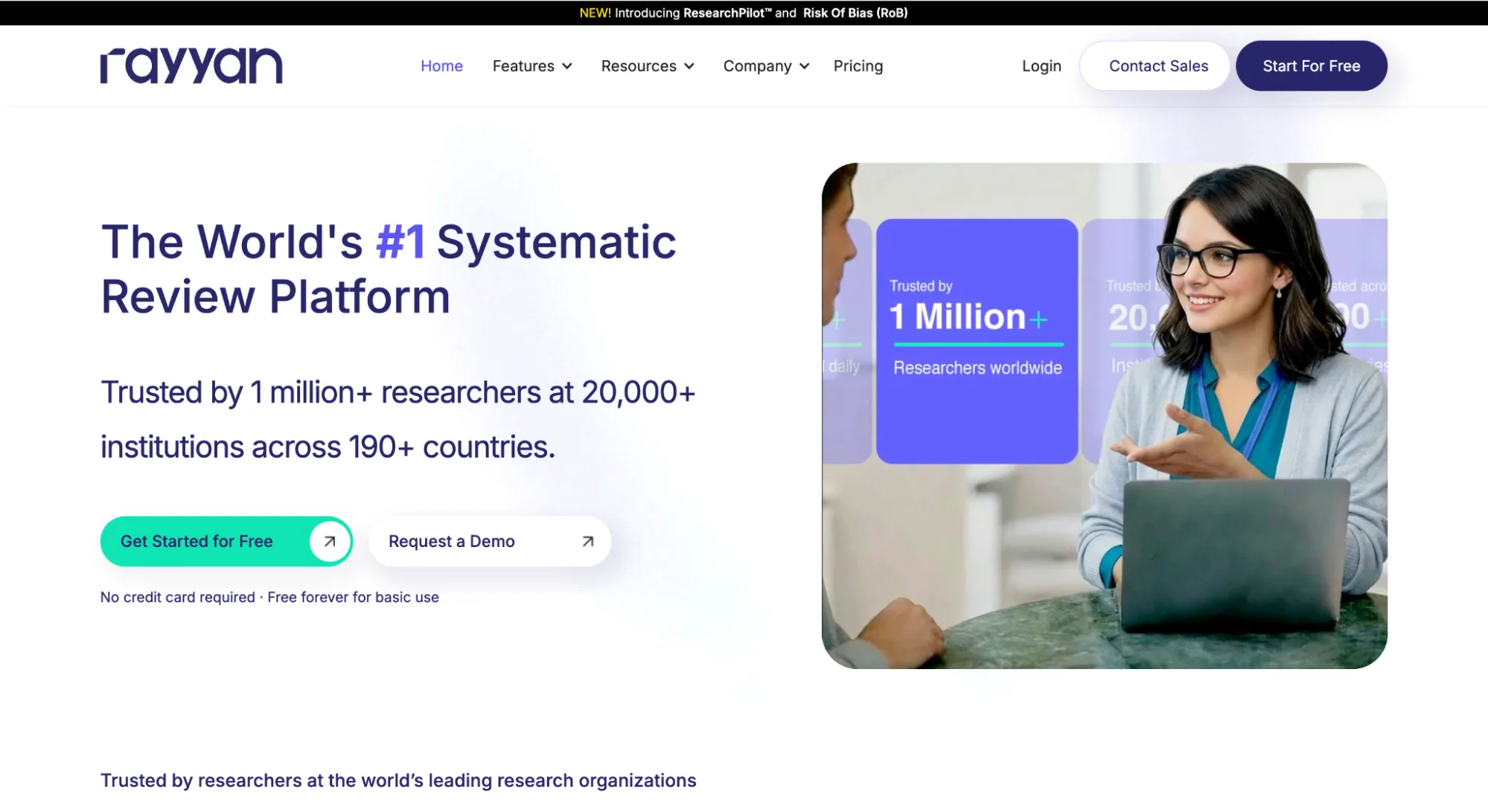
Rayyan is a SaaS research platform built around natural language processing and machine learning, designed to make systematic literature reviews faster and more accurate. Over 300,000 researchers across 180 countries use it to screen more than 700 million research articles, and the platform claims up to 90% reduction in screening time. Features like PICO extraction and advanced deduplication make it a specialized tool for academic and clinical research teams. The freemium model keeps the barrier to entry low while paid tiers open up the advanced capabilities.
What’s Rayyan’s Edge in Online Reputation Management Software?
Rayyan approaches the research collaboration space differently, focusing on removing the manual bottleneck that slows down systematic reviews rather than simply digitizing existing workflows. Reaching $5M in revenue in 2024 with a freemium model is a real sign of product-market fit that most SaaS tools in niche categories never achieve.
From the User Reviews:
Academic researchers and teams, including Cochrane Reviews authors, highlight how little training Rayyan requires before teams can contribute meaningfully. The interface adapts to how researchers already work rather than forcing a new process, and that flexibility gets mentioned consistently across reviews. That kind of user-first design is genuinely rare in research tooling.
The Process Behind This Ranking
Building a list like this required more than a quick scan of company websites. A structured research process was used across several distinct phases to make sure every platform included had the substance to back up its placement.
What Data Must Be Collected First
The process began by casting a wide net across software directories, review aggregators, industry forums, and SaaS-focused publications. Potential candidates were pulled from multiple sources, not just the obvious ones, so that smaller but genuinely strong platforms had a fair chance of appearing alongside more established names. Each tool was noted alongside its main focus area, target customer profile, and any documented use cases. That initial longlist gave a foundation to work from before any filtering began.
Pre-Verification Phase
Once the longlist was assembled, options that lacked sufficient public documentation were set aside. Platforms with no verifiable user reviews, no documented case studies, or no clear evidence of active deployment were removed at this stage. Review patterns across platforms like G2 and similar aggregators were examined to detect inconsistencies or gaps that might signal a platform hadn’t been tested in real-world conditions at a meaningful scale.
The Verification Phase
Each remaining company’s site claims were checked against what actual users reported. Where a platform claimed to reduce manual review management time, that claim was weighed against user commentary describing the actual day-to-day experience. Real-world results documented in case studies were given more weight than marketing copy, and discrepancies between stated capabilities and user-reported outcomes were flagged during this phase.
Tracking Authority Markers
Authority signals were gathered for each platform, covering industry awards, inclusion in analyst reports, and mentions across recognized publications covering SaaS, marketing technology, and reputation management. Platforms that appeared consistently across multiple credible sources were ranked with greater confidence. First-party research or proprietary data published by a company also carries weight, since it signals investment in the category beyond product development alone.
Online Reputation Management Software Proof Points
The final phase focused on evidence tied to the online reputation management space. Each platform was assessed for dedicated service pages that addressed the actual problems multi-location brands face, verified reviews from businesses in relevant industries, and case studies showing measurable outcomes. Platforms that demonstrated specific results, whether in net new review volume, improved response rates, or star rating improvements, earned higher confidence scores. This phase separates tools with genuine depth in the category from those that touched reputation management only as an additional feature.
How to Pick Your Best Match
Choosing the right online reputation management software comes down to matching the platform’s actual strengths to your specific situation. A single-location café and a 200-location franchise have very different needs, and the platforms on this list reflect that range. Here are five things worth thinking through before you commit.
- Industry/Domain Experience: Look at whether the platform has documented results in your type of business. Multi-location brands need tools built with location-level reporting in mind, not just general review monitoring.
- Features and Service Options: Take stock of what you actually need: SMS outreach, QR code collection, AI response generation, white-label options. Don’t pay for features you’ll never use, but don’t underestimate what you’ll need at scale either.
- Pricing Structure: Check whether pricing scales per location or per user. A $10/month entry point sounds great until it multiplies across 50 branches. Model out what the real monthly cost looks like at your current size and your target size.
- Results Measurement: Ask how the platform reports on improvements to your average star rating, review response rate, and net new review volume. If there’s no clear reporting layer, measuring results becomes guesswork.
- Industry Knowledge and Compliance: For businesses in healthcare, legal, or other restricted review solicitation categories, make sure the platform handles FTC review guidelines and platform terms of service without putting you at risk.
Closing Thoughts
The best online reputation management software for your brand depends on where you are right now and where you’re headed. Agencies and multi-location businesses leaning on automation will find strong options here, from entry-level tools like Repmanager to enterprise-grade platforms like Reputation. What the data consistently shows is that faster review acquisition, tighter response workflows, and consistent star ratings across locations are the outcomes that actually move the business forward. That gap between brands that manage this well and those that don’t is only getting wider.