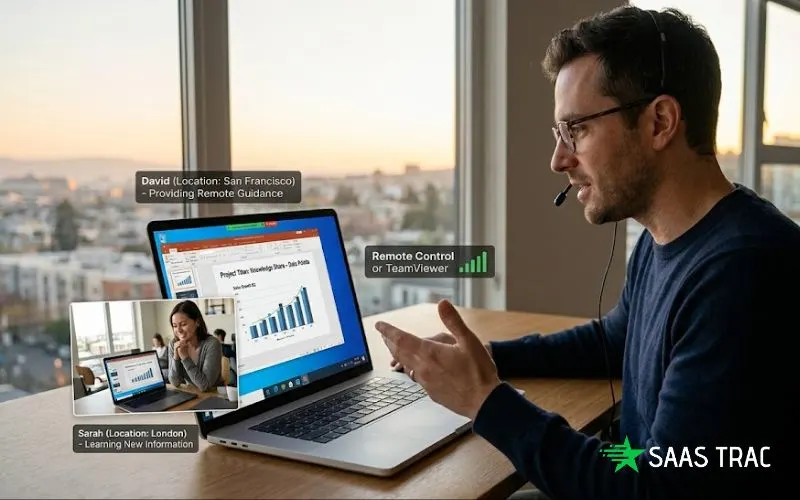
In this new era defined by a distributed workforce and complex digital infrastructures, the capability to manage systems remotely is no longer a maven luxury; it is a fundamental requirement. To bridge the gap between their management consoles and end-user devices, IT administrators need powerful, secure, and reliable tools to troubleshoot and maintain devices anywhere in the world.
IT administrators are tasked with ensuring that systems remain available, secure, and running for a growingly distributed base of users and devices. The tools they choose for remote access software for IT administrators have a direct impact on how effectively they can support users, manage endpoints, and respond to issues without requiring physical presence. This guide covers seven tools that belong on any serious evaluation shortlist.
Splashtop
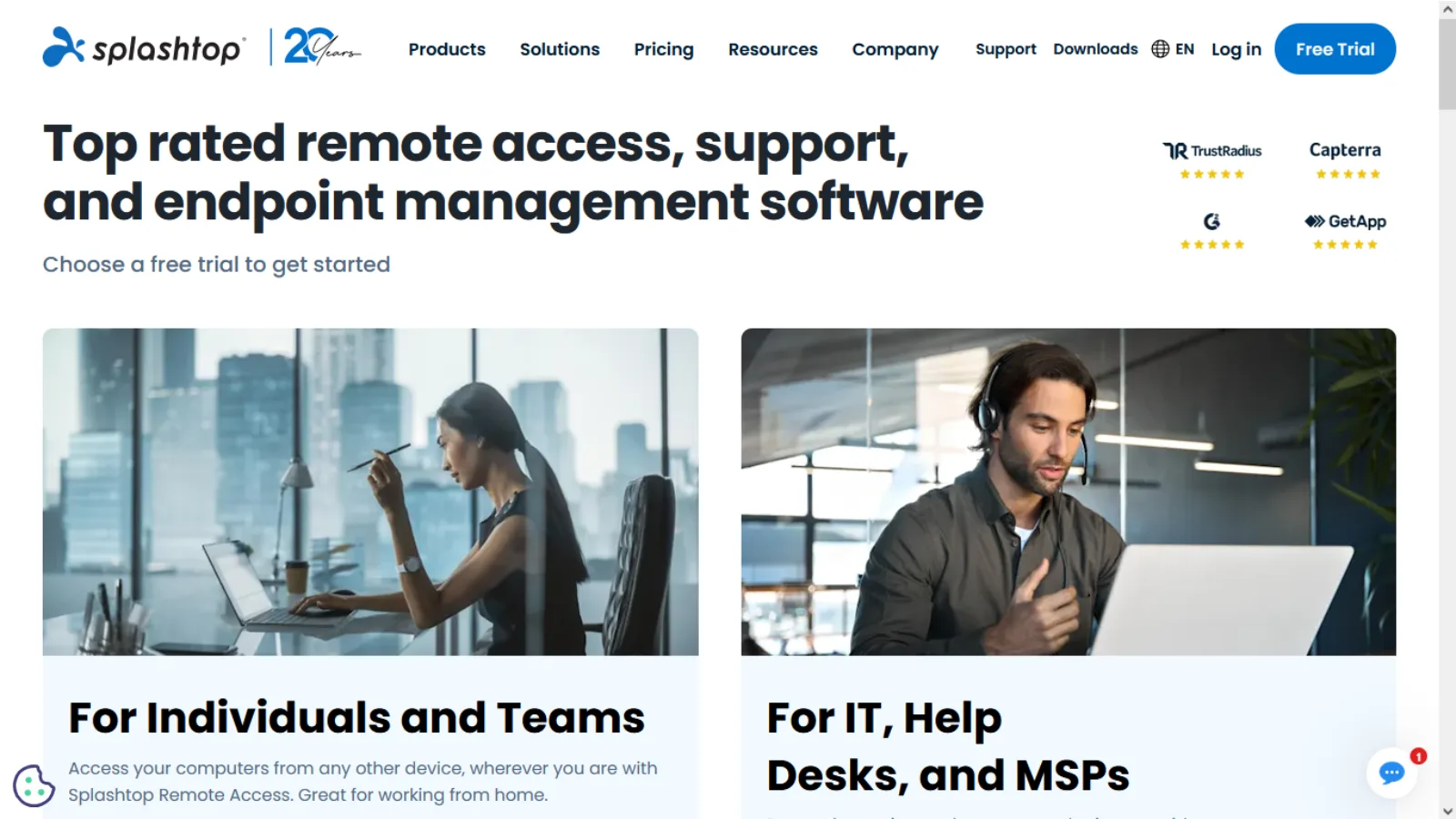
Splashtop is designed specifically for access scenarios that IT admins face every day. Across Windows, Mac, Linux, iOS, and Android, it supports both attended and unattended remote access – a feature set far richer than basic screen sharing! It is commonly used by IT teams for managing endpoints, remote support, file transfers, and session recording. With role-based access controls, multi-factor authentication, and audit logging for compliance, the platform provides administrators with the visibility and control their environments need.
What sets Splashtop apart in the space of IT administration is a mix of execution and authoritative profundity. To address this, session quality is high despite fluctuations in network conditions, and the management console provides an overview of active connections, user rights, and device inventory. Splashtop’s cross-platform reach squelches many of the compatibility headaches that infect more narrowly focused solutions for teams managing mixed device fleets across one or more locations.
Splashtop has scalable plans for various organization sizes, from small IT teams supporting a single office to MSPs managing geographically dispersed client environments. Transparent pricing on a subscription basis, and the available unattended access uses allow administrators to maintain devices via additional management utilities at times when schedules won’t be disrupted by updates or maintenance.
NinjaOne Remote
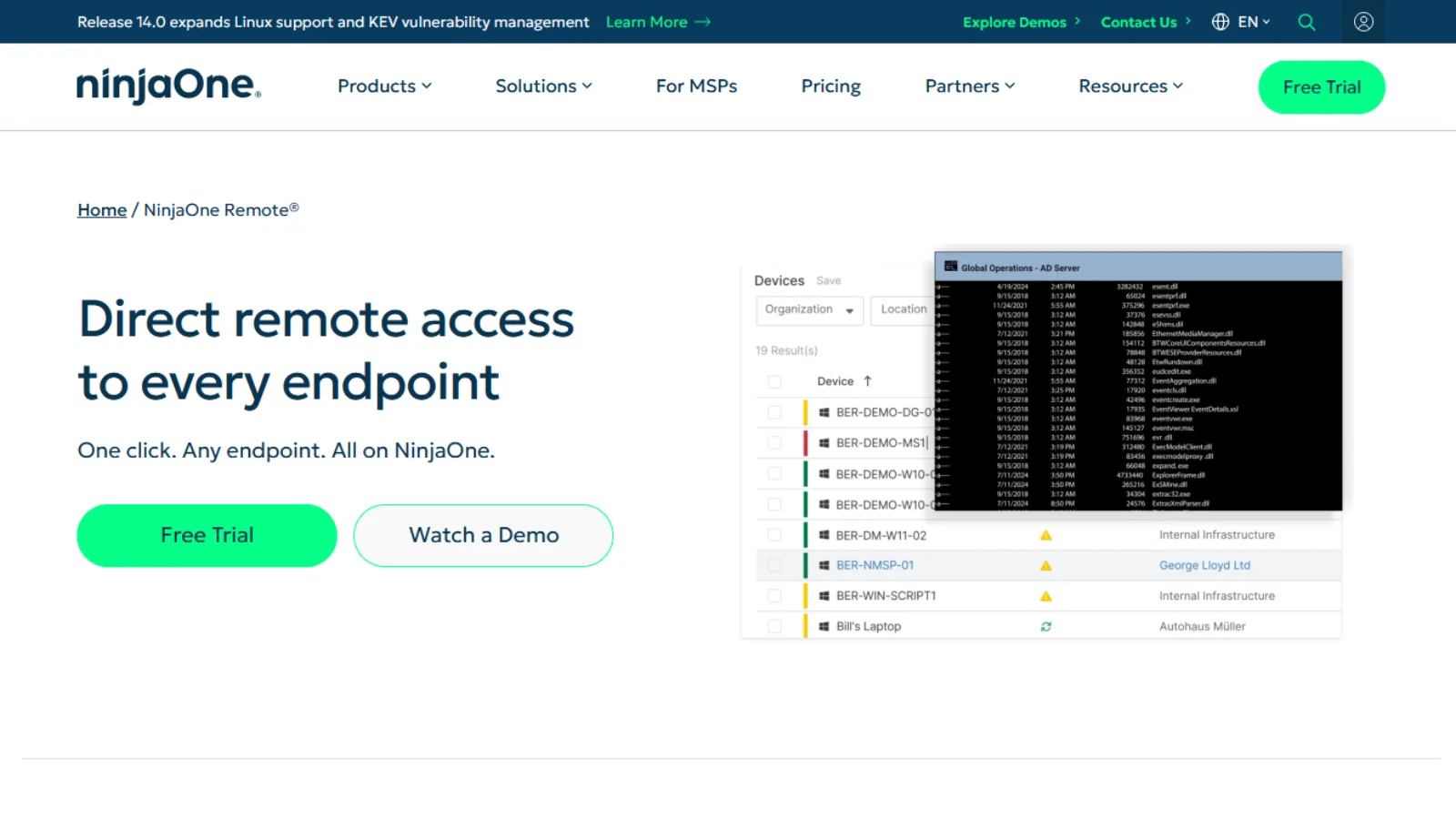
NinjaOne Remote is a remote access element embedded directly into the endpoint management platform. This means that for IT administrators already using NinjaOne’s RMM or PSA tools, this is an obvious pairing; access initiation is one-click from the management console with all records of every session flowing into the same reporting and ticketing environment.
It provides speedy, reliable connections in both Windows and macOS environments, and various diagnostic toolsets that surface device information, event logs, and running processes while an active session is underway. The consolidated workflow would make life easy for administrators who must resolve problems quickly, without having to flip between applications. For teams not already in the NinjaOne ecosystem, leveraging the platform for just remote access might be somewhat of an over-investment, and as a result probably more effort than required to implement; but for existing users, this is easy!
ConnectWise ScreenConnect
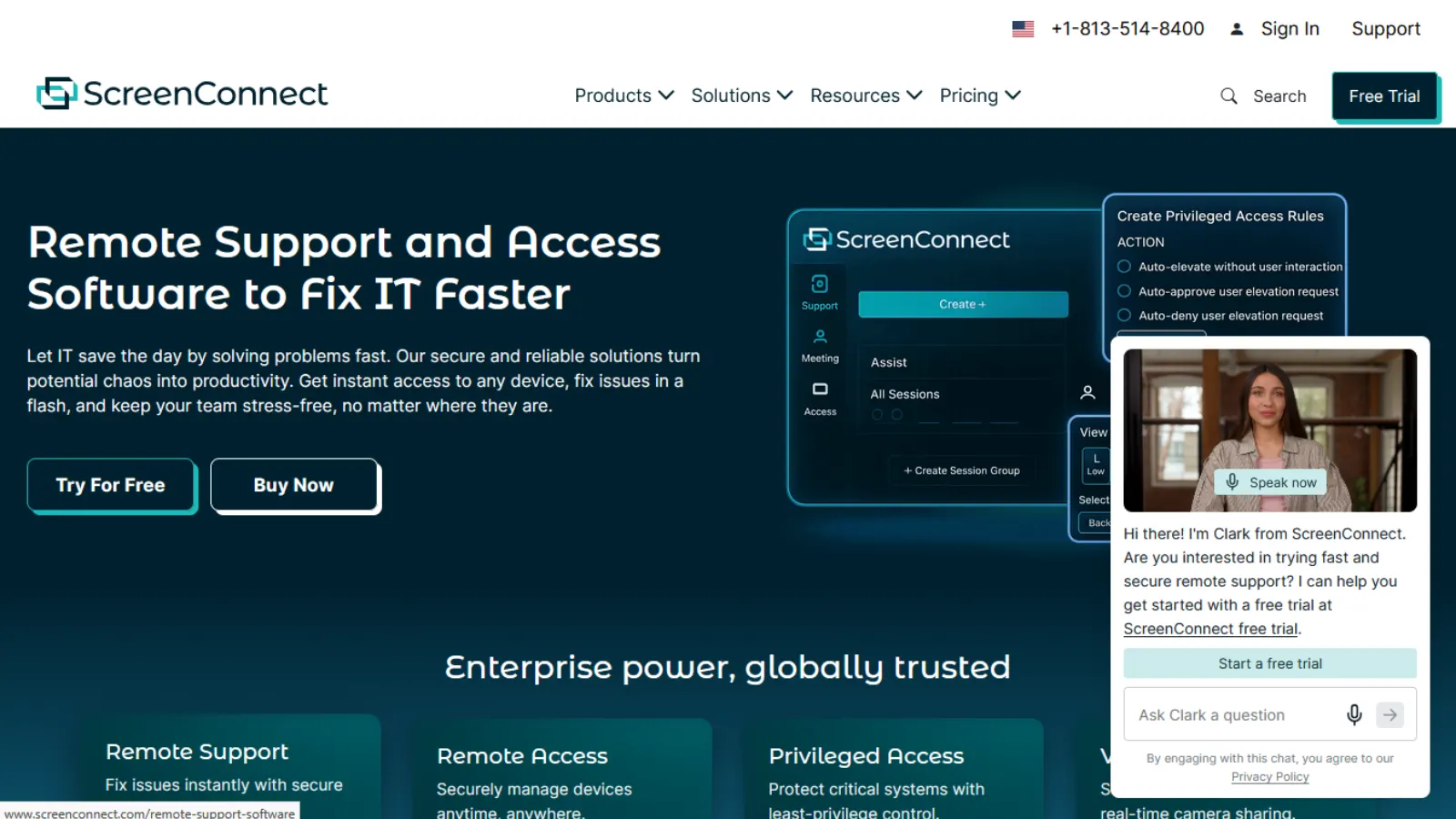
ScreenConnect has been in the IT service game for a long time now, especially among MSPs and internal helpdesk teams dealing with high session traffic. The concurrent session licensing model is also useful for organizations where multiple technicians may work in parallel on different devices belonging to several clients. Well, the white-label branding option is what lures IT service providers to use it in order to showcase remote support tools under their own brand name.
Utilizes Windows, macOS, Linux and Android endpoints for both attended and unattended access and integrates with ConnectWise’s full portfolio of PSA and automation products. ScreenConnect integrates seamlessly into the existing workflows of organizations already running the ConnectWise stack. Outside of the integration story, it is much less attractive, but licensing has also become increasingly expensive over recent years, so probably worth including in total cost of ownership assessments.
Dameware Remote Everywhere
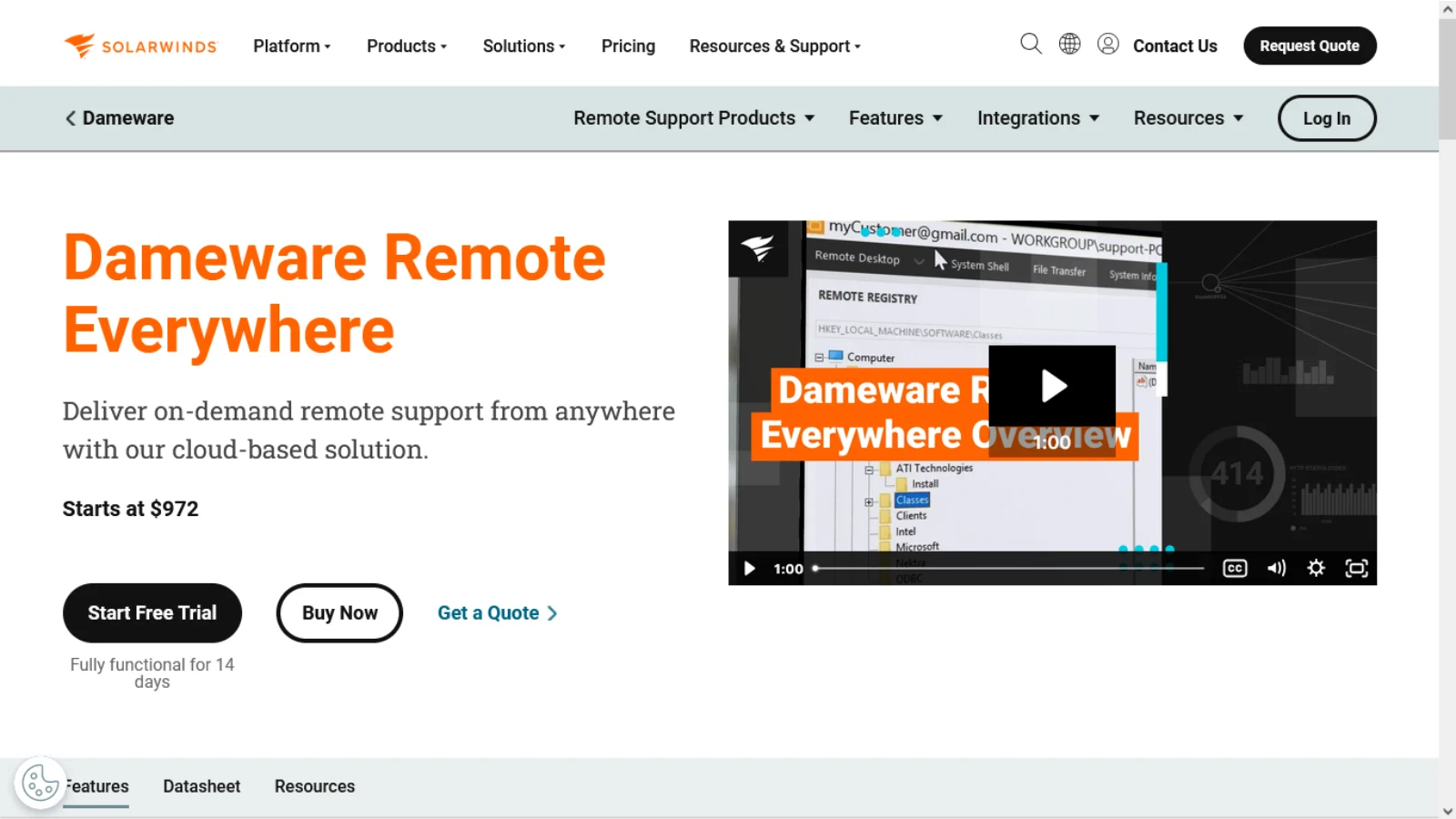
Dameware Remote Everywhere, from SolarWinds, is a cloud-based remote support platform built for IT administrators who need attended and unattended access across Windows, macOS, and Linux endpoints. Technicians can pull device event logs, running processes, and system diagnostics directly within a session, cutting down on the need to switch between separate diagnostic tools mid-troubleshoot.
The platform includes role-based access controls and centralized reporting so IT leadership can track technician activity across the team. For organizations already using other SolarWinds products for network or infrastructure monitoring, Dameware Remote Everywhere fits naturally into that existing toolset; for those outside the SolarWinds ecosystem, it still functions as a capable standalone option, just without the added integration benefit.
RemotePC
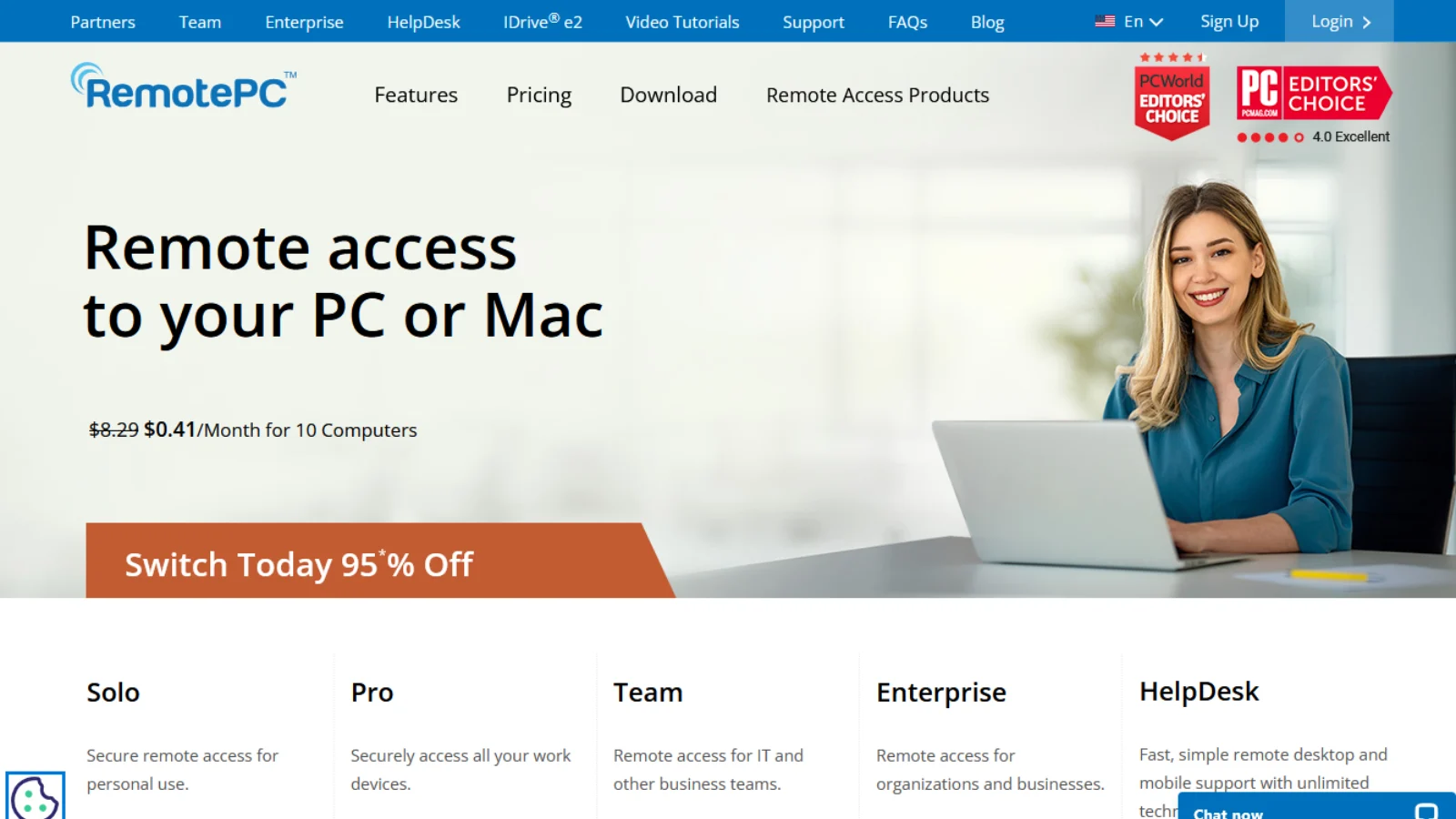
RemotePC provides an excellent mix of features and price, making it a good option for IT departments that are on a tight budget. It is available on Windows, macOS, and Linux as well as mobile platforms and comes standard with file transfer, remote printing, always-on access, and session recording. The device-count pricing model is built around costs per device rather than per technician, which drives significant savings on larger deployments.
On a Windows-to-Windows connection, performance is usually very decent, and its configuration is simple enough that there is no need for a lot of technical preparation to get deployed. If you are an IT administrator with remote or hybrid workers and need a platform that focuses on essential strategy minus the extra features and expense of heavier packaged solutions, then RemotePC is for you.
NIST’s enterprise cybersecurity framework helps IT admins assess how tools such as remote access platforms align with the overall security posture of an organization. Using that framework during tool selection can ensure access controls, authentication requirements, and monitoring capabilities are factored in along with features and pricing.
AnyViewer
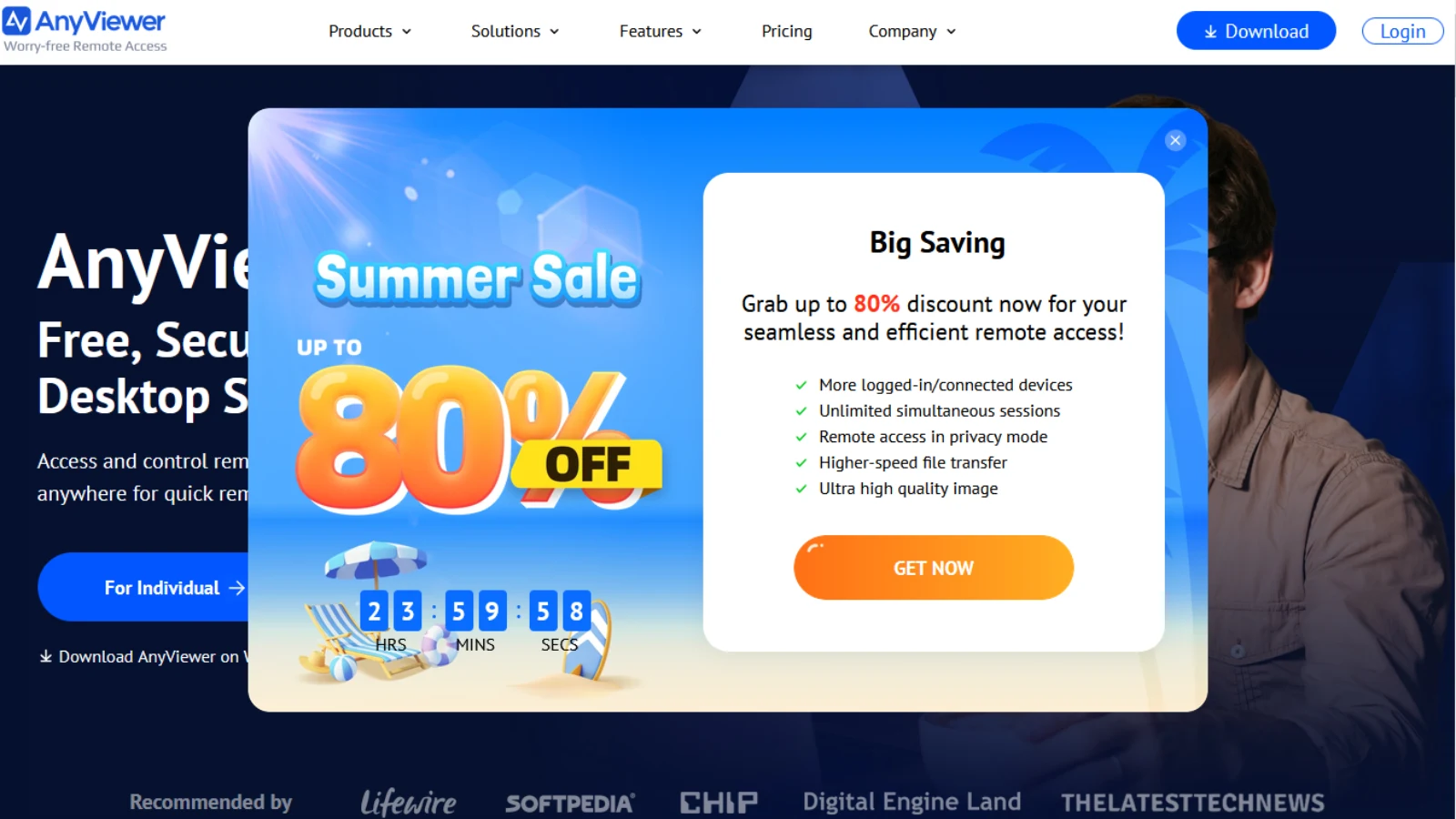
AnyViewer is a freeware remote access and support tool, offering both free and premium licenses. Supports Windows and iOS, this covers the core remote control and file transfer use cases a one-tech plus extremely small team may require. The free level is fine for casual use, and the paid tiers provide unattended access plus multi-session capability.
AnyViewer is also probably not quite deep enough on device platform support and features for IT admins in larger environments. It does not support centralized management, audit logging, or enterprise-level authentication integrations needed for professional IT operations. At the very least, it is useful as a lightweight backup or where teams are just starting to formalise their remote access strategy.
TsPlus
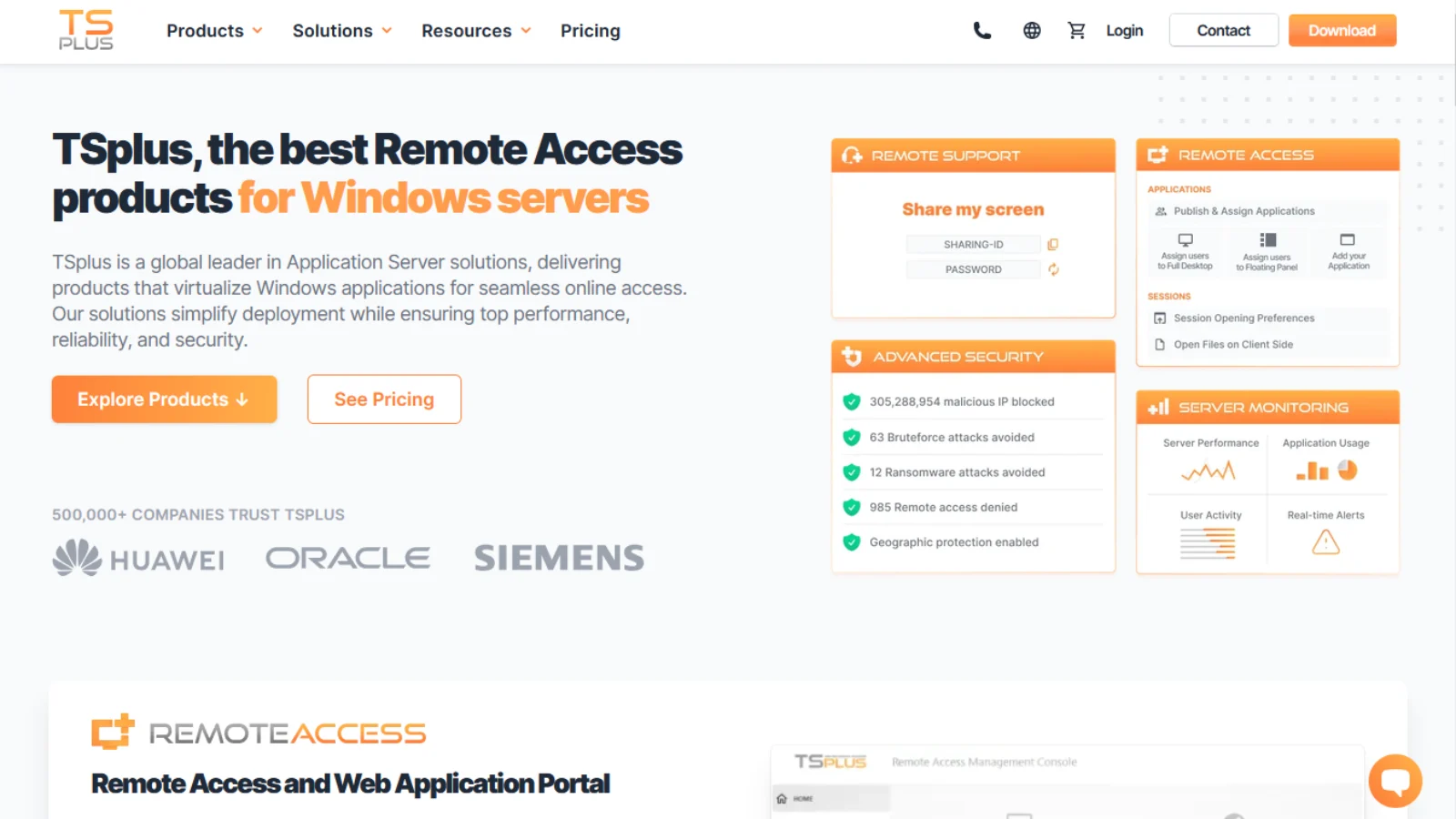
TsPlus is focused on Internet delivery of Windows applications and desktops throughout the cloud or on-premises to remote users. TsPlus is worth a look if you’re in an org with legacy Windows applications that need to be accessible remotely but can’t be rebuilt as web- or SaaS-based tools. It offers session-based access, file transfer and two-factor authentication, and is marketed as a low-cost alternative to Citrix for Windows-centric publishing scenarios.
IT administrators who are considering TsPlus must clearly know what they want to do with it. Unlike the other platforms in this list, it is not a general-purpose remote desktop tool for IT support workflows. It is valuable in certain Windows application delivery scenarios, but organizations needing greater flexibility will find it within other remote access platforms.
Authentication and Access Management Considerations
Regardless of which platform an IT team selects, ensuring that access is governed by strong authentication and least-privilege controls is non-negotiable. NIST’s resources on digital identity standards outline the frameworks and guidelines that organizations can apply to authentication design, identity proofing, and access lifecycle management. These are directly applicable to how IT administrators configure and restrict remote access to sensitive endpoints.
Any tool that moves into production should have, at a minimum, multi-factor authentication enabled. Administrative controls include everything from supporting session logging to role separation between standard users and IT technicians to defining offboarding processes that ensure access is revoked in the event of a personnel change.
Frequently Asked Questions
Well, what are the key features that IT administrators will prioritize when selecting a remote access tool?
You base yours on security controls: multi-factor authentication, end-to-end encryption, session logging and role-based access controls. Administrators should then weigh support for cross-platform devices, whether the solution provides unattended access (so they can fix problems after hours), and how robust the management console is when monitoring all active connections. The tool’s pricing structure and scalability with device count are key for planning your budget, as well.
What is unattended access in a remote access tool and how does it differ from attended access?
Attended access is when you have someone at the remote device there to take the connection or initiate it, often seen in user support cases. Unattended access implies that our administrator needs to connect with a device without any user intervention, as in the case of managing servers, performing scheduled maintenance, patch deployment, and accessing endpoints outside of normal business hours. Most tools designed for IT administration have support for both modes, but the degree of control and security configuration is highly platform-dependent.
Do IT admins need separate tools for remote support and remote monitoring?
The depth of DataOps depends upon several factors, including the size and complexity of an organization. A single solution for remote access and simple endpoint monitoring can be beneficial for smaller IT teams. For larger environments where dedicated NOC or SOC functions exist, some purpose-built tools designed exclusively for each function that integrate through APIs or shared ticketing systems may be required. The trick is to prevent tool sprawl; the overhead of managing disjointed tools far too often impairs rather than enhances operating efficiency.