
Manufacturing has become smarter than ever, but it has also become more vulnerable. Modern factories rely on automated production lines, robotics, Industrial IoT (IIoT), and connected machinery to maximize efficiency. While these technologies improve output, they also make operations more sensitive to disruptions. A single security incident, equipment failure, or unauthorized entry can halt production, delay deliveries, and result in significant financial losses.
The numbers highlight the seriousness of the problem. According to industry estimates, unplanned downtime costs industrial manufacturers an estimated $50 billion every year, while equipment failures account for nearly 42% of this downtime. For large manufacturers, even one hour of unexpected production stoppage can cost tens or hundreds of thousands of dollars, depending on the industry. These disruptions don’t just affect revenue—they also impact customer satisfaction, supply chain commitments, and regulatory compliance.
Traditional security systems simply record incidents after they occur. AI-powered security systems take a proactive approach by detecting risks in real time, identifying unusual activity, and alerting teams before small issues become expensive production problems.
In this article, you’ll learn how intelligent manufacturing security solutions are helping manufacturers reduce downtime, improve operational efficiency, strengthen workplace safety, and protect critical assets across modern production facilities.
1. AI Detects Problems Before They Stop Production
One of the biggest advantages of AI-powered manufacturing security is its ability to identify abnormal activity before it develops into a costly disruption.
Traditional surveillance relies on security personnel watching dozens of camera feeds simultaneously—a nearly impossible task in large manufacturing plants. AI continuously analyzes video streams, recognizes unusual behavior, and sends instant alerts whenever predefined risks appear.
For example, AI can detect:
- Unauthorized personnel entering restricted production areas
- Vehicles entering loading docks outside scheduled hours
- Workers remaining in hazardous zones longer than expected
- Equipment blocking emergency exits
- Suspicious movement around expensive machinery
Instead of discovering these issues after production has stopped, supervisors receive immediate notifications that allow them to intervene quickly.
Imagine a warehouse employee accidentally parking a forklift in front of an emergency electrical panel. Without AI, this issue might remain unnoticed until maintenance teams need emergency access. AI can recognize the obstruction immediately, reducing response time and preventing unnecessary delays.
This proactive monitoring significantly reduces operational interruptions while improving workplace safety.
2. Intelligent Manufacturing Security Solutions Provide Real-Time Visibility
Modern manufacturing security solutions are no longer limited to recording footage. They combine AI, cloud technology, and automation to give operations teams complete visibility across production facilities.
Platforms such as Coram demonstrate how manufacturers can modernize security without replacing existing infrastructure. According to its manufacturing solution, Coram works with existing IP cameras and provides a centralized cloud dashboard for monitoring multiple facilities. Its AI capabilities include real-time threat detection, license plate recognition, facial recognition, floor plan mapping, automated alerts, and natural-language video search that allows teams to find specific incidents across thousands of hours of footage within seconds. These capabilities help manufacturers investigate safety events faster while improving operational awareness across facilities.
Having centralized visibility allows manufacturers to:
- Respond to security incidents much faster
- Monitor multiple facilities from one interface
- Reduce manual video investigations
- Improve compliance monitoring
- Maintain consistent security standards across locations
For organizations operating several production plants, this level of visibility dramatically improves decision-making while minimizing operational downtime.
3. AI Improves Worker Safety and Reduces Production Interruptions
Worker safety directly impacts manufacturing productivity.
Every workplace accident can trigger production delays, equipment shutdowns, investigations, regulatory reporting, and financial losses. AI-powered security systems continuously monitor workplace activities and identify unsafe behaviors before accidents occur.
Instead of waiting for supervisors to notice violations, AI automatically identifies situations such as:
- Employees entering hazardous areas without authorization
- Unsafe movement around robotic equipment
- Vehicle-pedestrian conflicts
- Unauthorized access to chemical storage areas
- Safety rule violations in restricted production zones
Immediate alerts allow supervisors to intervene before a small safety issue escalates into a serious incident.
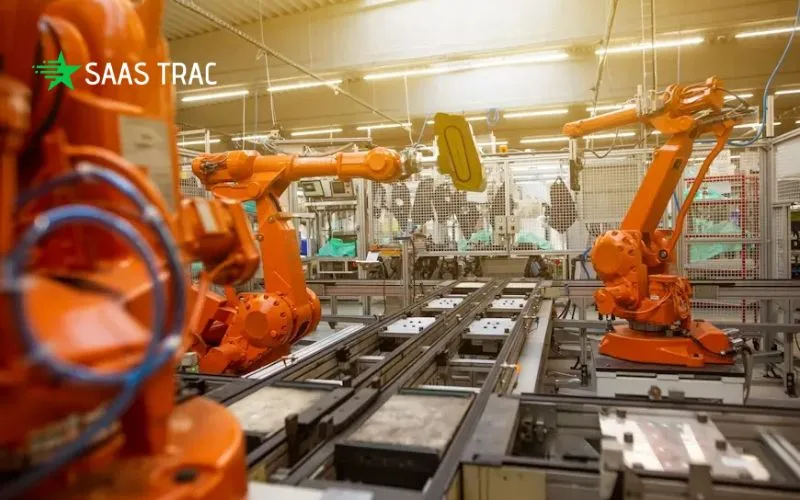
Consider an automotive manufacturing plant where heavy robotic arms operate continuously. If an employee accidentally enters a restricted robotic cell during operation, AI can detect the intrusion instantly, helping operators stop the process before an accident occurs.
Beyond protecting employees, preventing workplace incidents keeps production lines running efficiently while reducing unexpected downtime caused by investigations or equipment shutdowns.
4. Faster Incident Investigations Save Valuable Production Time
Investigating incidents has traditionally been one of the most time-consuming responsibilities for manufacturing security teams.
After an accident, theft, or operational disruption, security personnel often spend hours manually reviewing surveillance footage from multiple cameras to determine what happened.
AI dramatically changes this process.
Instead of scrolling through thousands of hours of recordings, intelligent systems can search video using simple descriptions or automatically identify relevant events.
This allows teams to quickly locate:
- Equipment misuse
- Unauthorized access
- Vehicle movements
- Employee activity
- Safety incidents
- Suspicious behavior
Faster investigations provide several operational benefits:
- Production resumes sooner.
- Maintenance teams identify root causes faster.
- Insurance claims become easier to support.
- Compliance documentation improves.
- Managers spend less time reviewing footage.
Rather than losing half a day investigating a single incident, AI enables manufacturers to resolve problems within minutes, reducing operational disruption and improving overall efficiency.
5. Predictive Monitoring Helps Prevent Equipment-Related Downtime
Equipment failures are one of the leading causes of unplanned downtime in manufacturing. While maintenance teams regularly inspect machinery, it’s nearly impossible to monitor every production area around the clock. AI-powered security systems add another layer of visibility by continuously analyzing activity around critical equipment.
Although AI security cameras don’t replace condition-monitoring sensors, they provide valuable operational intelligence by detecting situations that often lead to equipment problems. For example, AI can identify unauthorized personnel operating machinery, forklifts moving too close to expensive production equipment, blocked maintenance access points, or unusual activity around high-value assets outside normal operating hours.
By identifying these warning signs early, manufacturers can respond before operations are interrupted.
Some common issues AI can detect include:
- Unauthorized operation of production equipment
- Restricted maintenance areas being accessed without approval
- Vehicles or pallets blocking machinery or emergency exits
- Suspicious activity around expensive manufacturing assets
- After-hours movement in normally inactive production zones
Instead of reacting after production stops, operations teams gain the visibility needed to prevent avoidable disruptions. Over time, this proactive approach helps reduce emergency maintenance calls, improve equipment availability, and support more consistent production schedules.
6. Better Access Control Strengthens Both Security and Productivity
Manufacturing facilities are busy environments where employees, contractors, suppliers, and visitors move through different areas every day. Without proper access management, unauthorized entry can create safety hazards, interrupt production, and expose valuable equipment or intellectual property to unnecessary risks.
AI-powered security systems make access control far more intelligent than traditional badge-based systems alone. By combining surveillance with real-time analytics, manufacturers can verify who enters sensitive areas, monitor movement throughout the facility, and quickly identify unusual access patterns.
This level of visibility helps organizations:
- Protect production lines and restricted work areas
- Prevent unauthorized access to high-value inventory
- Monitor contractor and visitor activity
- Reduce insider security risks
- Improve compliance with workplace safety policies
For example, if a contractor attempts to enter a production zone outside approved working hours, AI can immediately alert security personnel. Instead of discovering the incident later during a manual review, the organization can respond in real time and avoid unnecessary operational disruptions.
As manufacturing facilities continue to automate operations, intelligent access management is becoming just as important as physical security.
7. AI Supports Continuous Improvement Across Manufacturing Operations
One of the biggest advantages of AI-powered manufacturing security is that it doesn’t simply help during emergencies—it also generates valuable operational insights over time.
Every alert, incident, and detected event creates data that manufacturers can analyze to identify recurring operational challenges. Instead of relying on assumptions, managers can use real security data to improve workflows, optimize staffing, and strengthen facility operations.
For example, AI analytics may reveal that:
- Certain loading docks experience repeated congestion during shift changes.
- Specific production areas generate frequent safety alerts.
- Unauthorized access attempts occur more often during overnight shifts.
- Equipment pathways are regularly blocked during deliveries.
- Certain facilities require additional supervision during peak production hours.
These insights allow manufacturers to make informed operational improvements rather than reacting only after problems occur.
Over time, this continuous feedback loop helps organizations reduce security incidents, improve workforce accountability, and create a safer, more efficient production environment. The result isn’t just better security—it’s smarter manufacturing operations with fewer interruptions and greater overall productivity.
Frequently Asked Questions
Can AI security systems completely eliminate manufacturing downtime?
No. Downtime can result from equipment failures, supply chain disruptions, maintenance issues, or unexpected events. However, AI significantly reduces downtime caused by security incidents, unauthorized access, delayed incident response, and workplace safety issues by identifying risks much earlier.
Do manufacturers need to replace their existing cameras?
Not necessarily. Many modern AI security platforms work with existing IP camera infrastructure, allowing manufacturers to upgrade their security capabilities without replacing their entire surveillance system.
How does AI improve workplace safety?
AI continuously monitors production areas and detects unsafe situations such as unauthorized entry into hazardous zones, blocked emergency exits, unusual activity around machinery, or restricted-area violations. Real-time alerts enable supervisors to respond before incidents escalate.
Is AI security useful for manufacturers with multiple facilities?
Yes. Cloud-based AI security platforms provide centralized visibility across multiple manufacturing sites, allowing security and operations teams to monitor facilities, investigate incidents, and maintain consistent security policies from a single dashboard.
Can AI help with compliance and investigations?
Yes. AI simplifies investigations by helping teams quickly locate relevant video footage and automatically documenting incidents. This supports internal investigations, insurance claims, safety audits, and regulatory compliance while saving significant time.
Conclusion
Manufacturing is becoming increasingly connected, automated, and data-driven, but these advancements also make production environments more vulnerable to costly disruptions. A single unauthorized entry, delayed security response, or overlooked safety issue can interrupt operations, affect delivery schedules, and increase operational costs.
AI-powered manufacturing security systems help organizations move beyond reactive surveillance. By detecting risks in real time, improving visibility across facilities, accelerating investigations, and strengthening workplace safety, they enable manufacturers to reduce downtime while creating more resilient and efficient operations.
As manufacturers continue investing in automation and digital transformation, intelligent security is no longer just about protecting assets—it’s becoming an essential part of maintaining productivity and business continuity.
Is your manufacturing facility using security simply to record incidents, or is it using AI to help prevent downtime before it happens?