

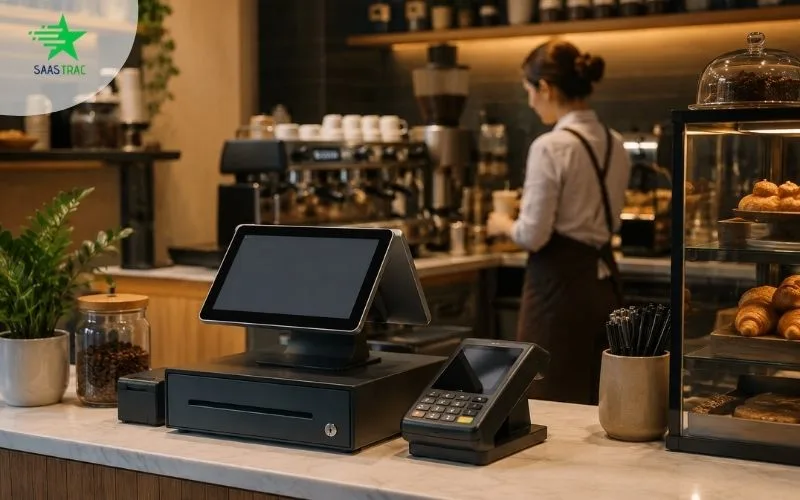
Choosing the best cafe POS software feels straightforward until you’re actually running a cafe and realize your system freezes during the morning rush. Rush-hour crashes, ingredient-level inventory blind spots, and broken connections to Uber Eats or DoorDash can quietly cost you hundreds of dollars a day. After reviewing dozens of cafe POS platforms across feature depth, reliability during peak hours, and real-world operator feedback, a clear set of contenders emerged. This guide covers five platforms worth serious consideration heading into 2026.
The shortlist methodology
Only platforms with a track record of serving cafe and restaurant operators made the final cut.
→ See the full research breakdown
- BLogic Systems – Best for integrated payments and offline reliability
- TouchBistro – Best for affordable iPad-based restaurant POS
- Restroworks – Best for enterprise restaurant chains and multi-unit operations
- GloriaFood POS – Best for small to mid-size restaurants and cafes
- Chowbus – Best for restaurant operations and point-of-sale management
The Stakes Behind Choosing Cafes POS Software
A slow or unreliable POS system doesn’t just frustrate staff. It costs you real money in lost orders and customers who don’t come back.
Managing high-volume rush hours without system lag is one of the hardest problems cafe owners face. When your POS locks up at 8 AM, every second of delay ripples across the entire line.
Ingredient-level inventory tracking is another area where a weak system quietly bleeds money. Over-ordering coffee beans or under-ordering oat milk because your software only tracks at the product level adds up fast.
The right platform directly affects your average transaction time, order accuracy rate, and how quickly counter seats turn over. Getting this choice right means fewer errors, faster service, and more completed orders per hour, which is exactly what separates a profitable cafe from a struggling one.
5 Cafes POS Software Compared
Note: All data in this table is sourced from review platforms and the official websites of the listed companies.
| Company Name | Years Operating | Headquartered In |
| BLogic Systems | Est. 2010 | San Jose, California, USA |
| TouchBistro | Est. 2010 | Toronto, Canada |
| Restroworks | Est. 2012 | San Francisco, USA |
| GloriaFood POS | Est. 2013 | Bucharest, Romania |
| Chowbus | Est. 2016 | Chicago, IL |
-
BLogic Systems – Best for Integrated Payments and Offline Reliability
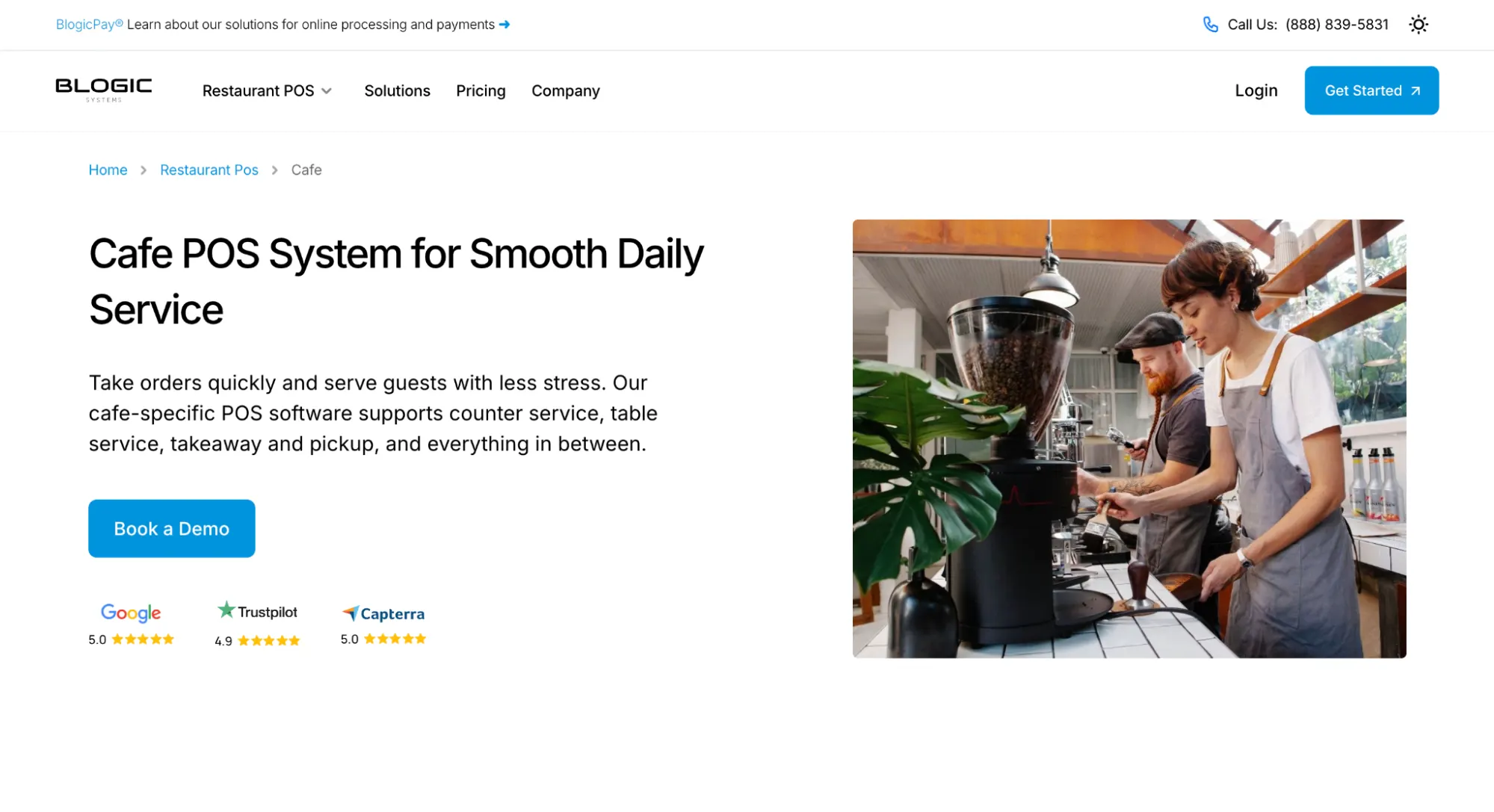
Which Solutions Does BLogic Systems Provide?
BLogic Systems delivers an all-in-one POS ecosystem built for cafes and restaurants. Their platform covers POS software, integrated payment processing through BlogicPay®, inventory management, employee scheduling, and delivery connections to DoorDash, Uber Eats, and Grubhub. What sets them apart is their hybrid cloud and offline setup, meaning the system keeps processing transactions even when the internet goes down (and that’s a bigger deal than most cafe owners realize until they actually need it). Serving 5,000 to 6,000 merchants and processing over $10 billion in transactions since 2010 gives them real operational depth.
Why Pick BLogic Systems for Cafes POS Software?
BLogic Systems directly addresses two of the most painful cafe operator problems: losing sales during internet outages and absorbing high credit card processing fees through their optional 0% credit-card-fee program. That kind of built-in financial flexibility is rare among POS providers at this scale, and their 24/7 live technical support means a problem at 6 AM on a Monday doesn’t have to become a catastrophe.
What the Reviews Show:
BLogic Systems has built a strong merchant base across 14-plus years in business, which tells you something about retention. Operators consistently point to the offline functionality and payment processing as the features they rely on most. For a cafe that can’t afford service interruptions during peak hours, that combination is hard to match.
-
TouchBistro – Best for Affordable iPad-Based Restaurant POS
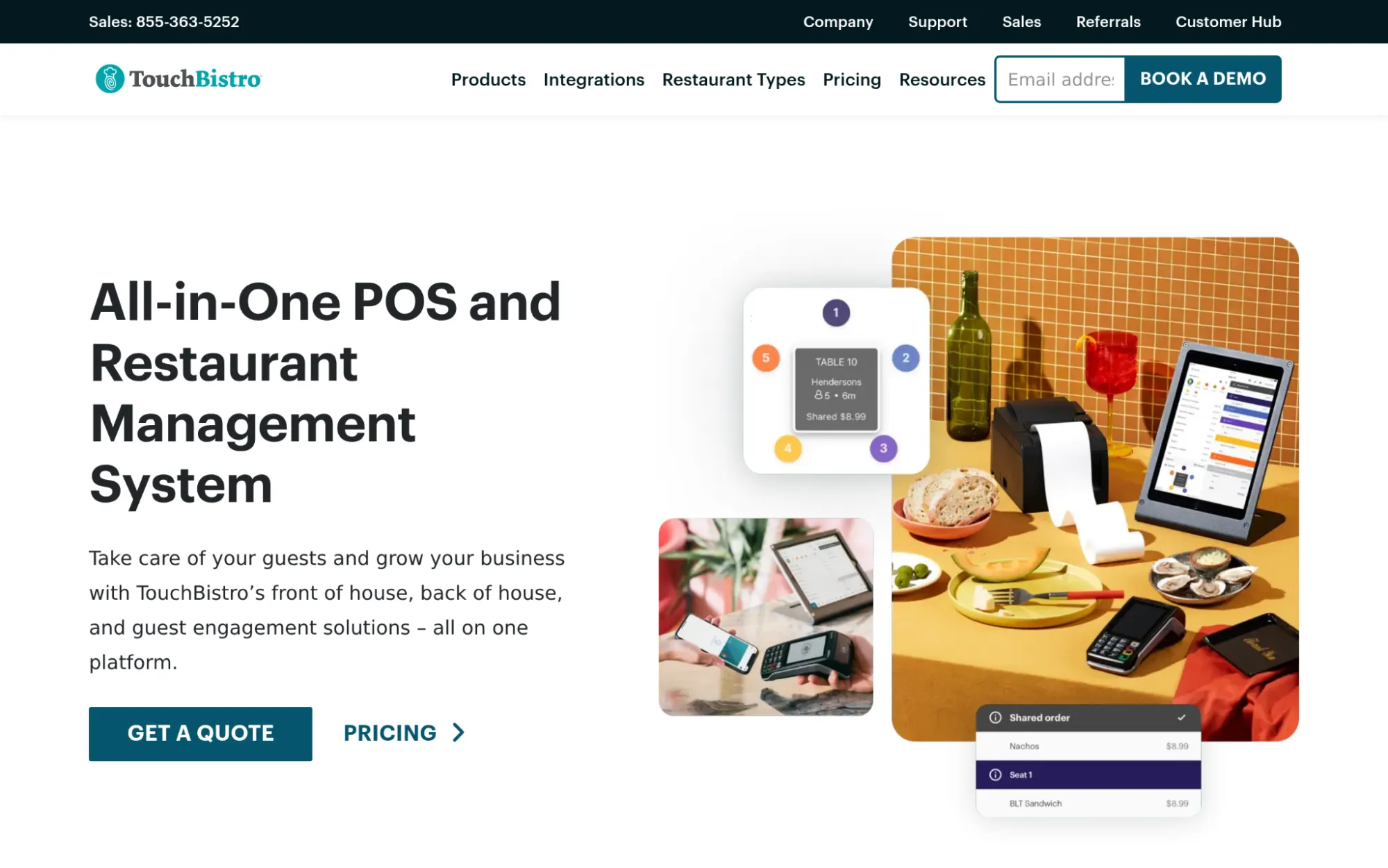
Which Solutions Does TouchBistro Provide?
TouchBistro runs on iPad and covers the full range of restaurant POS needs, including tableside ordering, kitchen display systems, inventory management, labor management, and payment processing. Founded in 2010 and now serving nearly 30,000 restaurants across 100-plus countries, they’ve built a genuinely mature platform. Not cheap to scale, but very accessible to start. Their hybrid offline capability keeps service running when connectivity drops, and the modular feature structure lets operators add functionality as their business grows without paying for what they don’t need yet.
Why Pick TouchBistro for Cafes POS Software?
TouchBistro solves the problem of needing enterprise-grade POS features without the enterprise-grade price tag, with plans starting at $69 per month. Their long track record across global markets means the platform has been stress-tested in real high-volume environments, which shows in how reliably it handles peak-hour order volume without lag.
What the Reviews Show:
TouchBistro earns consistent praise for its clean, customizable interface and the reliability of its offline mode. Cafe operators especially value how quickly new staff can get comfortable with the system, which matters a lot given how frequently cafes deal with employee turnover. The multiple Best Places to Work recognitions also suggest a stable team behind the product.
-
Restroworks – Best for Enterprise Restaurant Chains and Multi-Unit Operations
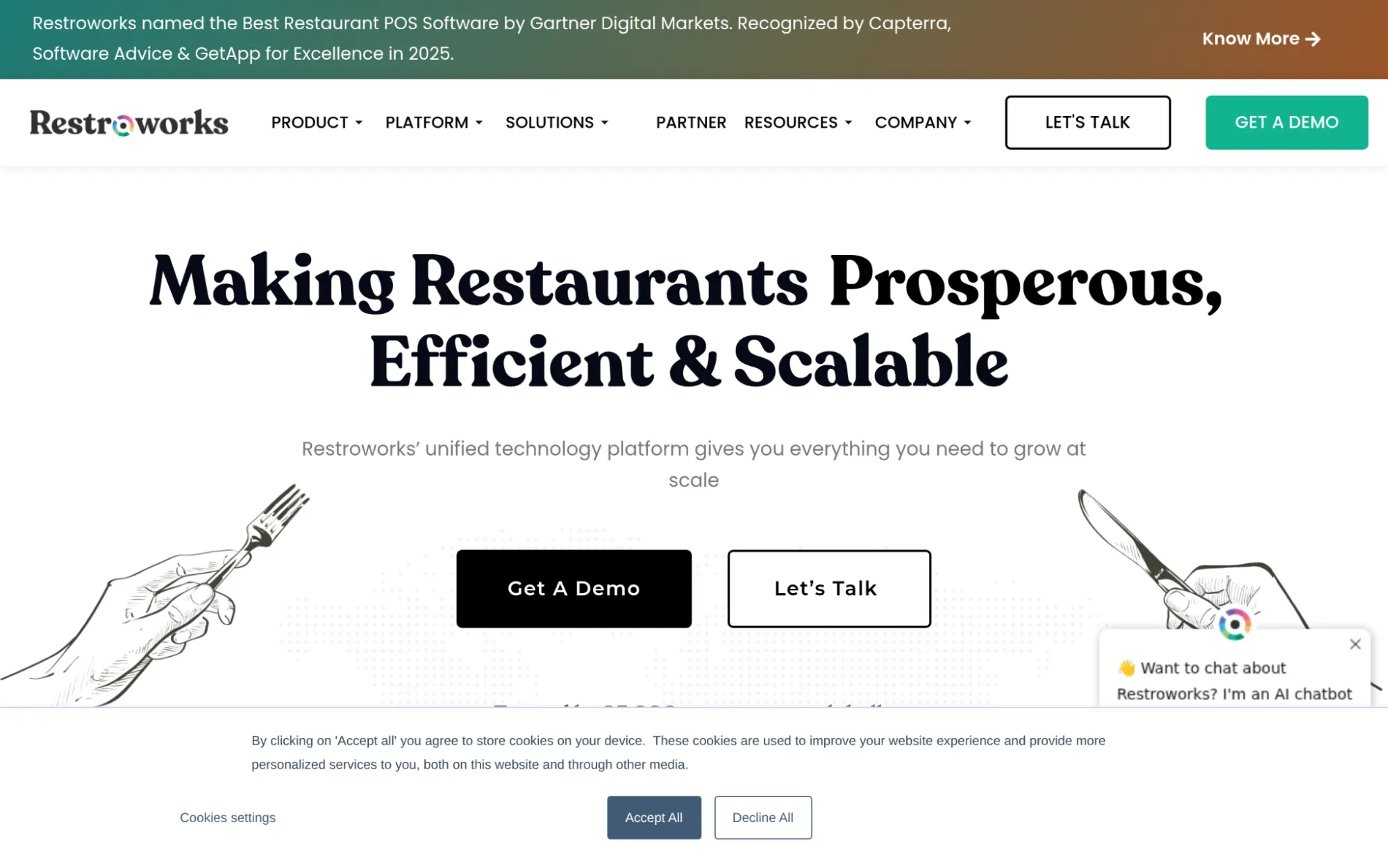
Which Solutions Does Restroworks Provide?
Restroworks is a cloud-native platform built for restaurants operating at scale. Their feature set covers POS, inventory management, kitchen automation, digital ordering, and advanced analytics, all tied together through 400-plus third-party integrations. The client list includes Taco Bell, Subway, Nando’s, and Buffalo Wild Wings, which makes clear this isn’t a platform chasing enterprise credibility. It already has it. They also hold ISO 27001, ISO 27017, SOC2, and GDPR certifications, so security and data handling are taken seriously (think enterprise pricing, but enterprise-grade everything).
Why Pick Restroworks for Cafes POS Software?
Restroworks handles the operational challenges that multi-unit restaurant groups face daily, from unified inventory visibility across locations to kitchen automation that cuts order errors at high volume. Their G2 Winter 2024 Leader recognition and Capterra Best Value Product award suggest the platform delivers at a level the market actually validates.
What the Reviews Show:
Users point to Restroworks’ depth of integrations and kitchen automation as standout features. Restaurant groups running multiple locations particularly value the unified reporting and centralized management tools. That kind of cross-location visibility is hard to match with lighter platforms.
-
GloriaFood POS – Best for Small to Mid-Size Restaurants and Cafes
Which Solutions Does GloriaFood POS Provide?
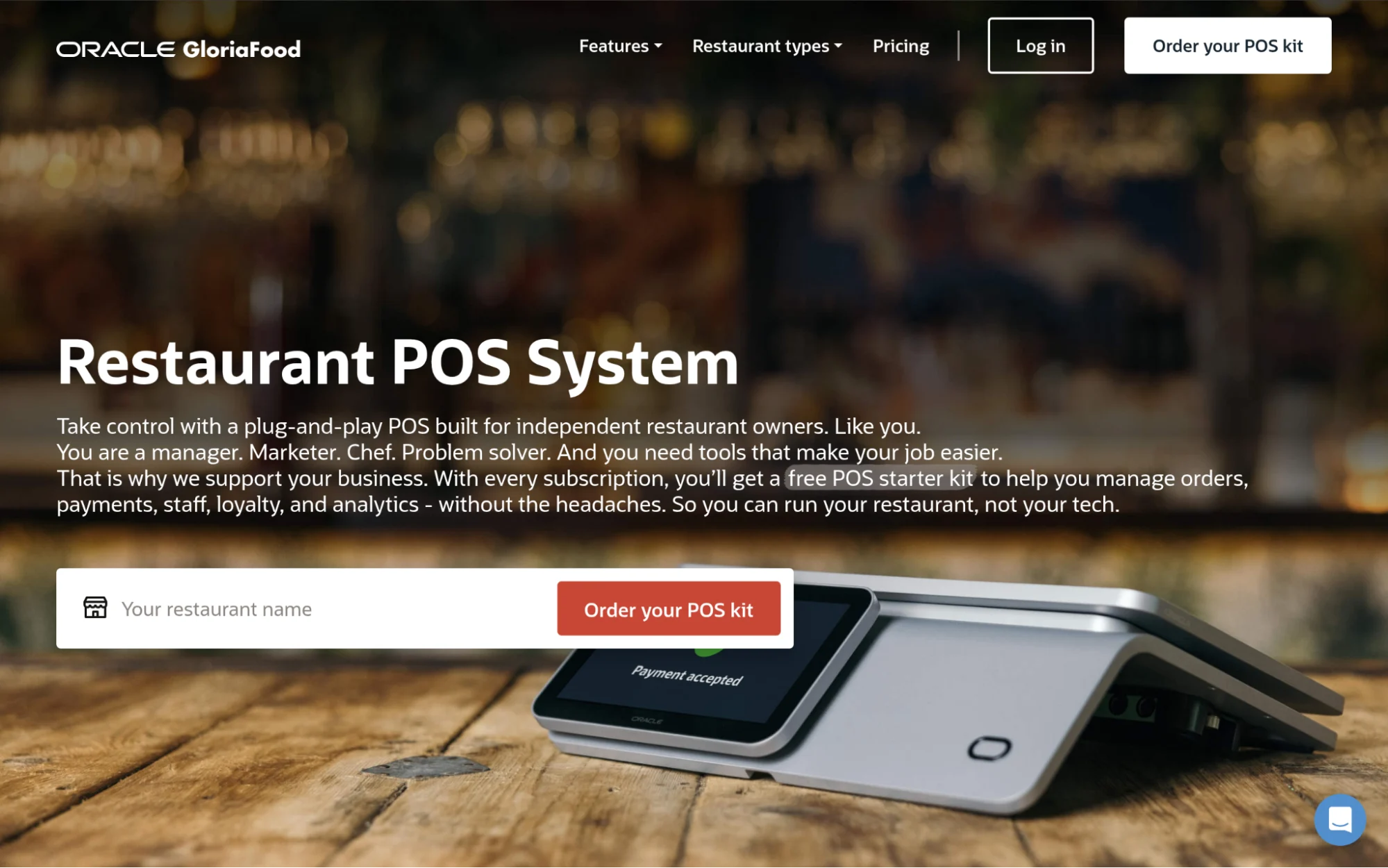
GloriaFood POS is an all-in-one restaurant management system now under Oracle’s ownership since 2021. The platform handles table service, quick service, bars, and cafes with features covering payment processing, QR code ordering, online ordering without commissions, offline functionality, and operational analytics. The free starter kit with hardware is a genuinely practical differentiator for smaller operators who are watching upfront costs carefully. No hidden fees, no commission on online orders, and offline capability built in makes this a strong option for lean operations.
Why Pick GloriaFood POS for Cafes POS Software?
GloriaFood POS removes two common friction points for smaller cafe operators: confusing pricing structures and commission fees eating into already tight margins on online orders. Users who have run the platform for around five years consistently report fewer order errors and reliable service even during internet outages, which tells you the offline mode actually works.
What the Reviews Show:
The longevity of user relationships stands out here. Operators who’ve been on GloriaFood POS for multiple years rarely mention switching costs as a concern, which suggests the platform earns its keep over time. Reviewers call out the user-friendly ordering interface and cost-effectiveness as the reasons they stay.
-
Chowbus – Best for Restaurant Operations and Point-of-Sale Management
Which Solutions Does Chowbus Provide?
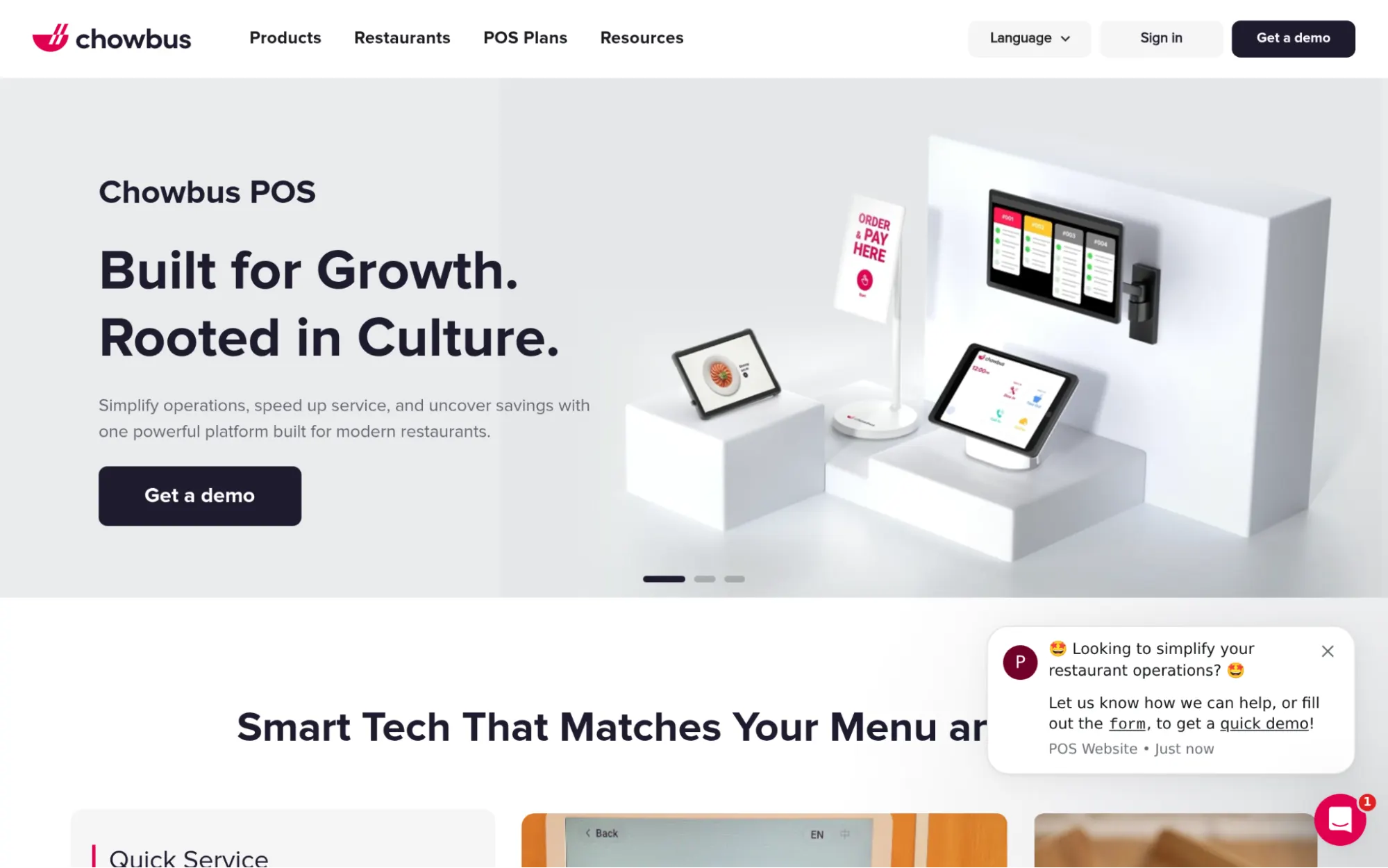
Chowbus started as an online food ordering and delivery platform and evolved into a full SaaS POS system for restaurants across the US and Canada. Their platform covers POS systems, online ordering, and third-party delivery support, all on a continuous software upgrade model so operators aren’t stuck waiting on annual releases for new features. Founded in 2016 and backed by $134 million in funding, including an $81 million Series E in 2026, they’re a company with serious market validation. The Andreessen Horowitz Marketplace 100 recognition in 2020 adds credibility to their trajectory.
Why Pick Chowbus for Cafes POS Software?
Chowbus brings a delivery-first background to the POS space, which means their delivery support isn’t an afterthought added onto a traditional system. Their pivot from marketplace to full enterprise restaurant software reflects a genuine understanding of how restaurant operators actually run their day-to-day business.
What the Reviews Show:
Chowbus is a newer player compared to some on this list, but the funding trajectory and enterprise pivot show strong market confidence. Operators appreciate the straightforward SaaS model with continuous updates, which cuts the frustration of waiting on features that are already needed today.
Also Read
Evaluation Criteria and Research Approach
Building this list required more than pulling together a handful of well-known names. The goal was to find platforms that genuinely serve cafe and restaurant operators well, not just platforms with the biggest marketing budgets.
What Gets Collected First
The research started by pulling together a broad longlist from multiple sources, including restaurant technology directories, software review platforms like G2 and Capterra, industry case studies, and vendor websites. The goal at this stage was breadth, capturing as many relevant options as possible before applying any filters. Platforms that appeared repeatedly across multiple respected directories received closer attention.
Initial Screening and Selection
Once the longlist was assembled, options without verifiable track records in the cafe or restaurant space were removed. This meant looking closely at review patterns over time, not just overall star ratings. A platform with a strong recent spike in reviews but no sustained history raised questions. Consistency of positive feedback across multiple periods carried more weight than a burst of activity around a product launch.
Ensuring Accuracy Through Evidence Review
Each shortlisted platform’s marketing claims were cross-checked against what real users were actually reporting. If a vendor claimed their system handles high-volume peak hours without lag but reviews consistently described slowdowns at busy times, that discrepancy mattered. The aim was to see whether the real-world experience operators described matched what the platform said about itself.
The Authority Layer
External signals beyond user reviews were factored in as well. Award recognition from credible industry bodies, mentions in restaurant technology publications, and evidence of original research all contributed to each platform’s overall standing. A platform that has earned recognition from multiple independent sources carries more weight than one relying entirely on self-reported claims.
Real-World Cafes POS Software Evidence
Dedicated service pages targeting cafe and restaurant operators, verified case studies showing measurable outcomes, and reviews from operators describing specific use cases all served as strong signals. Platforms that could point to concrete examples of solving real problems, like reducing order errors during rush hours or maintaining service reliability during connectivity drops, earned higher consideration than those offering only general capability descriptions.
Finding the Right Cafes POS Software for Your Needs
No single platform on this list is the right fit for every cafe. The best choice depends on your operation’s size, budget, and the specific problems you need to solve first. Here’s what to evaluate before committing.
- Industry/Domain Experience: Look for platforms built for cafe and restaurant environments, not general retail POS systems adapted for food service. Purpose-built platforms understand modifier handling, kitchen display workflows, and rush-hour load in ways general systems often don’t.
- Features and Service: Match the feature set to your actual needs. A single-location cafe doesn’t need multi-unit enterprise reporting. A high-volume coffee chain does. Avoid paying for features you won’t use within the first six months.
- Pricing Structure: Factor in both the monthly software fee and hardware costs, payment processing rates, and any per-transaction fees. Some platforms look affordable upfront but carry higher processing costs that add up quickly at volume.
- Results Measurement: Ask each vendor how their platform helps you track average transaction time, order accuracy rate, and table turnover. If they can’t answer that clearly, the analytics probably aren’t strong enough.
- Industry Knowledge and Compliance: Confirm PCI-DSS payment compliance and food safety regulation adherence are built into the platform, not just mentioned in passing. For cafes serving alcohol, age-verification requirements add another layer worth confirming before you sign.
Final Words
Picking the right cafe POS software comes down to matching the platform’s strengths to your operation’s actual pressure points. Offline reliability, delivery integrations, and accurate inventory tracking matter more than flashy dashboards. The platforms on this list cover a real range, from lean single-location tools to enterprise-grade systems for multi-unit chains. As cafe operations keep getting more complex, the gap between a well-chosen POS and a poorly matched one will only get wider.