


The electrical sub who wins a commercial bid isn’t always the one with the lowest number. That’s a truth most experienced contractors know but not everyone internalizes when preparing a proposal. Understanding how GCs actually evaluate and select subcontractors — and what that means for how to bid commercial electrical work — is as important as getting the quantities right. Resources like https://drawer.ai/ cover the technical side of the takeoff and estimating workflow in detail, but the selection criteria GCs apply operate at a different level, one that starts before the number is even submitted.
What GCs Are Actually Looking At
When a general contractor receives electrical bids for a commercial project, the first thing they’re doing isn’t comparing totals. They’re leveling — normalizing each bid onto a common scope so that differences in inclusions, exclusions, and assumptions become visible. A bid that’s $80,000 lower than the next closest might be missing fire alarm, temporary power, or testing and commissioning. The GC’s job is to find those gaps before they become change orders.
This leveling process means that the quality of a bid package — its clarity, completeness, and internal consistency — directly affects how a sub is perceived, regardless of the final number. A bid that requires three clarification calls to understand is a bid that signals operational risk. A bid that clearly states what’s included, what’s excluded, and what assumptions were made about Division 01 and Division 26 requirements is one that GCs can work with confidently.
The criteria GCs typically apply when shortlisting electrical subs:
- Scope completeness – Does the bid address every system in Division 26, or are there unexplained omissions?
- Bonding and insurance – Does the sub meet the project’s requirements? This is a disqualifying check, not a preference.
- Similar project experience – Has the sub completed comparable work — same occupancy type, same scale, similar complexity?
- Bid responsiveness – Did the sub acknowledge all addenda, respond within the bid window, and follow the submission format the GC requested?
- Exclusions list quality – Are exclusions stated specifically, or is the bid written to obscure what’s not included?
- Track record on change orders – GCs with prior relationships know which subs use change orders to recover margin they left out of the original bid.
How to Bid Electrical Projects for a Commercial Audience
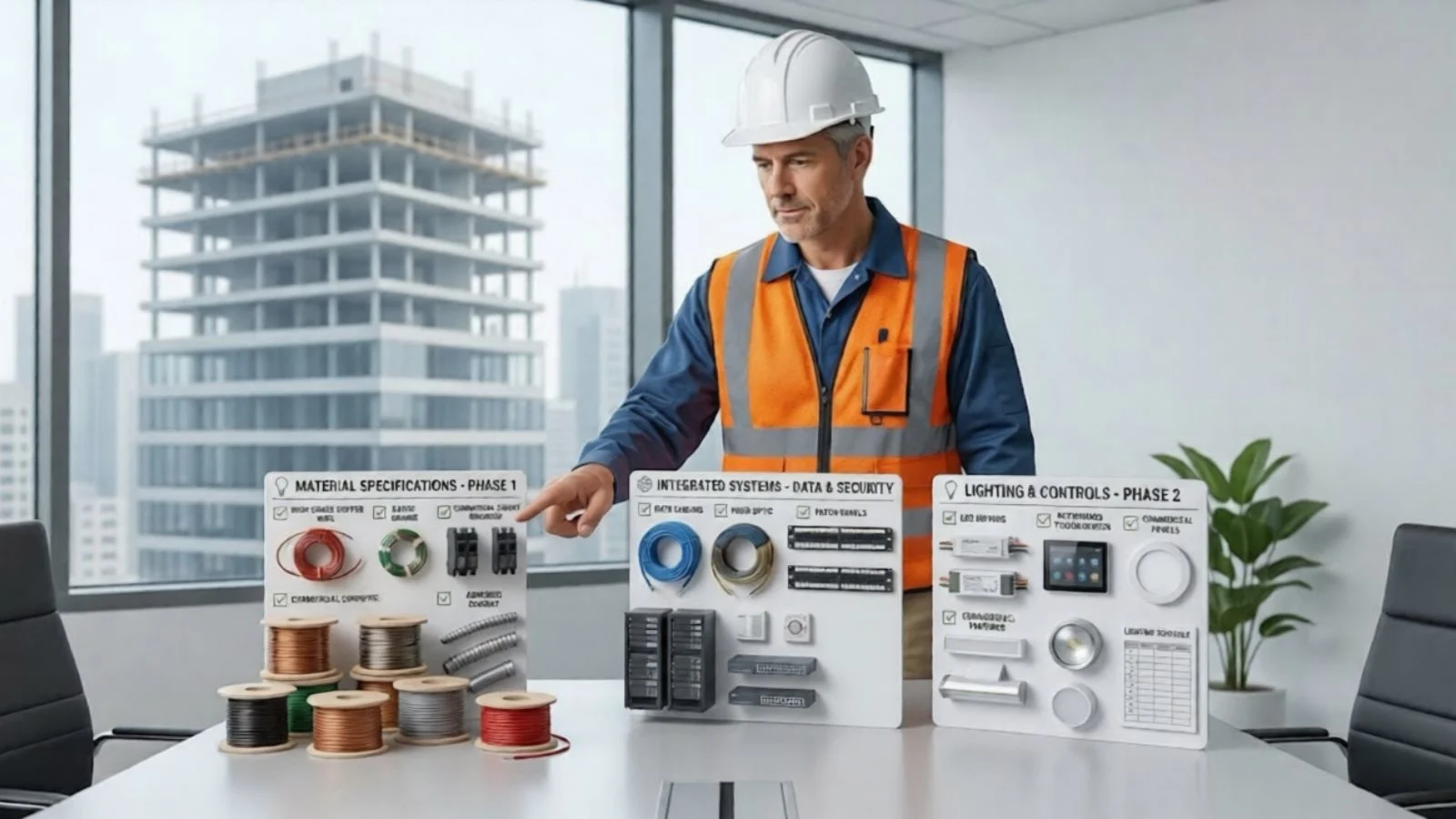
Knowing how to bid electrical projects in a commercial context requires a different discipline than residential or service work. The bid goes to a professional estimating team, not a homeowner — and that team is comparing it against several other submissions simultaneously.
A few practices that consistently improve how a commercial electrical bid is received:
- Read Division 01 before opening a single drawing. General requirements — bonding thresholds, insurance minimums, submittal formats, payment terms — define whether you’re qualified to bid at all. Finding a disqualifying requirement after completing the takeoff wastes everyone’s time.
- Write scope inclusions and exclusions as explicitly as the GC does. Vague scope language protects no one. If low-voltage, data cabling, or temporary power isn’t in your number, say so specifically — not in a catch-all disclaimer at the bottom of the page.
- Format pricing the way the GC asked, not the way you prefer. Some GCs require lump sum; others want itemized breakdowns by system or phase. Submitting the wrong format signals that the sub didn’t read the bid instructions carefully.
- Acknowledge every addendum, even if it doesn’t change your number. An unacknowledged addendum is grounds for a bid being excluded from consideration. It takes thirty seconds to add a line confirming it was received and reviewed.
- Follow up after submission — once. A single follow-up call or email the day after the bid deadline is professional. Multiple calls before the award decision signals desperation rather than interest.
What Separates Subs That Get Invited Back
The distinction between subs that GCs use once and subs that end up on shortlists for every suitable project comes down to predictability. A GC wants to know that the number a sub submits is the number that will hold — that scope won’t expand unexpectedly, that change orders will be reasonable, and that the field team will execute what the bid described.
That predictability starts in the estimating process. When a takeoff is thorough and auditable — when quantities are generated from a structured process rather than approximated — the resulting bid is more defensible at every stage: during scope review, during value engineering conversations, and during change order negotiations months into the project.
Platforms designed for electrical takeoff, including Drawer AI, are built around producing exactly this kind of structured output — organized by device type and circuit — that supports not just bid submission but the project conversations that follow. According to published customer case studies, teams using structured AI-assisted workflows have reported significant reductions in takeoff time, which translates into more bids reviewed and more opportunities to be selective about which projects to pursue.
The Relationship Factor
None of the above replaces the relationship dimension of commercial subcontracting. GCs maintain informal shortlists based on past performance, and a sub with a strong track record on previous projects gets a different kind of consideration than one bidding cold. That relationship is built through execution — showing up, managing scope professionally, and handling the inevitable field complications without turning every one into a dispute.
The bid is the entry point. The relationship is what keeps a sub on the list.