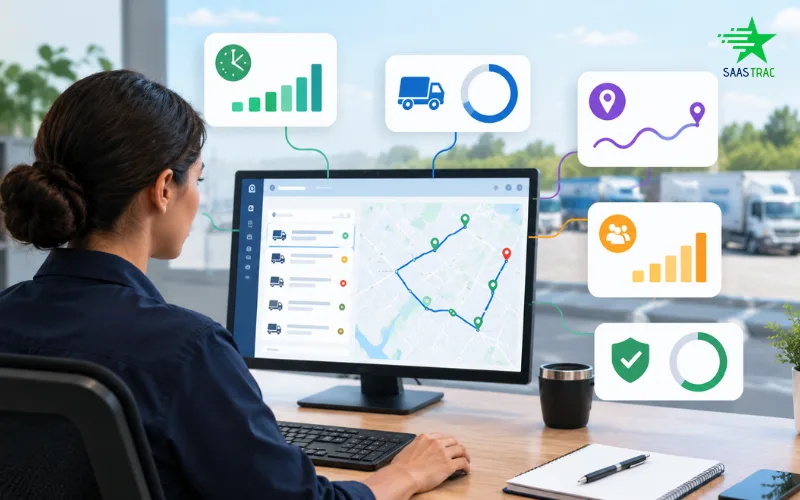

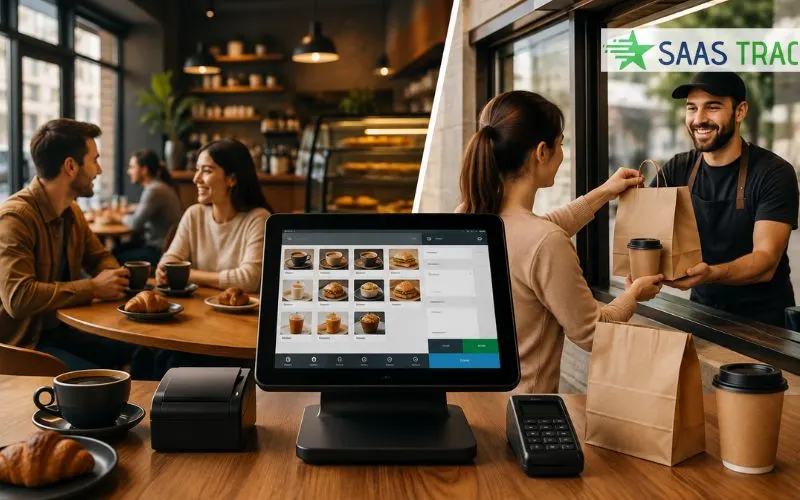
Running a café without the right Cafe POS Systems is a bit like pulling shots during a morning rush with only one espresso machine. The pressure builds fast. Between juggling dine-in tables, takeaway orders, and delivery platforms all at once, operators constantly deal with slow transaction processing, outdated menu pricing across channels, and payment fees that quietly eat into margins. After reviewing the leading platforms built for food and beverage operations, this guide covers five systems worth considering for cafés managing both sides of the counter.
How the picks were chosen
Each option was assessed using publicly available information, including user reviews, feature documentation, ratings from software directories, and official product pages. Only platforms with a documented track record serving food and beverage businesses made the cut.
→ See the full research breakdown
- BLogic Systems – Best for integrated POS and payment processing for cafés and restaurants
- Epos Now – Best for multi-location café and hospitality management
- Loyverse – Best for small cafés seeking a free, loyalty-enabled POS
- Lavu – Best for mobile-first café operations on iPad
- HungerRush – Best for quick-service cafés needing integrated online ordering
Why Cafe POS Systems Are Worth the Investment
The difference between a smooth café operation and a chaotic one often comes down to what’s running at the counter. A good POS doesn’t just ring up orders. It holds the whole operation together during peak-hour rushes when every second of transaction processing time counts.
Keeping menu pricing accurate across dine-in, takeaway, and delivery channels is one of the most persistent headaches café operators deal with. When a price changes, it needs to update everywhere instantly, not just on the in-store screen.
The right system also puts pressure on one of the biggest quiet costs in the business: payment processing fees. Those fees add up fast across hundreds of daily transactions.
When a platform is built for food and beverage rather than adapted from a general retail solution, it tends to handle these challenges more naturally. You see it in faster average transaction processing times, higher system reliability during busy periods, and a higher average ticket size per customer because staff can upsell and modify orders without slowing down the line.
Cafe POS Systems Comparison Table
Note: All data in this table is sourced from review platforms and the official websites of the listed companies.
| Company Name | Years Operating | Team Size | Headquartered In |
| BLogic Systems | Since 2010 | 51–200 employees | San Jose, California, USA |
| Epos Now | Since 2011 | ~501 employees | Norwich, UK |
| Loyverse | Since 2014 | Not disclosed | Limassol, Cyprus |
| Lavu | Since 2010 | 198 employees | Albuquerque, New Mexico |
| HungerRush | Since 2003 | ~252 employees | Houston, Texas |
-
BLogic Systems – Best for Integrated POS and Payment Processing
What Is BLogic Systems Known For?
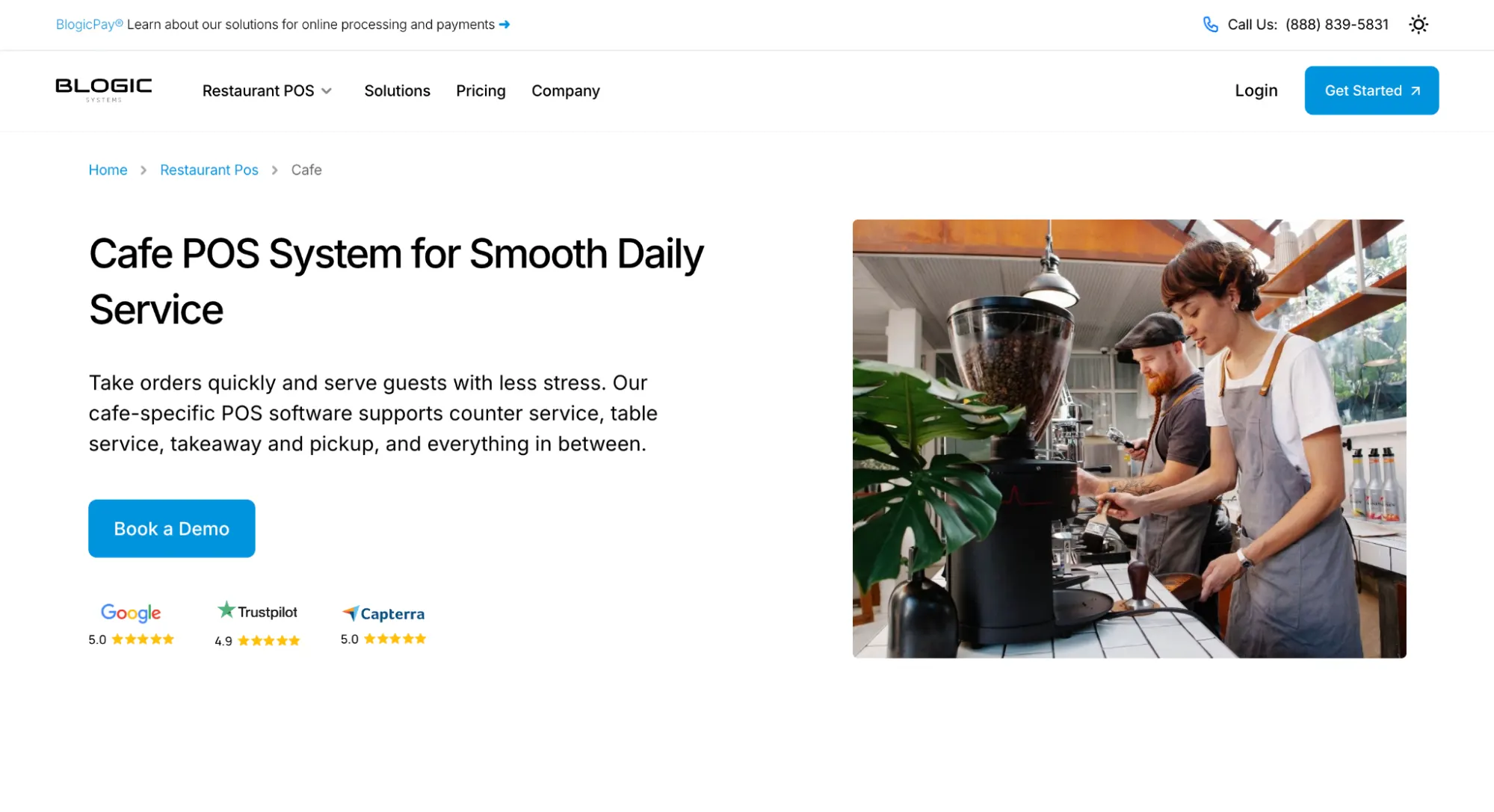
BLogic Systems is a restaurant POS and payment processing platform that has been serving food and beverage businesses since 2010. Built for cafés, bars, breweries, and quick-service restaurants, the platform pulls POS software, inventory management, employee scheduling, analytics, and delivery platform connections into one dashboard. Their BlogicPay integrated payment processing stands out, especially the optional 0% credit card fee program (which is genuinely rare at this level). With a customer base of 5,000 to 6,000+ merchants, they’ve clearly built something operators keep coming back to.
What’s BLogic Systems’ Edge in Cafe POS Systems?
BLogic Systems addresses one of the most stressful scenarios in café management: the internet going down mid-service. Their hybrid cloud and offline setup keeps transactions running without skipping a beat. That kind of reliability is hard to match, and when paired with 24/7 live support and guided setup assistance, it’s the kind of system a café can actually depend on during a Saturday morning rush.
The Review Roundup:
Operators point to the offline functionality and integrated payment setup as the features they rely on most. The customized setup assistance also comes up frequently, which suggests the platform doesn’t just hand over software and walk away. That post-sale support detail separates BLogic Systems from a lot of competitors in this space.
-
Epos Now – Best for Multi-Location Café and Hospitality Management
What Is Epos Now Known For?
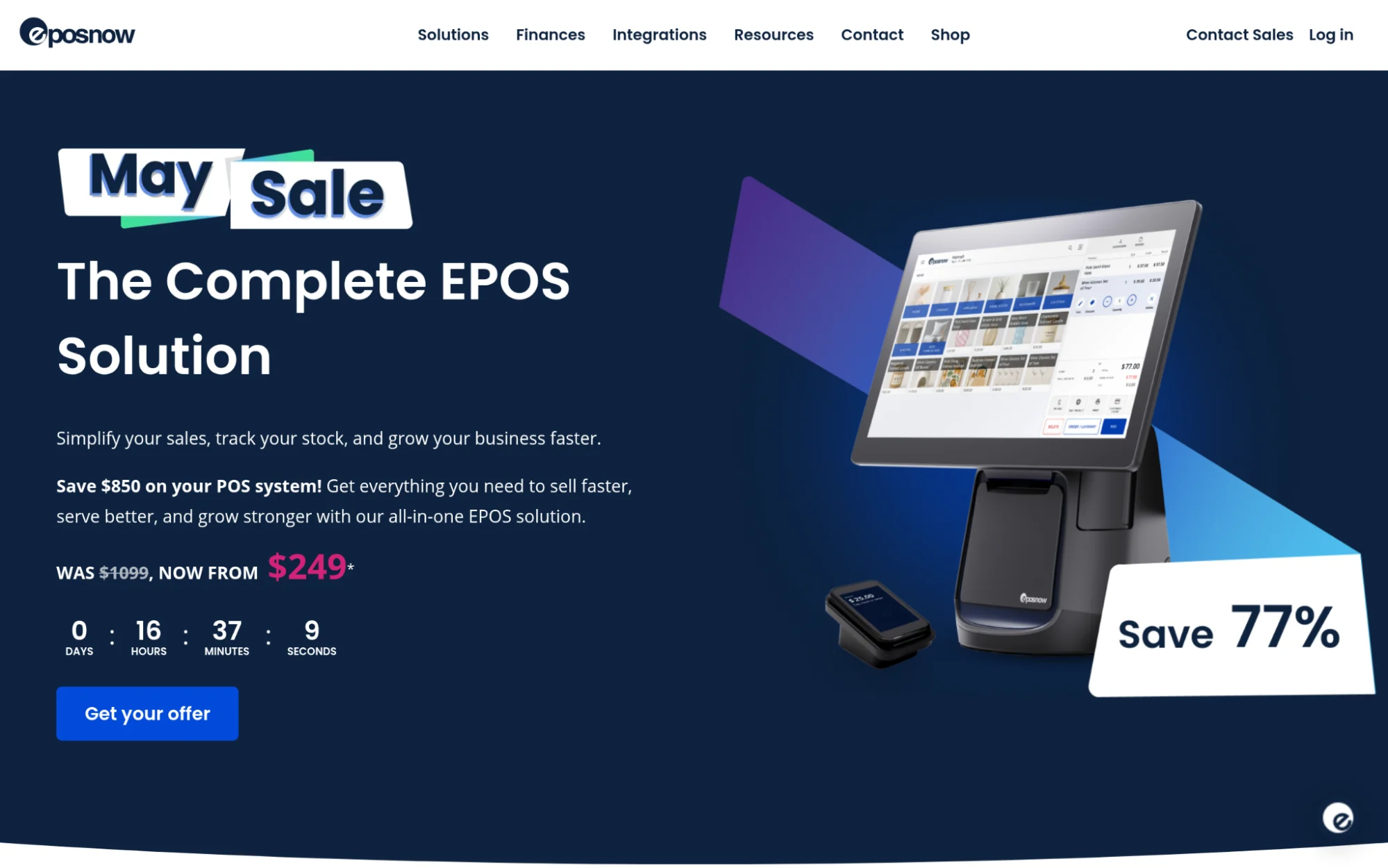
Epos Now is a POS platform that’s been running since 2011 and now serves over 90,000 merchant locations across 11 countries. For café operators managing more than one location, the appeal is real: centralized control over sales data, inventory, and pricing from anywhere with an internet connection. The app store carries 130+ third-party integrations covering accounting, e-commerce, and customer management tools. With annual revenues exceeding $150 million, this isn’t a startup bet.
What’s Epos Now’s Edge in Cafe POS Systems?
Multi-location café operators often struggle with keeping menu pricing and reporting consistent across every site, and Epos Now’s centralized cloud setup directly tackles that problem. Their AI support agent, Sidekick, reportedly handles up to 70% of support requests automatically, which means staff spend less time waiting on hold and more time serving customers. Not a small thing during a busy service.
The Review Roundup:
Users point to the platform’s ease of remote management and the breadth of integrations available. The support tools have been a positive surprise for many operators who expected slower response times. The recognition as one of the fastest-growing UK tech companies in 2023 backs up the momentum they’re building.
-
Loyverse – Best for Small Cafés Seeking a Free, Loyalty-Enabled POS
What Is Loyverse Known For?
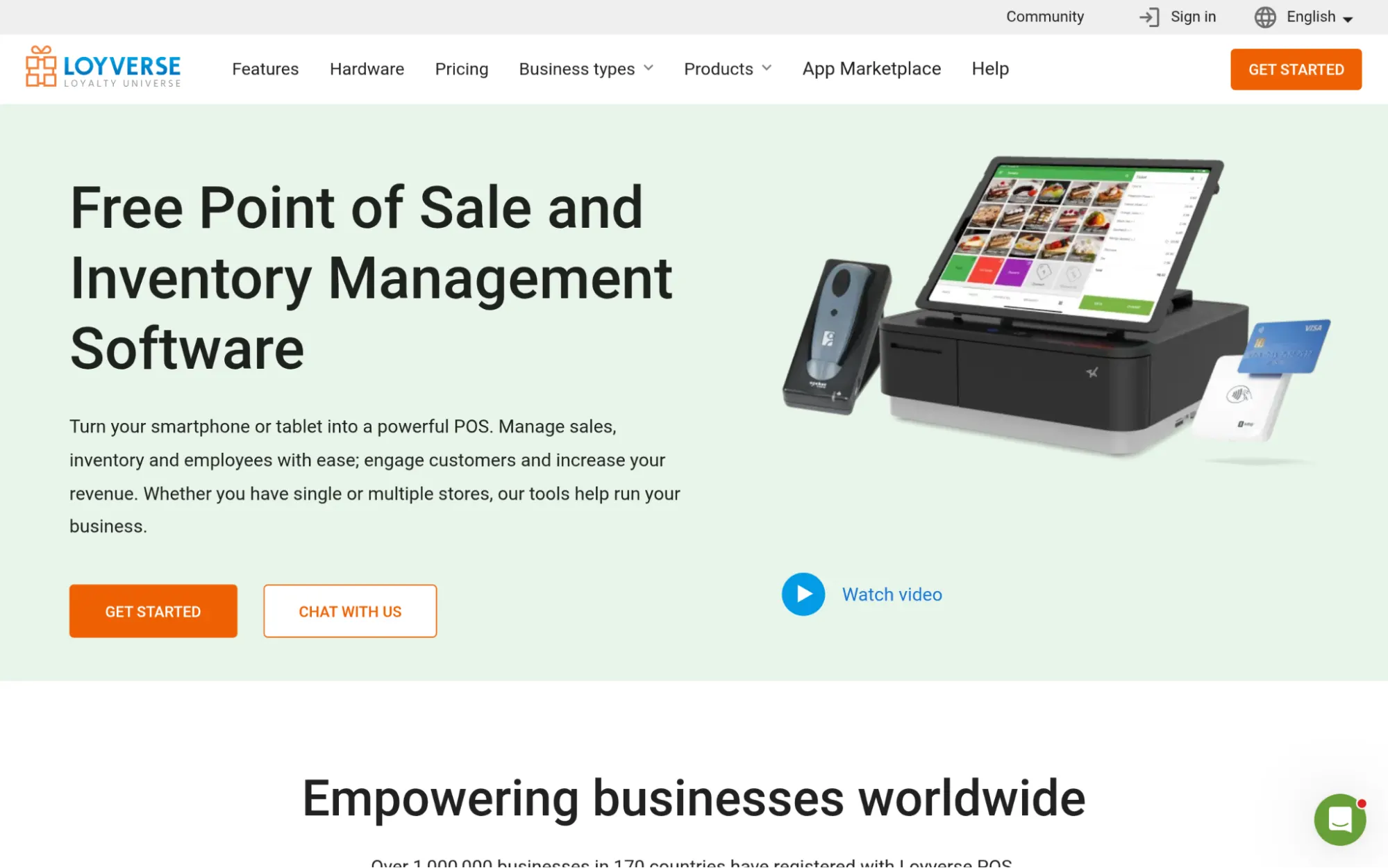
Loyverse has been building POS software since 2014 and now serves over one million registered businesses across 170+ countries. The freemium model is the headline here: the base POS is genuinely free, and the built-in loyalty program comes included at no extra cost (which is unusual, because most platforms charge separately for loyalty features). Supporting 25+ languages and integrating with payment gateways like Stripe, PayPal, and Square, it’s built for small café owners who need something functional without a big monthly bill.
What’s Loyverse’s Edge in Cafe POS Systems?
Small café operators running on tight margins often can’t justify paying for loyalty software on top of a POS subscription. Loyverse removes that barrier entirely by bundling both at no cost. That usually means operators get customer retention tools from day one rather than treating loyalty as a “someday” upgrade.
The Review Roundup:
Recognition from Capterra, G2, Trustpilot, and Crozdesk suggests Loyverse has earned genuine user satisfaction rather than just market presence. Small restaurant and café owners consistently mention ease of setup and the value of the free tier as the reasons they chose and stayed with the platform.
-
Lavu – Best for Mobile-First Café Operations on iPad
What Is Lavu Known For?
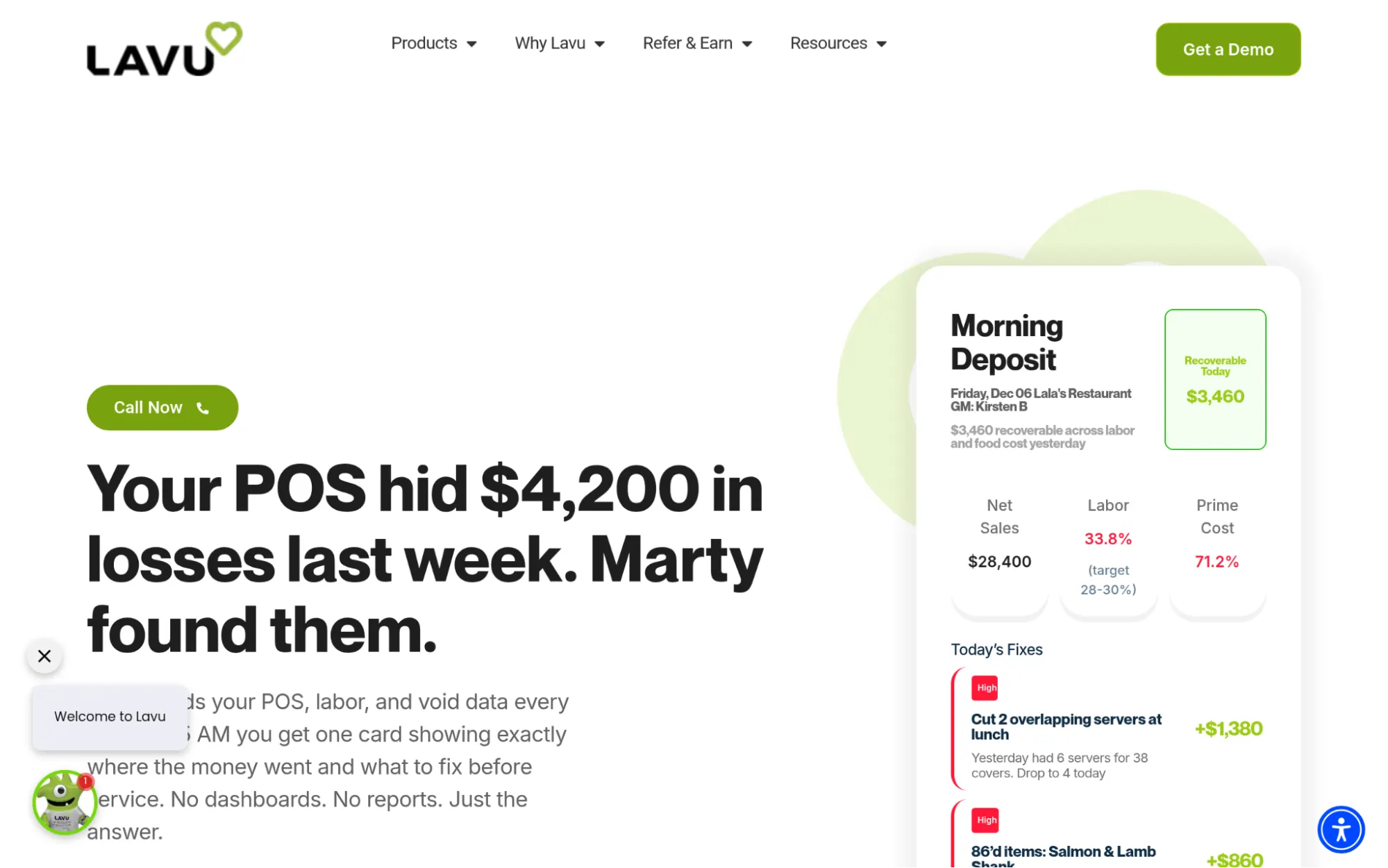
Lavu has been in the restaurant POS technology space since 2010 and holds the distinction of launching the world’s first iPad-based POS system for food service. That head start shows. The platform covers mobile POS, integrated payment processing, online ordering, and back-of-house management, all built around an interface that café staff can learn quickly (even with the turnover rates this industry deals with). Operating in over 100 countries and having processed more than one billion orders, the reliability case is pretty straightforward.
What’s Lavu’s Edge in Cafe POS Systems?
Staff training is one of the most persistent friction points for café operators dealing with high turnover, and Lavu’s intuitive iPad interface cuts that setup time down considerably. The recent launch of Lavu Capital powered by Parafin also shows the company thinking beyond just the POS, giving restaurant merchants access to financial tools that most standalone systems don’t touch.
The Review Roundup:
Lavu holds the top spot on Capterra and has earned multiple G2 accolades, which reflects consistently positive feedback from verified users rather than just brand recognition. Ease of use and the restaurant-specific feature set are the most frequently praised elements, which tracks given the platform’s exclusive food service focus.
-
HungerRush – Best for Quick-Service Cafés Needing Integrated Online Ordering
What Is HungerRush Known For?
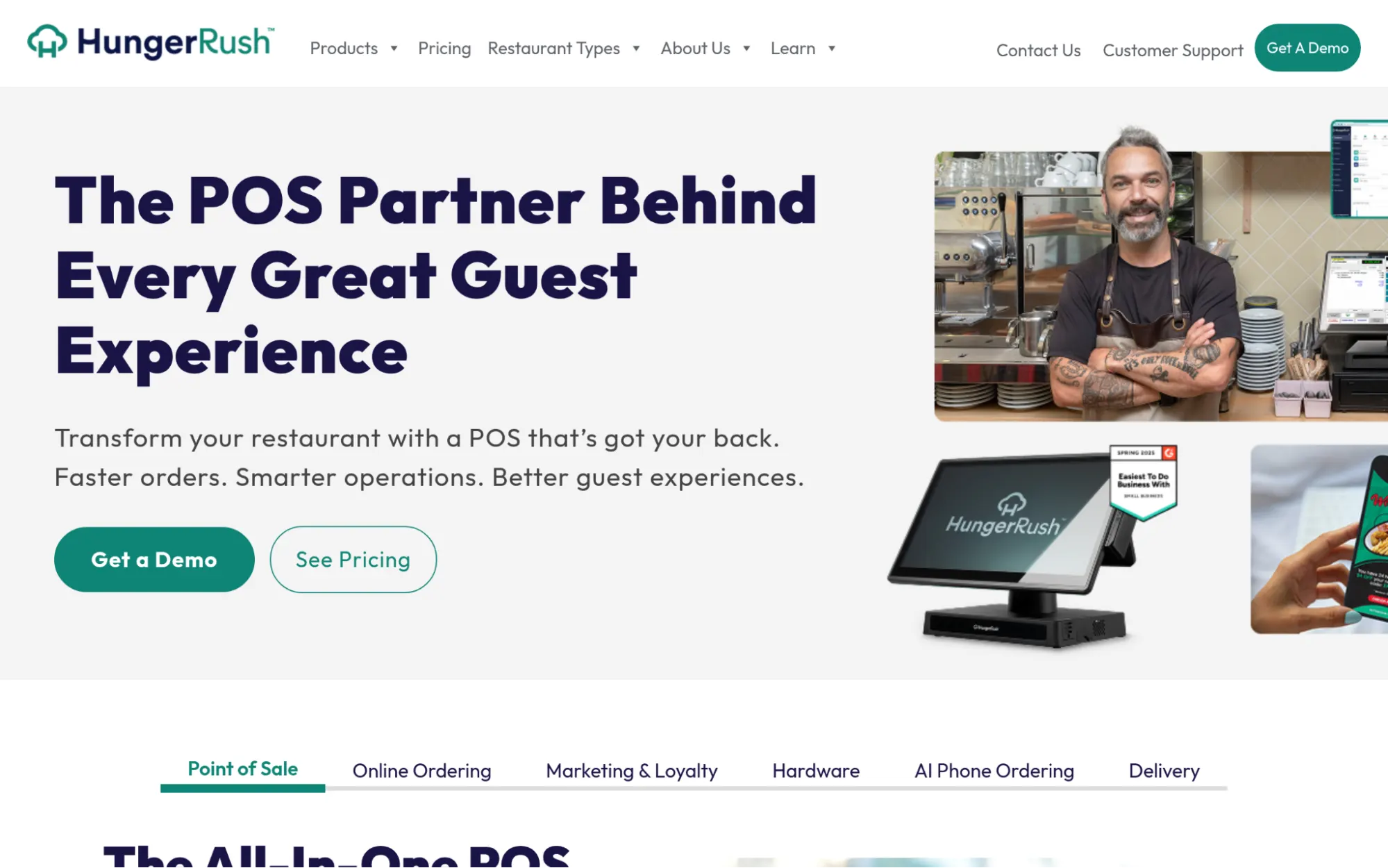
HungerRush has been building restaurant technology since 2003, making it one of the more experienced players on this list. Their flagship product, HungerRush 360, brings together digital ordering, delivery management, kitchen operations, customer engagement, and payment processing under one roof. The numbers back the scale: 7,000 restaurants globally using the platform to process $5 billion in monthly pizza sales. They’ve also expanded into text ordering through OrderAI Text, which puts them ahead of most competitors on the ordering channel front.
What’s HungerRush’s Edge in Cafe POS Systems?
Quick-service café operators dealing with high order volume across multiple channels, in-store, online, and delivery, need a system where everything talks to each other without manual workarounds. HungerRush 360 is built around exactly that problem. Their acquisitions of Menufy, 9Fold, and OrdrAi signal a company actively expanding its capabilities rather than sitting still.
The Review Roundup:
Partnerships with major brands like Jet’s Pizza and Grubhub point to a platform that holds up under serious operational demand. Operators who run high-volume quick-service formats tend to be the most satisfied users, which makes sense given how the product was designed. That kind of vertical focus is rare and worth paying attention to.
Selection Framework: How Each Pick Was Evaluated
The research behind this list started from the ground up, pulling candidate platforms from multiple directions before any shortlisting happened.
Setting Up Your Information Foundation
The initial longlist was built by pulling platform names from restaurant technology directories, food and beverage software review sites, and industry case study collections. Each source was checked for recency to avoid surfacing platforms that had changed ownership, pivoted away from food service, or gone dormant. The goal at this stage was breadth, not precision, so the net was cast wide before any filtering criteria were applied.
Filtering Candidates for Final Consideration
Once the longlist was assembled, options without verifiable track records in the food and beverage space were removed. Review patterns were analyzed across multiple platforms to look for consistency rather than isolated high scores. Platforms with thin or unverifiable customer reviews were excluded, as were options where the food and beverage focus appeared to be a smaller part of a broader retail offering. What remained was a shorter list of platforms with clear, documented histories of serving café and restaurant operators.
Cross-Checking Against Reliable Sources
Each shortlisted platform was then checked against its own public-facing claims. Feature descriptions on official product pages were compared against what users described in verified reviews. Where gaps appeared between marketing language and reported real-world results, those discrepancies were noted and weighed against the overall picture. Platforms that showed consistent alignment between their stated capabilities and actual user outcomes received stronger consideration.
Industry Standing Check
Beyond reviews, each platform’s broader standing in the food and beverage technology space was assessed. This included mentions in industry publications, awards from software review bodies, and any original research or data the companies had published. Platforms recognized by multiple independent organizations, or cited in relevant trade coverage, were treated as having demonstrated credibility beyond self-reported metrics. Recognition from sources like Deloitte Fast 50, Capterra, and G2 carried weight in this phase.
Cafe POS Systems Proof Points
The final check focused on direct evidence that each platform actively serves café and restaurant operators at a meaningful scale. Dedicated service pages for food and beverage use cases, verified reviews from restaurant and café owners, and relevant operational case studies were all reviewed. Platforms that could show proof of their food service focus, whether through customer counts, order processing volume, or named restaurant partnerships, ranked more strongly in the final selection than those relying on general hospitality positioning alone.
Choosing the Right Cafe POS Systems: A Quick Guide
Picking a café POS isn’t just a software decision. It affects how fast your line moves, how accurately your inventory gets tracked, and how much you pay per transaction every single day. Here’s what to look at before committing:
- Industry and Domain Experience: Look for platforms built for food and beverage, not retail systems adapted for cafés. Purpose-built systems handle table management, kitchen display, and delivery integrations more naturally.
- Features and Service: Check whether the platform covers everything you actually need: menu management, offline functionality, multi-channel order syncing, and loyalty tools. Missing one of these usually means a workaround that costs time or money.
- Pricing Structure: Pay close attention to transaction fees, monthly software costs, and hardware pricing. Some platforms offer 0% processing fee programs that can make a real difference at volume.
- Results Measurement: A good POS should give you clear visibility into average ticket size, table turnover rate, inventory shrinkage, and end-of-day reconciliation accuracy without requiring a separate reporting tool.
- Industry Knowledge and Compliance: Make sure the platform understands PCI DSS and food safety compliance requirements, including age verification for alcohol sales where relevant, so those responsibilities don’t fall through the cracks.
Wrapping Up
Picking the right café POS comes down to how well a platform fits the real daily pressure of food service, not just how long its feature list runs. The systems covered here each serve different operator profiles, from solo café owners watching every dollar to multi-location operators who need centralized control. As customer expectations for faster service and more ordering channels keep growing, the POS at the center of it all will matter more, not less.