
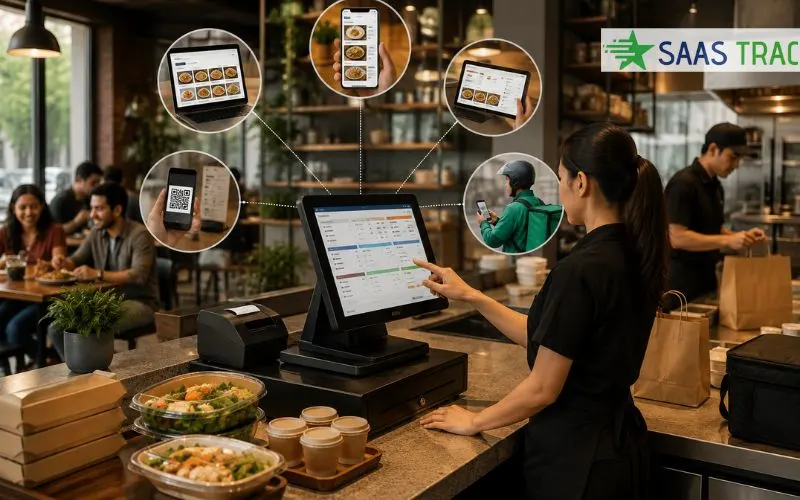
Most restaurant owners don’t realize how much a wrong POS decision costs until they’re stuck paying surprise processing fees or rebooting a frozen screen during a Friday dinner rush. Affordable Restaurant POS Systems sound straightforward on paper, but the real challenge is finding one that won’t quietly eat your margins with hidden transaction fees or fall apart the moment you open a second location. After reviewing dozens of platforms across independent restaurants and multi-unit groups, this guide breaks down five options that actually handle multi-channel ordering without breaking the budget.
Behind the ranking
Every platform featured here was examined using publicly available sources: official product pages, verified customer reviews, third-party directory listings, and documented case studies. Only systems with a clear track record inside restaurant operations made the cut, so the list stays focused on what works in real operations, not just on paper.
→ See the full research breakdown
- Orders.co – Best for Independent and multi-location restaurants seeking an all-in-one POS solution
- Square – Best for restaurant payment processing and operations management
- Clover – Best for multi-location restaurant chains and independent food service businesses
- Shift 4 – Best for full-service restaurant POS systems
- Lavu – Best for restaurant operations and management
The Real Impact of Picking the Right Affordable Restaurant POS Systems
Picking the wrong POS system doesn’t just cost money upfront. It creates a slow drain through high per-transaction costs, missed table turns, and order-accuracy problems that compound over time.
The hardest part for most operators is that the cheapest-looking option rarely stays cheap. Low monthly fees often come paired with processing rates that quietly add up, especially in high-volume environments where every transaction fee matters.
Scaling is another real pressure point. A system that works fine for one location can become genuinely painful when you add a second or third, whether that’s through software limitations or pricing tiers that jump dramatically.
The right choice shows up in the numbers: faster average table turn time, cleaner order accuracy rates, and a cost per transaction that stays predictable month over month. That’s why matching the platform to your specific operation type matters more than chasing the lowest advertised price.
5 Top Picks at a Glance
Note: All data in this table is sourced from review platforms and the official websites of the listed companies.
| Company Name | Headquartered In |
| Orders.co | Los Angeles, CA |
| Square | San Francisco, CA |
| Clover | Sunnyvale, CA |
| Shift 4 | N/A |
| Lavu | Albuquerque, NM |
-
Orders.co – Best for Independent and multi-location restaurants seeking an all-in-one POS solution
What Services and Products Does Orders.co Offer?
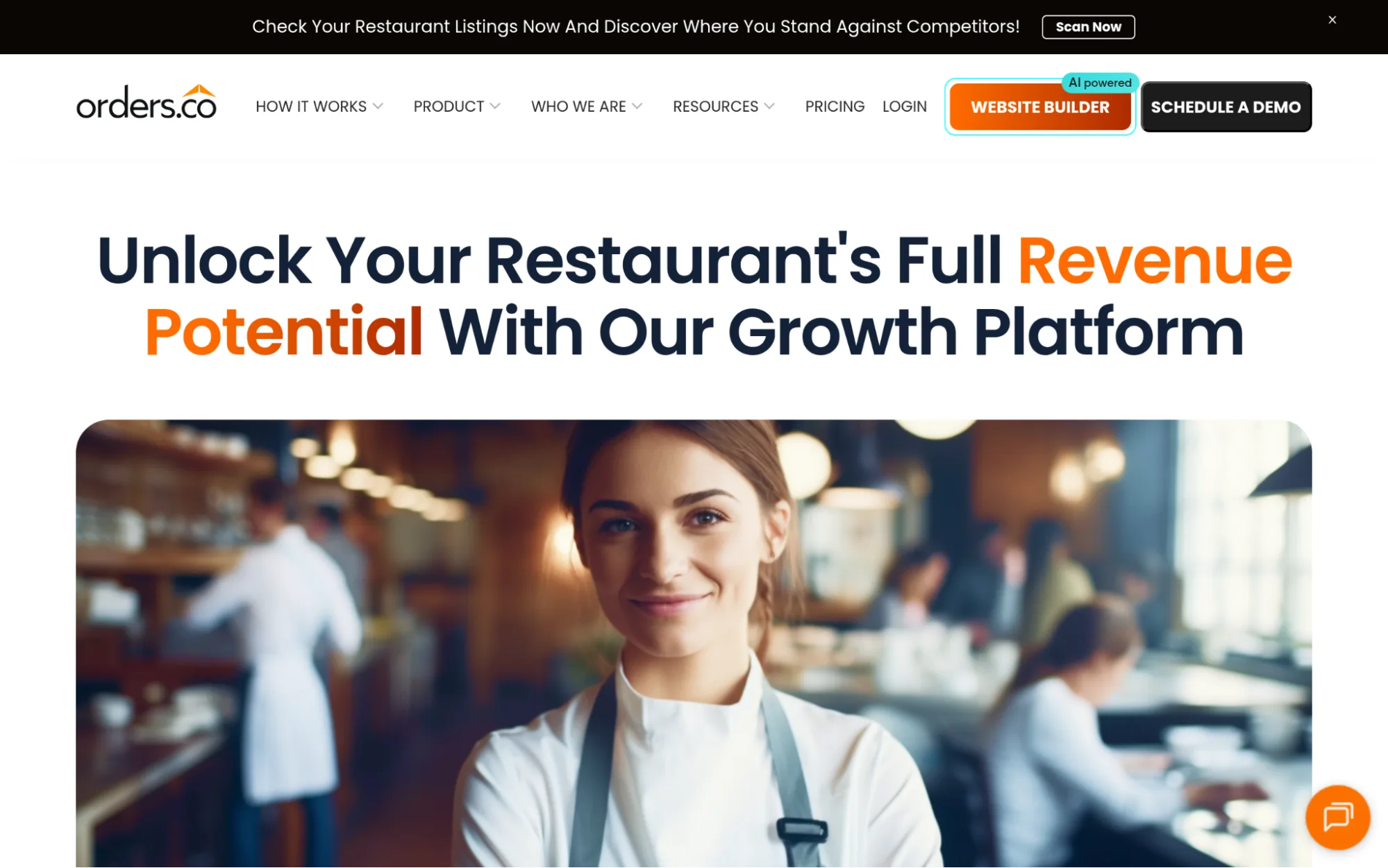
Orders.co gives restaurants a single POS environment for handling in-person sales, direct online orders, catering, and third-party delivery. It is suitable for several food-service models, including food trucks, pizzerias, full-service restaurants, and businesses operating across multiple locations.
Orders arriving through DoorDash, Uber Eats, Grubhub, ezCater, or the restaurant’s own website are routed into the same system. Menu changes can also be distributed across connected platforms at once, reducing the need to update each channel manually.
Its operational toolkit includes:
- KDS support and QR ordering for table-service customers
- Dedicated catering workflows for ordering, preparation, and delivery
- Dispatch options for restaurant drivers and outside delivery providers
- Combined processing of direct and third-party orders
- Synchronized menu information across connected sales channels
- X and Z reports showing shift activity, popular items, and provider results
Each account also includes a direct ordering website that does not charge marketplace commissions. Customer loyalty, automated marketing, and dispute-handling tools are provided within the platform rather than requiring separate subscriptions.
What Sets Orders.co Apart from Other Restaurant POS Platforms?
Affordability with Orders.co comes largely from reducing the number of products a restaurant needs to pay for and maintain. Online ordering, delivery management, menu control, customer loyalty, and marketing are brought into the POS instead of being divided among several providers.
Its commission-free website creates another potential cost advantage. Restaurants can accept direct orders without giving a percentage of every transaction to a delivery marketplace, and the website is included rather than offered as an optional upgrade.
The software was also developed specifically for food-service operations. Restaurant requirements such as detailed modifiers, multiple ordering sources, catering, and delivery coordination are treated as standard workflows rather than additions to a general retail POS.
Live support is available at any time and is not restricted to a more expensive plan. This gives restaurant teams direct access to support when a system issue affects active service.
For restaurants with more complex operational requirements, integrating a POS system with an enterprise platform such as Odoo can provide additional advantages. Odoo connects restaurant POS with accounting, inventory, purchasing, CRM, employee management, and business reporting in a unified ERP ecosystem. Working with an brainvire certified odoo gold partner can help restaurant owners implement and customize these capabilities to support multi-location operations and long-term business growth while maintaining seamless data flow across departments.
Real User Sentiment:
Customer feedback often highlights the reduction in repetitive administrative work. Automated loyalty and marketing functions appear especially valuable for operators who have limited time to manage customer retention campaigns manually.
Users also appreciate being able to replace several disconnected tools with one system. For independent restaurants and growing multi-location groups, this simpler technology setup can make staff training and everyday order management easier.
-
Square – Best for Restaurant Payment Processing and Operations Management
What Services and Products Does Square Offer?
Square covers payment processing, inventory tracking, staff management, bookings, and e-commerce from a single platform. Founded in 2009 by Jack Dorsey, it pioneered the mobile card reader and now serves 4 million merchants while processing $241 billion in payments annually. Not a small operation. For restaurants, Square offers a $0 chargeback fee, which is a meaningful cost saver in a space where payment disputes aren’t uncommon. The platform works across counter service, table service, and online ordering channels.
What Sets Square Apart from Affordable Restaurant POS Systems?
Square cuts through unnecessary features by putting payments, inventory, and operations into one system that works whether you’re running one location or ten. The $0 chargeback fee alone gives it a real edge for restaurants that deal with frequent online orders, where dispute rates tend to climb.
Real User Sentiment:
Reviews often mention the speed of setup and the reliability across channels as standout qualities. One restaurant reportedly tripled its business after moving to Square (think about what that says for system scalability). From what the data shows, reviews skew positive on value for independent operators, with occasional friction noted around advanced features that require higher-tier plans.
-
Clover – Best for Multi-Location Restaurant Chains and Independent Food Service Businesses
What Services and Products Does Clover Offer?
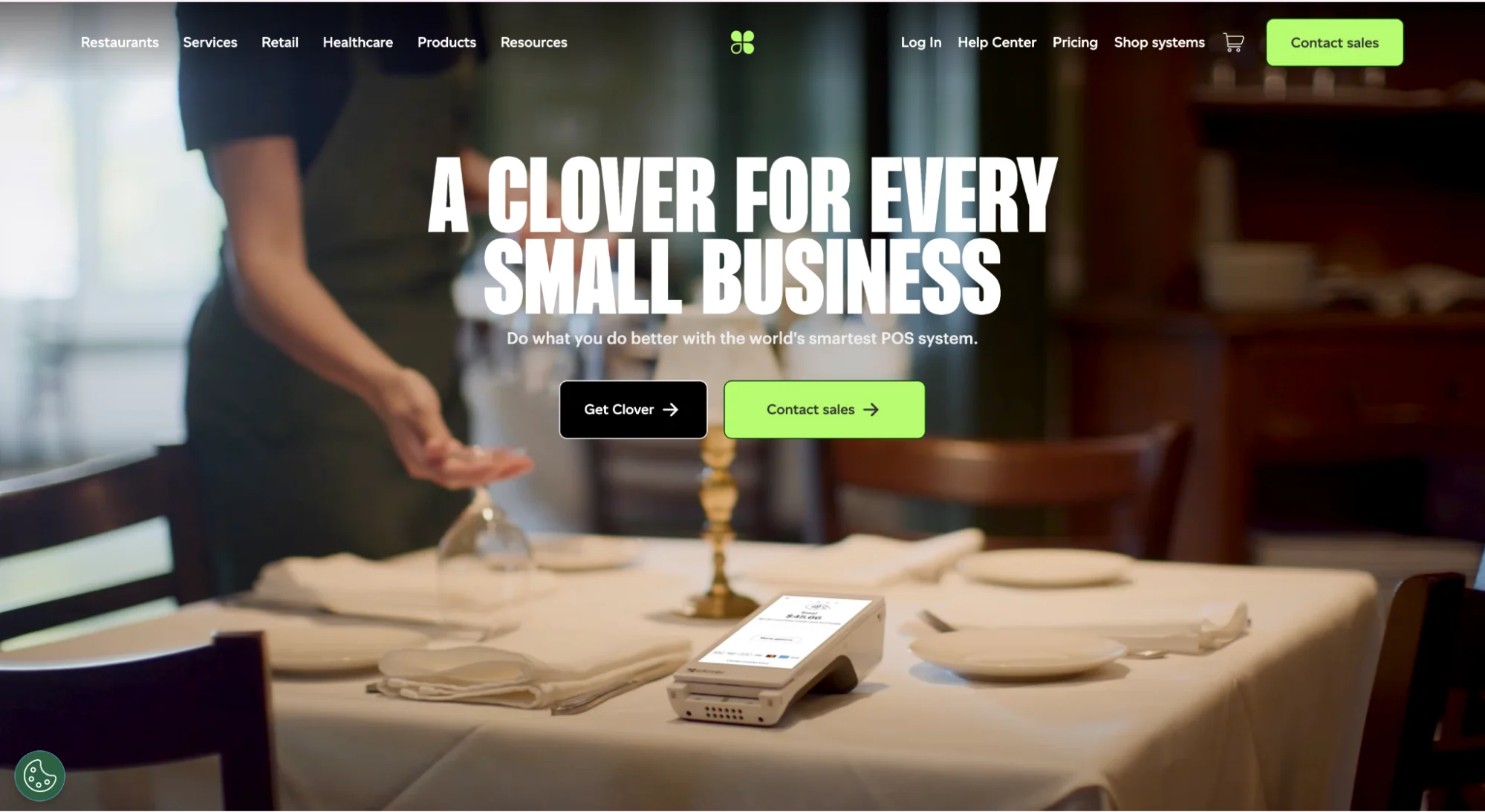
Clover is an Android-powered POS platform that processes over 2 billion transactions annually across hundreds of thousands of merchants. Their hardware lineup includes the Clover Station, Clover Mini, and Clover Mobile, giving restaurants flexible deployment options depending on their setup. The platform handles payments, inventory, and staff management, and an open App Marketplace lets operators add third-party tools without replacing the central system. Clover also offers specialized software tiers for table service and counter service, which keep the setup relevant to different restaurant formats.
What Sets Clover Apart from Affordable Restaurant POS Systems?
The Android-based architecture keeps hardware costs lower than proprietary systems because operators aren’t locked into a single device ecosystem. That open app approach also means Clover grows with the restaurant rather than forcing a full system swap when needs change.
Real User Sentiment:
Users frequently call out the hardware flexibility as a major reason they chose Clover over more rigid alternatives. The app marketplace gets mentioned often as a practical way to add kitchen display system connections or loyalty tools without switching platforms. For operators who want room to customize without rebuilding from scratch, the reviews suggest Clover delivers on that promise consistently.
-
Shift 4 – Best for Full-Service Restaurant POS Systems
What Services and Products Does Shift 4 Offer?
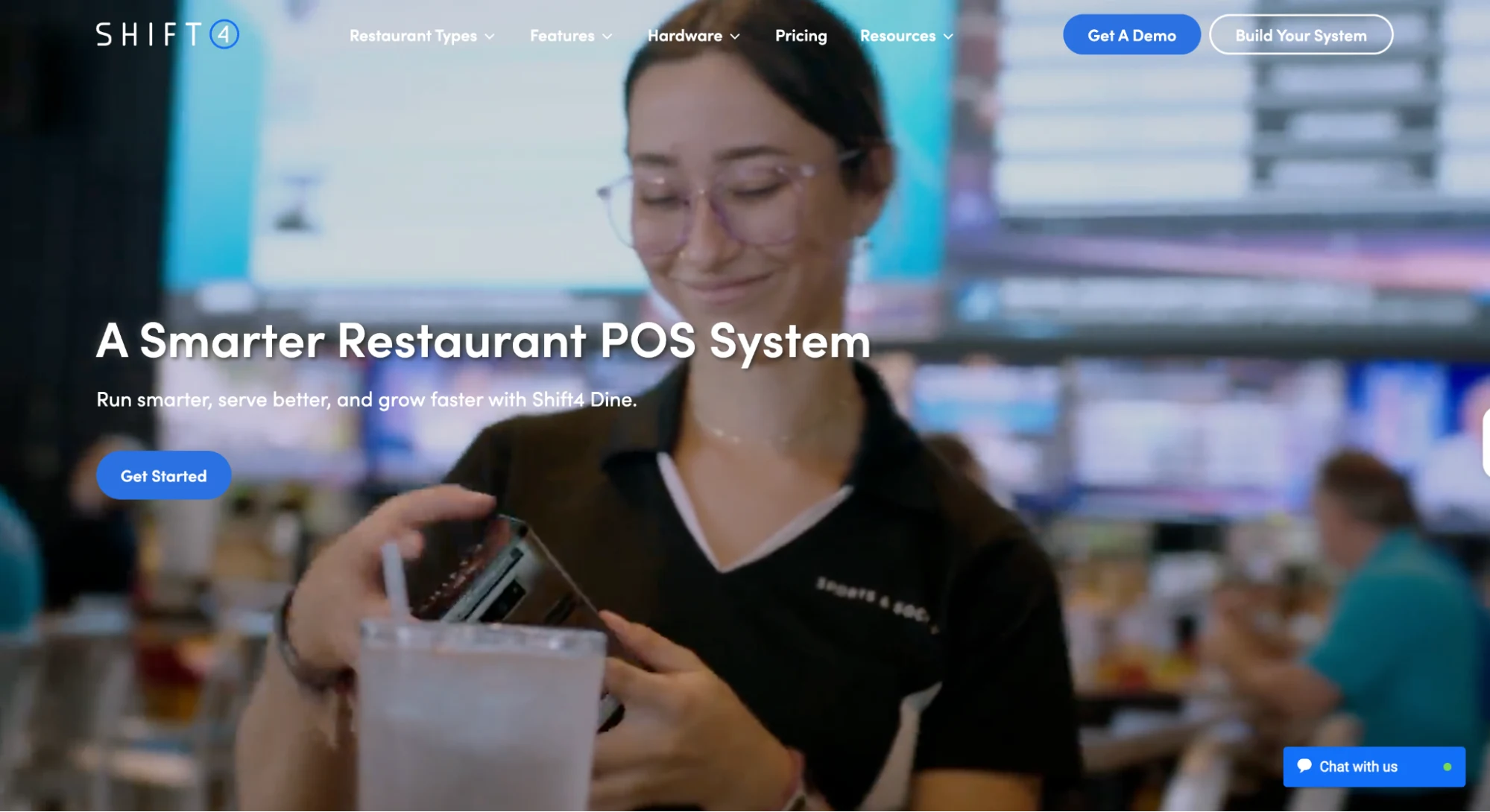
Shift 4 Dine is an all-in-one restaurant POS system that bundles software, hardware, and payment processing under one roof. The platform processes $260+ billion annually and serves 200,000+ customers, backed by 25+ years of experience in commerce technology. Their hardware suite covers restaurant command center terminals, mobile terminals, tableside ordering tablets, kitchen display systems, and customer-facing displays. Every system comes with 24/7/365 in-house support and a lifetime hardware warranty. That’s genuinely rare for this category.
What Sets Shift 4 Apart from Affordable Restaurant POS Systems?
Shift 4 Dine removes the vendor patchwork problem by delivering software, hardware, and payment processing from a single source, with a nationwide network of certified technicians for on-site service. That kind of end-to-end accountability is hard to match when a full-service restaurant can’t afford extended periods without service during peak hours.
Real User Sentiment:
Operators who’ve reviewed Shift 4 Dine consistently point to cost savings and operational lift across multi-location setups. The 24/7 support gets highlighted repeatedly, which makes sense because restaurants don’t fail during business hours only. From what the reviews show, the combination of the lifetime hardware warranty and always-on support removes a lot of the risk anxiety that comes with switching POS platforms at scale.
-
Lavu – Best for Restaurant Operations and Management
What Services and Products Does Lavu Offer?
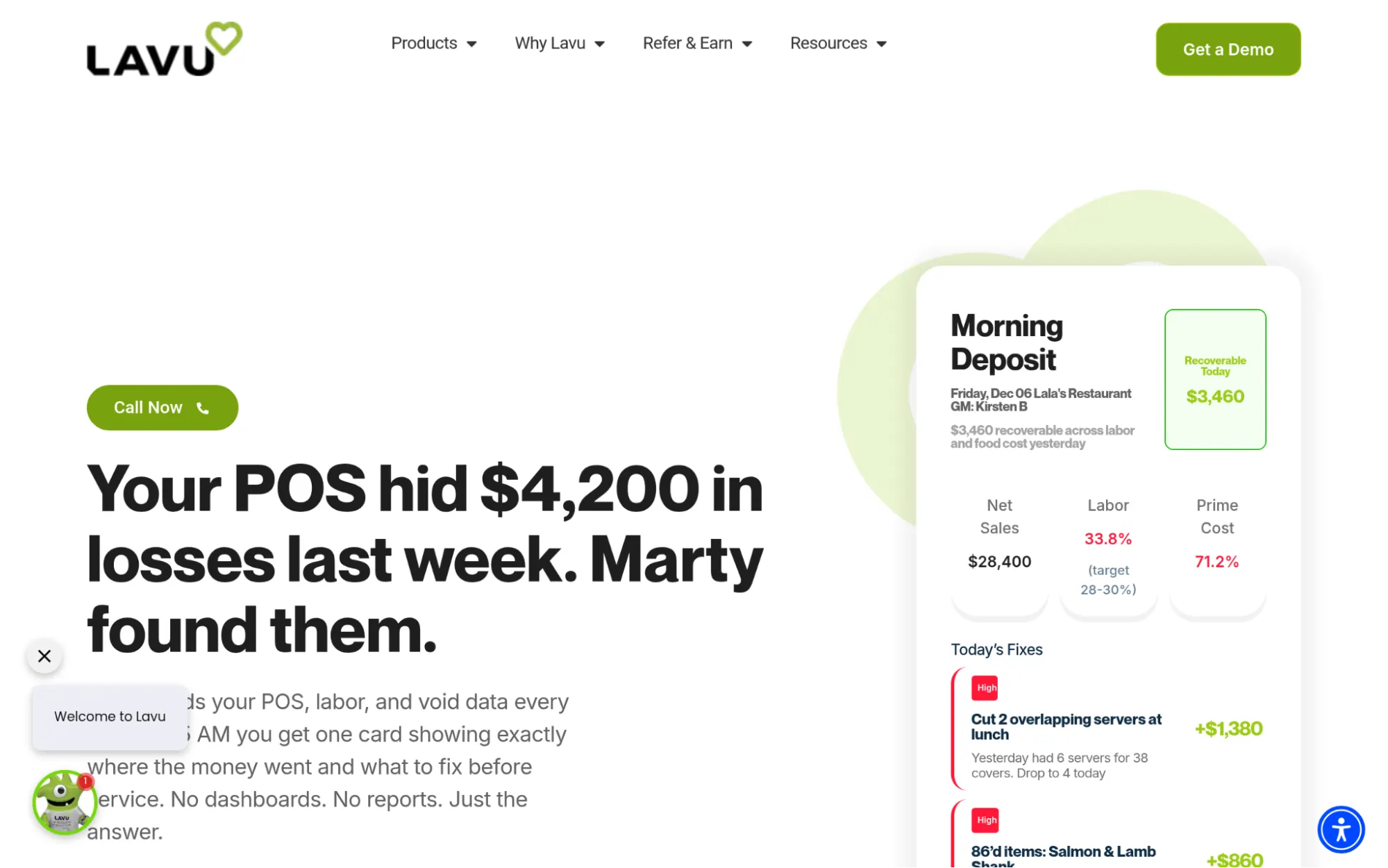
Lavu is a restaurant operating system built around Marty, an AI layer that connects POS, payments, labor tracking, and reporting into one platform. They pioneered the first iPad-based POS for restaurants and have grown into the world’s largest mobile POS provider, now active in over 80 countries. Pricing starts at $59/month with free hardware included (competitive for what you get). The platform covers online ordering, loyalty programs, inventory management, and detailed labor reporting, which makes it a genuine all-in-one for operators who don’t want to stitch together five separate tools.
What Sets Lavu Apart from Affordable Restaurant POS Systems?
Lavu’s Marty AI delivers daily operational reports by 5 AM on cash flow and cost improvement opportunities, giving restaurant owners a head start on decisions before service begins. That daily intelligence loop, built into the base product, separates Lavu from platforms where reporting is an add-on or an afterthought.
Real User Sentiment:
G2 reviewers in the 2025 awards cycle gave Lavu strong marks, particularly for the depth of reporting and the ease of training staff quickly on the iPad interface. High employee turnover is a real pain in restaurants, and multiple reviews note that new staff can get up to speed fast on Lavu’s system. From what the reviews show, the value-to-price ratio is a recurring theme, especially for single-location operators who need enterprise-level tools without enterprise pricing.
How These Were Chosen and Verified
Here’s a look at how each platform on this list actually earned its spot.
Data Assembly and Organization
The process started by pulling together a broad set of candidates from restaurant technology directories, software review platforms, and industry-specific case study collections. Each platform’s product pages were documented alongside any publicly available performance data, customer testimonials, and third-party feature comparisons. The goal at this stage was to build a complete picture before any filtering happened, so no strong contenders got dropped before the full picture was assembled.
The Shortlisting Pass
Once the initial list was assembled, platforms without verifiable reviews or a documented history in restaurant operations were removed. Review patterns were analyzed for consistency: not just star ratings, but the details reviewers mentioned repeatedly, whether that was setup speed, support quality, or pricing transparency. Platforms where reviews were sparse, inconsistent, or heavily weighted toward generic praise were flagged and deprioritized.
Verification Pass
Every claim made on official product pages was cross-checked against what actual users reported in independent reviews. Where a company’s marketing language described a feature as a central offering, that feature had to show up organically in customer feedback to stay in consideration. Capabilities like multi-location management, kitchen display system compatibility, and multi-channel ordering support were all checked against real-world reported use, not just listed specifications.
Industry Recognition and Authority
Award mentions, placements in industry publications, and recognition from commerce and fintech organizations were reviewed for each platform. These signals weren’t treated as automatic qualifiers, but they added weight to platforms already showing strong functional evidence. Companies like Clover (Commerce Platform of the Year in the FinTech Breakthrough Awards) and Square (Fast Company’s Most Innovative Companies of 2026) demonstrated the kind of external validation that supports long-term platform reliability. Lavu’s multiple G2 2025 award recognitions added further confidence around positive customer experiences.
Evidence Specific to Affordable Restaurant POS Systems
The final check focused on each platform’s relevance to affordable restaurant POS needs. This meant confirming that dedicated service pages, pricing structures, and documented use cases addressed restaurant operators dealing with multi-channel ordering, processing fee concerns, and scalability from single to multiple locations. Platforms that showed strong general commerce capabilities but lacked specific restaurant-facing evidence were not included, regardless of their overall size or reputation.
What to Look For When Choosing Affordable Restaurant POS Systems
Choosing a POS system for a restaurant goes beyond comparing monthly fees. The right platform needs to fit how your operation actually runs, including how orders come in, how staff move, and how the numbers get tracked.
- Industry/Domain Experience: Look for platforms built with restaurants in mind, not general retail systems applied to food service. Restaurant-specific logic around table turns, modifiers, and split checks matters.
- Features and Service Options: Confirm that multi-channel ordering, kitchen display system compatibility, loyalty programs, and delivery app connections are included, not locked behind expensive add-ons.
- Pricing Structure: Evaluate total cost of ownership, not just the monthly software fee. Processing rates, hardware costs, and per-location fees all affect real-world cost per transaction.
- Results Measurement: The system should give clear reporting on labor cost as a percentage of revenue, food and beverage inventory variance, and order accuracy rate without requiring a data analyst to read the dashboard.
- Industry Knowledge and Compliance: PCI DSS compliance, EMV chip standards support, and correct handling of regional food service regulations and tip pooling laws should all be standard, not optional features.
Final Take
Multi-channel ordering management asks a lot from a POS platform: consistent order accuracy across channels, processing fees that don’t quietly erode margins, and enough flexibility to scale without a full system rebuild. Square and Clover bring proven scale, Shift 4 brings service reliability, and Lavu brings daily AI-driven insights at an accessible price. Orders.co stands out for operators who need customer engagement automation alongside their ordering system. The restaurant technology space keeps raising the bar, and the best platforms are keeping pace.