


Work is changing faster than ever. Deadlines are tighter, teams are more distributed, and expectations are higher across every industry. In this environment, AI productivity is no longer a buzzword; it’s becoming the backbone of modern workflows.
From automating repetitive tasks to assisting with strategic decision-making, AI is reshaping how professionals manage their time and energy. Instead of spending hours drafting emails, organising tasks, or analyzing data, individuals and teams are now relying on intelligent systems to streamline operations.
The shift isn’t just happening in startups or tech companies. Enterprises, agencies, freelancers, and remote teams are actively investing in AI tools for productivity to stay competitive. As we move deeper into 2026, the focus is no longer on whether to adopt AI, but which tools deliver real impact.
What Is AI Productivity and Why It Matters in 2026
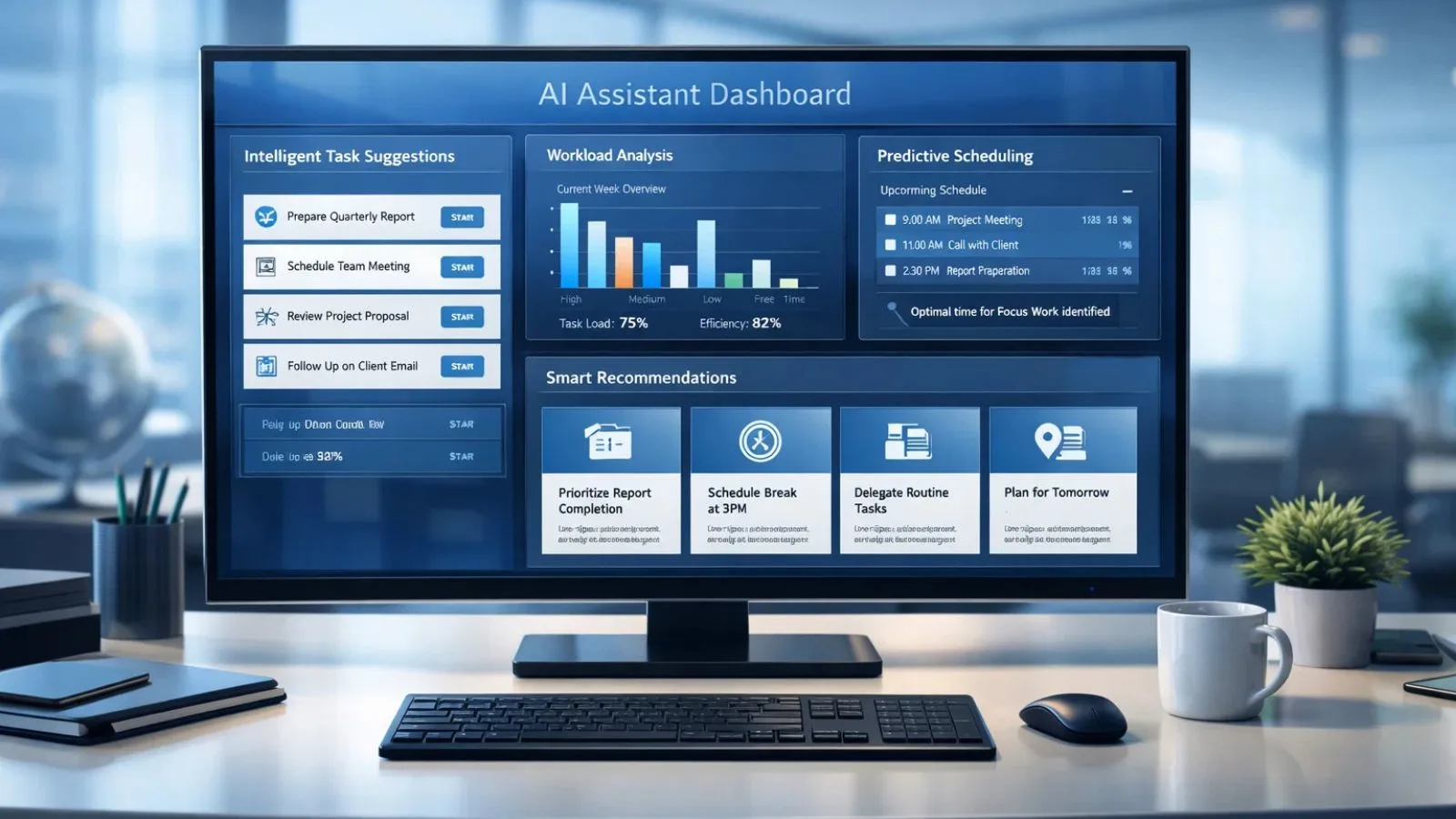
At its core, AI Productivity refers to the use of artificial intelligence to enhance how individuals and teams complete tasks, manage time, and make decisions. It goes beyond simple automation. Instead of just executing predefined rules, AI systems analyze patterns, learn from data, and provide intelligent recommendations.
For example, traditional automation might schedule meetings based on availability. AI, on the other hand, can suggest optimal meeting times based on workload, priorities, and team behavior patterns. That’s a major difference.
In 2026, businesses will no longer use AI only for cost-cutting. They’re using it to:
- Reduce cognitive overload
- Accelerate content creation
- Improve project forecasting
- Enhance collaboration
- Minimize repetitive administrative tasks
The rise of AI productivity tools in 2026 reflects a broader shift toward smarter work systems. Companies want fewer manual processes and more intelligent assistance.
Another reason AI productivity is becoming essential is remote and hybrid work. With distributed teams, managers need tools that help maintain alignment without constant supervision. AI-driven dashboards, smart task allocation, and predictive analytics are now supporting remote work productivity in ways traditional systems simply couldn’t.
And perhaps most importantly, AI allows professionals to focus on high-value thinking. Instead of spending time organizing information, they can spend time interpreting it.
As we move forward, understanding the categories of AI tools available becomes critical.
Key Categories of AI Tools for Productivity
To maximize AI Productivity, businesses need to understand the main tool categories dominating 2026. Most AI tools for productivity fall into four essential groups.
1️⃣ AI Writing & Content Assistants
These tools help draft emails, reports, marketing copy, and summaries in seconds. They reduce content turnaround time and improve consistency across teams. Many of the best AI productivity tools 2026 include advanced writing capabilities powered by contextual language models.
2️⃣ AI Task & Project Management Tools
AI-enhanced project tools go beyond task tracking. They predict delays, prioritize work automatically, and balance workloads. This directly improves remote team productivity by identifying bottlenecks before they become problems.
3️⃣ AI Meeting & Communication Assistants
These tools record meetings, generate summaries, and assign action items automatically. According to recent AI productivity tools news, this category is growing rapidly as hybrid teams look to eliminate manual note-taking.
4️⃣ AI Data & Analytics Tools
AI analytics platforms interpret data, generate reports, and surface insights instantly. Instead of building dashboards manually, managers can ask questions and receive real-time answers.
Best AI Productivity Tools 2026 (Notable Platforms to Watch)
As the demand for smarter workflows grows, several platforms are standing out for their real-world impact on AI productivity. Instead of focusing only on generic writing assistants, here are productivity-focused solutions gaining attention in 2026 for measurable business value.
1️⃣ Arize – AI Performance & Workflow Optimization
Arize helps organizations monitor and optimize AI systems in real time. While not a traditional task tool, it enhances productivity by ensuring AI models perform accurately and efficiently across workflows.
Best for: Companies managing multiple AI-driven processes
Strength: Deep performance analytics
Limitation: More technical, suited for data-focused teams
2️⃣ Jibble – AI-Powered Time Tracking
Jibble automates time tracking and attendance with intelligent insights into work patterns. For teams focused on improving remote work productivity, automated time capture reduces administrative overhead.
Best for: Distributed teams and HR departments
Strength: Simple setup and clear reports
Limitation: Focused mainly on time tracking
3️⃣ Acedit – Intelligent Document Workflow Tool
Acedit supports faster editing and collaborative documentation through contextual AI suggestions. It reduces revision cycles and improves documentation consistency key contributors to overall efficiency.
Best for: Documentation-heavy teams
Strength: Streamlined editing process
Limitation: Primarily content-focused
4️⃣ MailerLite – AI-Enhanced Campaign Automation
MailerLite uses AI-driven automation for segmentation, email optimization, and campaign performance tracking. While marketing-focused, it demonstrates how AI productivity tools in 2026 are eliminating repetitive manual campaign setup tasks.
Best for: Marketing teams
Strength: Smart automation workflows
Limitation: Limited beyond marketing use cases
5️⃣ GetResponse – AI Campaign & Automation Suite
GetResponse combines automation, analytics, and content assistance into one platform. It helps teams reduce repetitive engagement tasks and focus on strategy.
Best for: Outreach and customer engagement teams
Strength: End-to-end campaign automation
Limitation: Not designed for general task management
What These Tools Have in Common
The best AI productivity tools 2026 share a few core qualities:
- They remove repetitive manual effort
- They integrate into existing workflows
- They improve decision-making speed
- They scale across teams
Together, they reflect a broader shift toward structured, measurable AI productivity rather than isolated automation experiments.
AI Productivity Tools News: Trends Driving 2026
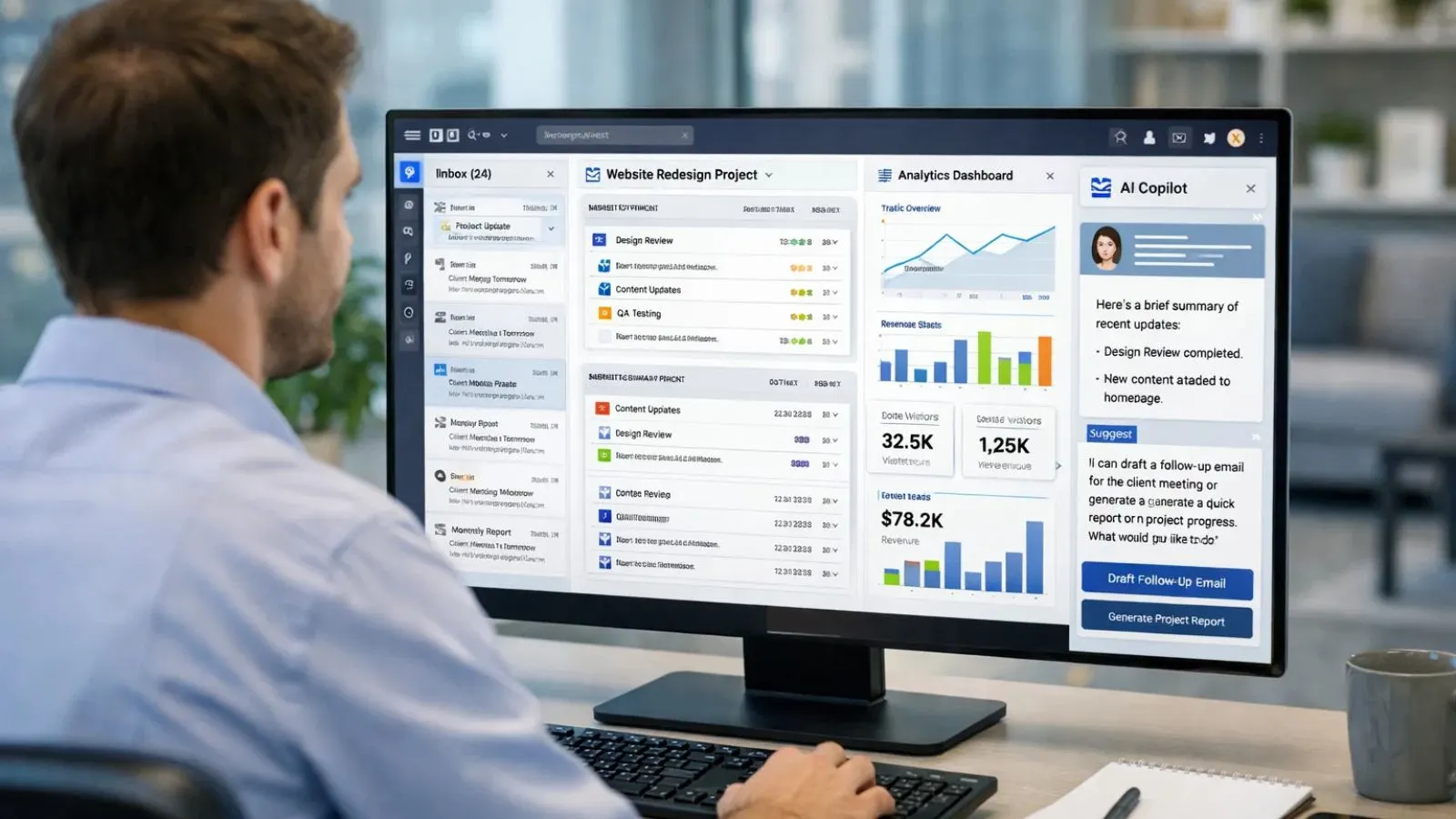
In 2026, AI productivity is shifting from experimentation to strategic integration. The latest AI productivity tools news shows that businesses are focusing on smarter implementation rather than simply adopting more tools.
Here are the biggest trends shaping the market:
1️⃣ Built-In AI Copilots
AI is now embedded directly into everyday work platforms. Instead of switching between apps, users get real-time assistance inside their existing tools, improving remote work productivity without adding complexity.
2️⃣ Predictive Task Management
Modern AI systems can forecast delays, detect workload imbalance, and suggest task prioritization. This proactive approach is becoming a defining feature of AI productivity tools in 2026.
3️⃣ Personalization & Smart Automation
AI tools are learning individual work patterns and adapting accordingly. This helps improve remote team productivity by offering tailored suggestions instead of generic automation.
4️⃣ Governance & Responsible AI
As adoption grows, companies are prioritizing compliance, data control, and usage transparency. Sustainable AI productivity now depends on structured oversight.
These trends show that AI in 2026 isn’t about hype; it’s about intelligent integration.
How to Choose the Right AI Productivity Tool
With so many platforms claiming to improve AI Productivity, choosing the right one can feel overwhelming. The key isn’t picking the most popular tool, it’s selecting the one that aligns with your workflow, team size, and long-term goals.
Here’s a simple framework to guide your decision:
1️⃣ Define the Core Problem
Start by identifying what you’re trying to improve:
- Task management?
- Communication delays?
- Time tracking?
- Performance visibility?
The best AI tools for productivity solve specific problems clearly and measurably.
2️⃣ Look for Integration, Not Isolation
Avoid tools that operate in silos. The strongest AI productivity tools 2026 integrate with:
- Project management systems
- Communication apps
- Calendar platforms
- Team collaboration tools
Seamless integration improves remote worker productivity because teams spend less time switching between systems.
3️⃣ Prioritize Automation That Saves Real Time
Some tools automate tasks that barely matter. Others eliminate hours of repetitive work.
Focus on solutions that can:
- Reduce manual reporting
- Auto-generate summaries
- Track performance intelligently
- Provide actionable insights
That’s where real AI productivity gains happen.
4️⃣ Ensure Transparency & Control
As highlighted in recent AI productivity tools news, governance matters. Make sure any tool you choose offers:
- Clear data control policies
- Admin dashboards
- Permission settings
- Usage visibility
Responsible AI use builds trust and supports long-term adoption.
5️⃣ Consider Scalability
What works for a small team may not work for an entire organization.
Choose tools that grow with you, platforms that:
- Support multi-department workflows
- Offer tiered or enterprise plans
- Provide advanced analytics as you scale
Scalable tools deliver more value over time without requiring a complete overhaul.
Conclusion
AI Productivity in 2026 isn’t about adding more tools; it’s about using the right ones strategically. Businesses that focus on integration, governance, and real workflow improvements see measurable results.
The best AI tools for productivity don’t replace teams; they enhance how teams think, plan, and execute. As AI productivity tools continue to evolve in 2026, success will depend on clarity of purpose, smart adoption, and continuous optimization.
AI isn’t the future of work.
It’s already part of it.
FAQs
- How do AI tools improve productivity at work?
AI tools improve productivity by reducing repetitive tasks, organizing information, automating workflows, and providing intelligent recommendations. This allows professionals to focus more on strategic thinking, creativity, and decision-making. - Are AI productivity tools useful for remote teams?
Yes. AI productivity tools are especially useful for remote and hybrid teams. They help track tasks, summarize meetings, monitor performance, and improve communication across distributed teams. - How do businesses choose the right AI productivity tools?
Businesses should choose tools based on their workflow needs, integration capabilities, scalability, and automation features. The best AI tools for productivity are those that save time, reduce manual work, and align with existing systems.