
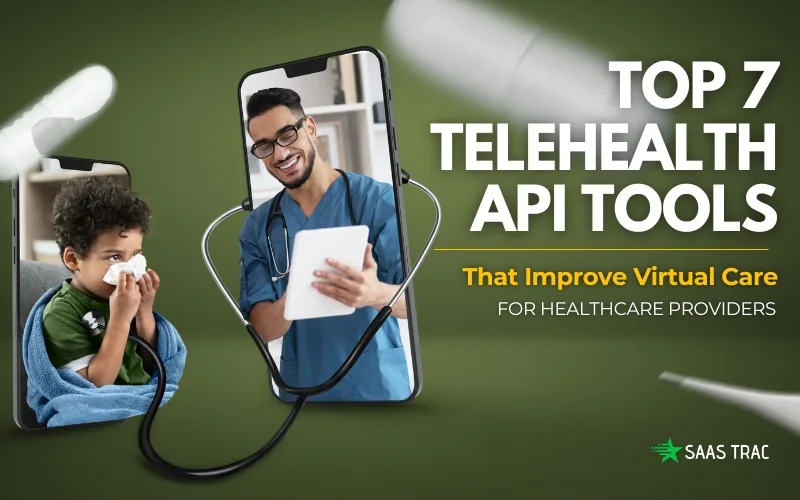
Telehealth relies on stable video, clear scheduling, and patient-friendly access. Picking the right API matters because it shapes how smoothly care happens in a digital setting. This article compares seven telehealth API tools used by healthcare providers and app builders.
It opens with iotum, a HIPAA-compliant video conferencing API that embeds into existing apps and portals. Then it reviews Sendbird Video, Ziggeo, QuickBlox, Livestorm, and Mux.
Each section breaks down core features, strengths, and ideal scenarios, from live consults and recording to analytics, security, and developer control. The goal is to help teams match technology to real clinical workflows.
iotum
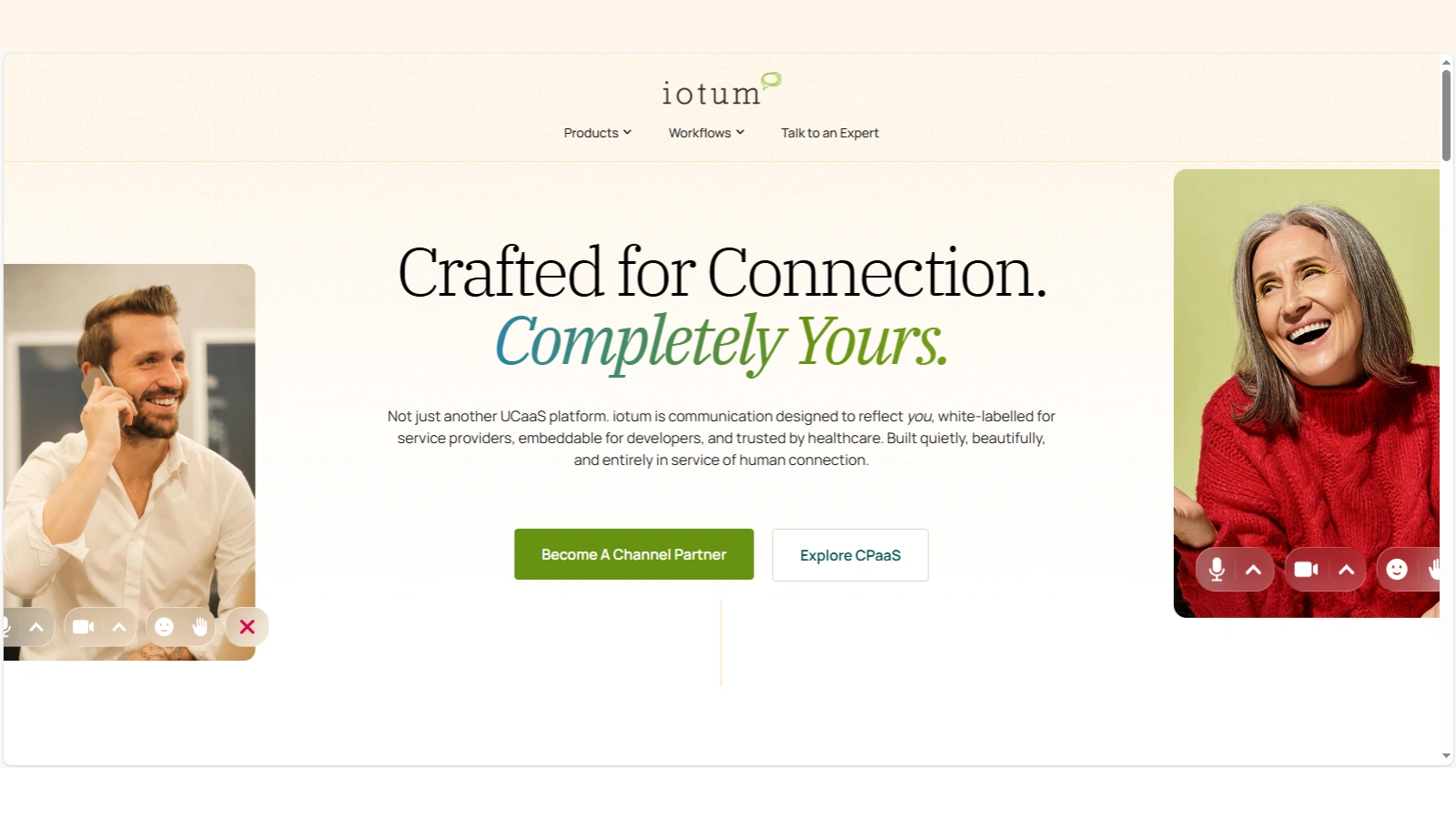
iotum is a telehealth video conferencing API built to support remote care without slowing the work of healthcare providers. It lets healthcare teams add HIPAA-compliant video, voice, chat, and scheduling into their own apps or portals with minimal build effort. Patients join from a browser, no downloads needed, and can connect from desktop or mobile devices.
The iotum solution also supports features that mirror in-person visits, such as waiting rooms, screen sharing, document exchange, and live annotation. Built-in analytics and recording help teams review visits later and improve service quality over time.
Key Features
- Appointment management and reminders. A scheduling API supports booking tools plus automated email and SMS invitations and reminders, helping reduce missed visits.
- Download-free remote consultation. Patients and clinicians can meet through browser-based video and voice, with optional dial-out calls for access flexibility.
- Clinical collaboration tools. Sessions include text chat, document and screen sharing, waiting room controls, live video annotation, closed captions, and recording.
- Virtual care analytics. Post-visit insights include appointment summaries, transcripts, speaking time metrics, sentiment signals, keyword extraction, and searchable recordings.
- Security and compliance. The system is HIPAA compliant, uses WebRTC standards-based security, offers meeting locks and access codes, and supports data sovereignty across regions
iotum Pros
iotum stands out for teams that want telehealth features embedded into an existing product rather than forcing users into a separate tool. Its plug-and-play API and mobile SDKs reduce development load, while still allowing full branding and interface control. That helps maintain patient trust and a consistent digital experience.
The platform also handles real clinical needs, such as quick-join links, dial-out calls, and accessibility support through captions. With recording, transcription, and analytics built in, each visit can feed a continuous improvement loop across providers and locations.
iotum Best Use Case
The iotum solution fits healthcare organizations that deliver remote consultations at scale and need reliable, secure communication inside their own workflows. Typical use cases include virtual specialist visits, follow-up check-ins, and tele-visits for rural or mobility-limited patients.
It also supports clinics and hospitals that want shared patient context, integrated scheduling, and measurable visit data across departments. Beyond direct care, iotum is used for medical education, where multi-camera video and annotations can support training and case review. In short, it suits teams aiming for friction-free telehealth without rebuilding their whole tech stack.
Sendbird Video
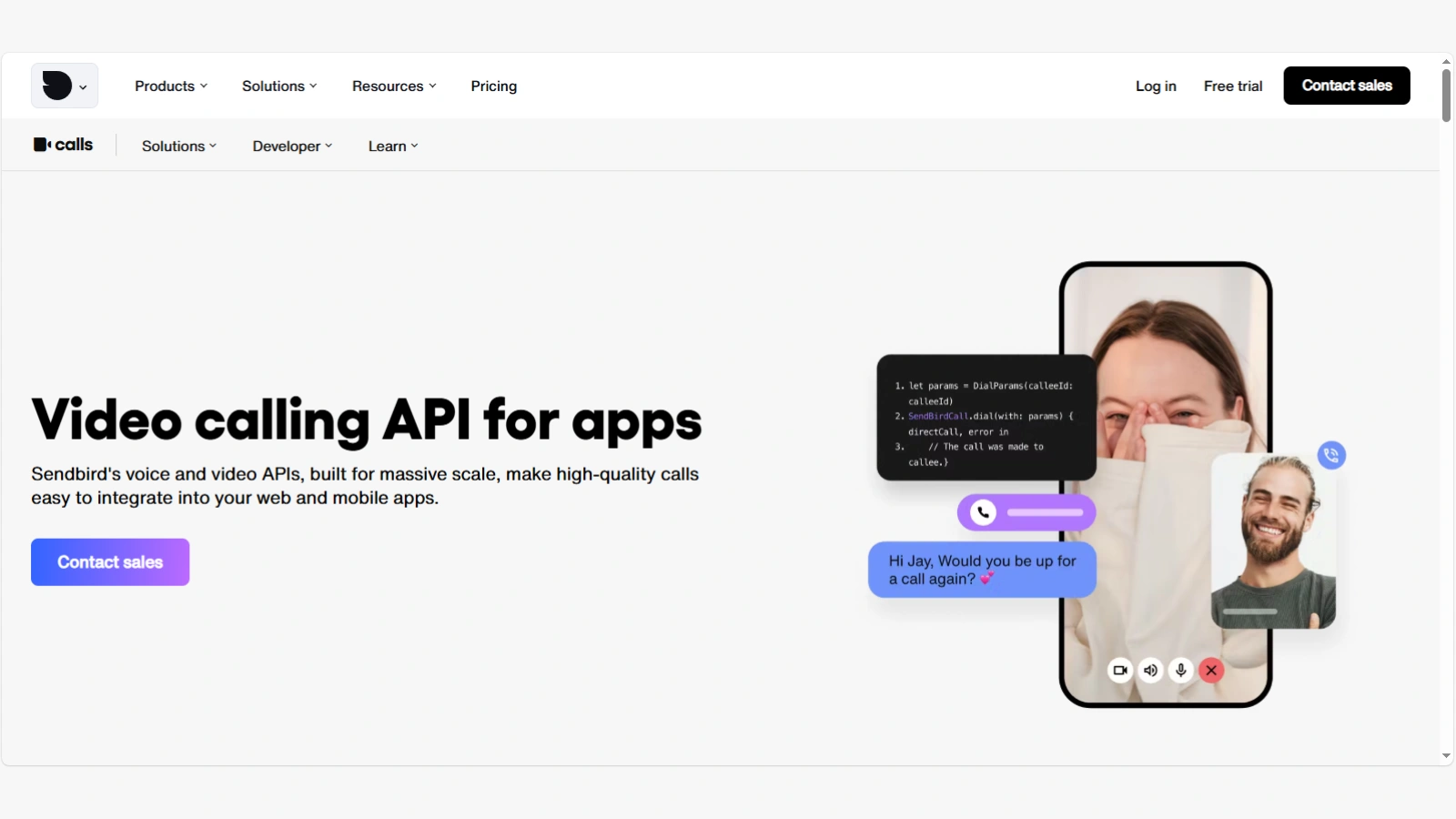 Sendbird Video delivers secure, high-quality 1:1 voice and video calling right inside medical applications. Healthcare providers can connect with patients whatever their location through this healthcare communications solution.
Features
- HIPAA-Compliant Infrastructure – Meets all healthcare privacy requirements to secure protected health information safely
- Cross-Platform Support – Runs on iOS, Android, and JavaScript with no limit on logged-in devices per user
- Rich Interactions – Creates better experiences by adding custom details to calls
- Security Framework – Delivers top standards in security, privacy, and confidentiality
- Screen Sharing – Lets providers share medical content from their screens during patient visits
Sendbird Video Pros
Sendbird achieved HIPAA compliance just three months after launching voice and video features. The platform provides native SDKs that create excellent mobile experiences for patients using smartphones. It combines smoothly with in-app chat to give patients complete communication options. Healthcare providers can access call logs to document everything properly.
Sendbird Video Best Use Case
Sendbird shines in telemedicine apps where patient confidentiality needs complete protection. Healthcare marketplaces that connect patients with specialists value Sendbird’s power to help buyer-seller interactions stay within the app.
Mental health platforms work better with Sendbird’s personal, supportive environment. Rural healthcare delivery gets better through telehealth video conferencing API solutions that remove distance barriers.
Ziggeo
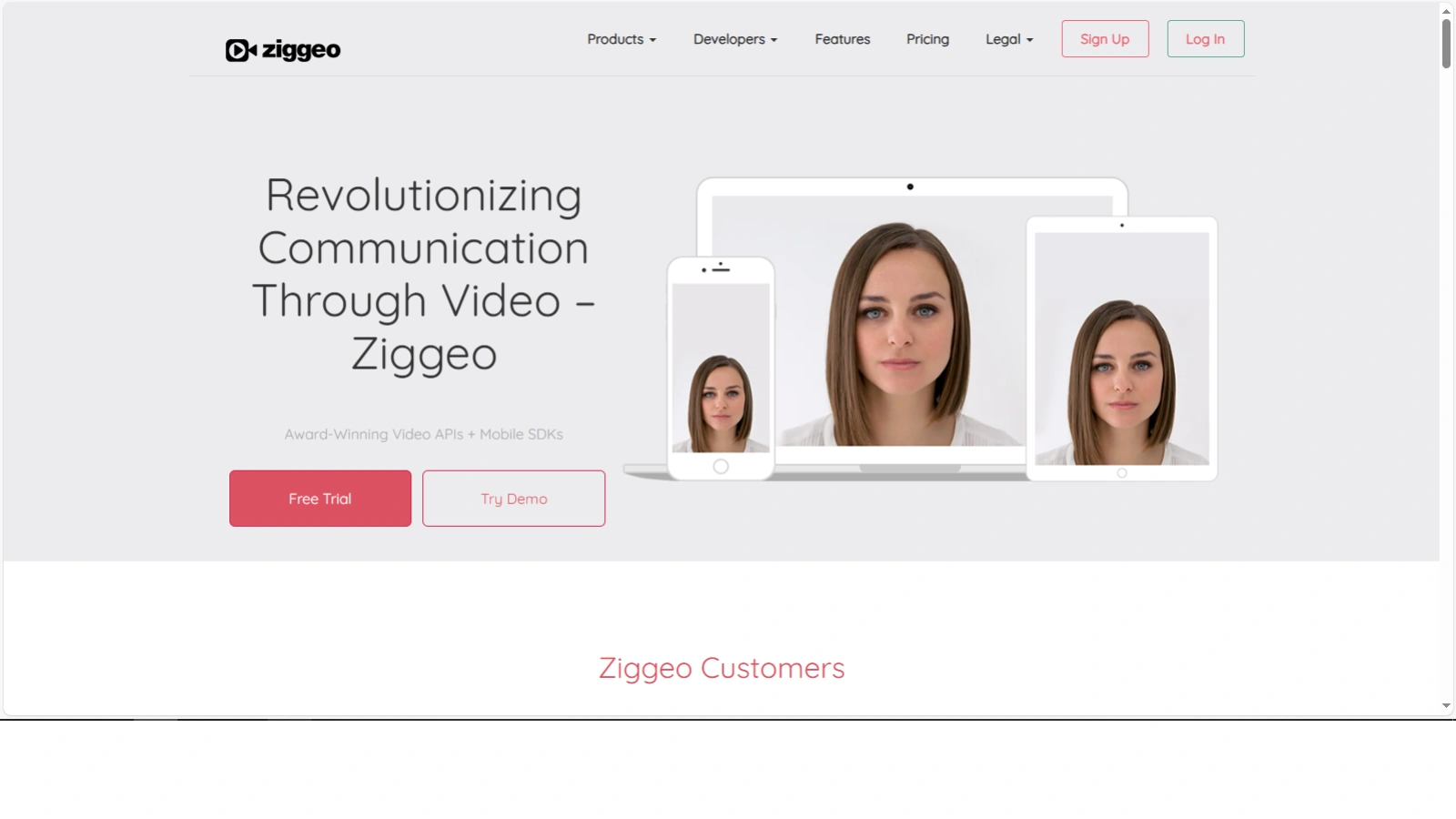 Ziggeo offers healthcare providers an award-winning video API that makes recording and playback simple in telehealth applications. The platform has served as a HIPAA-compliant service since 2020, helping medical professionals connect with patients through video technology.
Features
- Video Recording/Playback – Captures and plays videos in a variety of devices and browsers using HTML5/WebRTC technology
- Screen Recording – Records computer desktop screens directly from browsers
- Video Management – Organizes and curates videos through a personal dashboard
- Security Framework – Implements multiple protection layers before data reaches servers
- Transcoding Services – Automatically converts videos to desired formats without complex settings
Ziggeo Pros
The platform maintains strict compliance standards including HIPAA, SOC2, PCI, GDPR, and CCPA. Healthcare organizations can ask for Business Associate Agreements through their support team.
The system requires minimal setup effort – users simply copy the header and embedding code to begin. On top of that, the platform’s video token system gives clinics complete control over who records or views footage.
WebHooks ensure servers stay updated about new recordings and create continuous information flow. The integrated AI converts speech into text, extracts keywords, and recognizes objects.
Ziggeo Best Use Case
The platform serves healthcare providers who need secure video recording capabilities in their telehealth video conferencing API ecosystem. Medical staff can capture videos easily with Ziggeo’s tools, which lets doctors assess cases quickly through pre-recorded content.
The platform works best in telehealth scenarios that need asynchronous video communication beyond live consultations.
QuickBlox
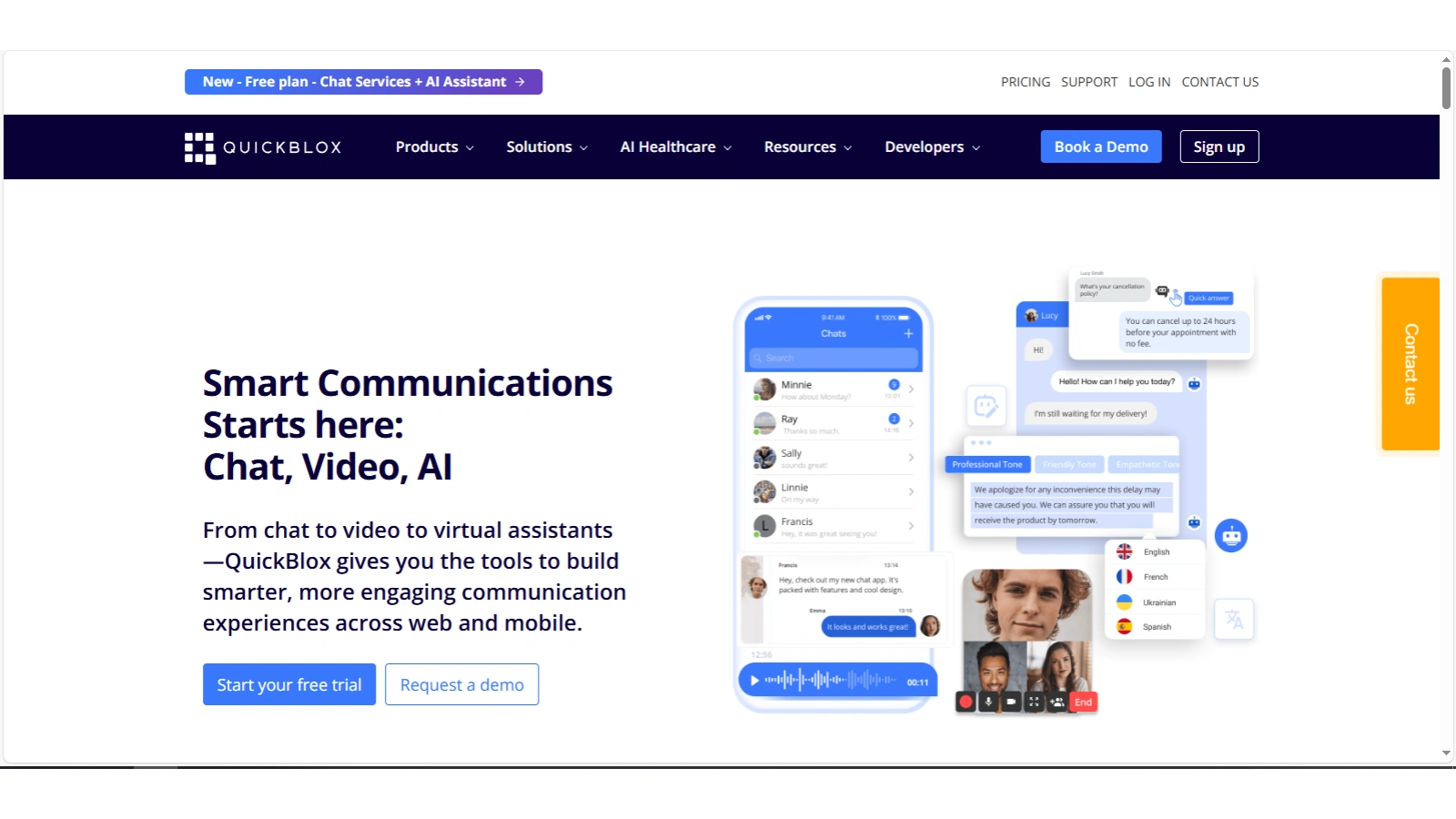 QuickBlox is a 30,000-developer strong communication platform that generates 75 million chat streams daily. Healthcare providers use this API to build custom telehealth tools that align perfectly with their workflows.
Features
- Secure Communication – HIPAA-compliant texting, voice, video calling, and file sharing capabilities
- Patient Management – Virtual waiting rooms and appointment booking within the app
- AI Integration – OpenAI-powered features with AI Answer Assistant
- White-Label Options – Complete branding customization to match healthcare provider identity
- Flexible Deployment – Cloud-based or on-premises installation with preferred providers (AWS, Azure)
QuickBlox Pros
Security credentials make QuickBlox stand out remarkably. The platform maintains HIPAA compliance across its product line and provides Business Associate Agreements (BAAs) to healthcare customers. Healthcare organizations love how this API eliminates adaptation to rigid systems. The straightforward implementation works across multiple platforms without burdening IT departments.
QuickBlox Best Use Case
This telehealth video conferencing API works best for organizations building custom telehealth applications. A psychological consultancy showcases this perfectly, their therapists saved several hours weekly by taking notes directly during sessions. The platform’s integration capabilities connect smoothly with existing EHR systems, making it valuable for healthcare providers with established workflows.
Livestorm
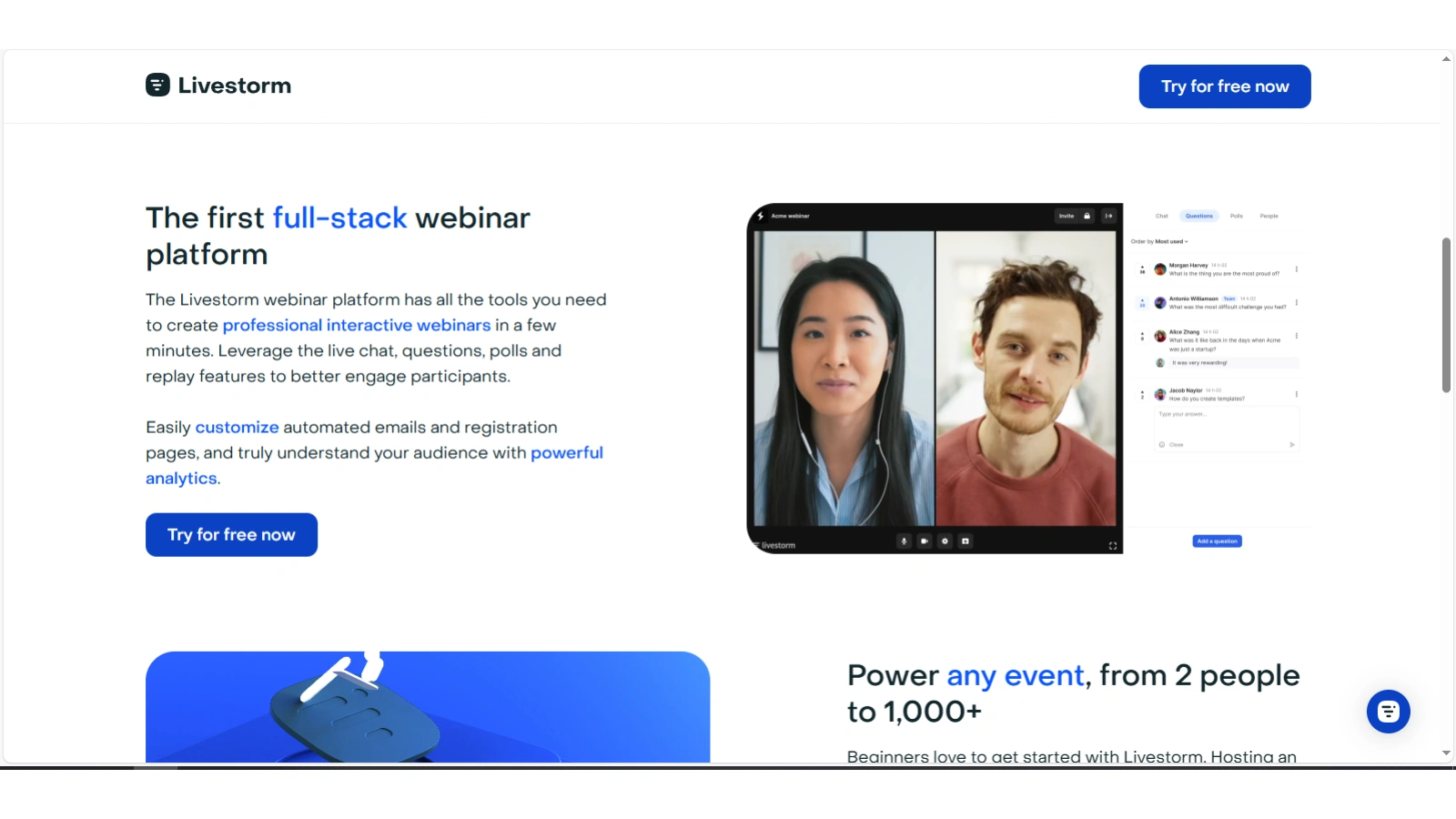 Livestorm provides a browser-based video platform that healthcare organizations can use right away – patients don’t need to download any software. This European solution delivers both strong functionality and compliance standards for medical communications.
Features
It has several tools that make medical interactions effective:
- Engagement capabilities – Patients can actively participate through polls, chat, and question tabs
- Advanced reporting – You can track attendance, view engagement stats, and share data with your team
- API integration – The platform allows 10,000 API calls every 30 days to access event data
- Security framework – Patient communications stay protected with TLS 1.2/1.3 protocols and AES256 encryption
Livestorm Pros
Livestorm stands out as a telehealth video conferencing API with several benefits. The platform maintains ISO 27001 certification and GDPR compliance to protect healthcare data.
Users give it high marks for ease of use with a 9.1 rating. Healthcare teams can connect Livestorm to more than 20 apps like Pipedrive and Intercom. Enterprise customers get a guaranteed uptime of 99.98%.
Livestorm Best Use Case
Healthcare education scenarios showcase Livestorm’s strengths. Medical professionals can show treatments, run expert panels, and present new therapies. Pharmaceutical companies launch products and share therapy updates through the platform. Healthcare institutions deliver continuing medical education (CME) courses to practitioners anywhere.
Mux
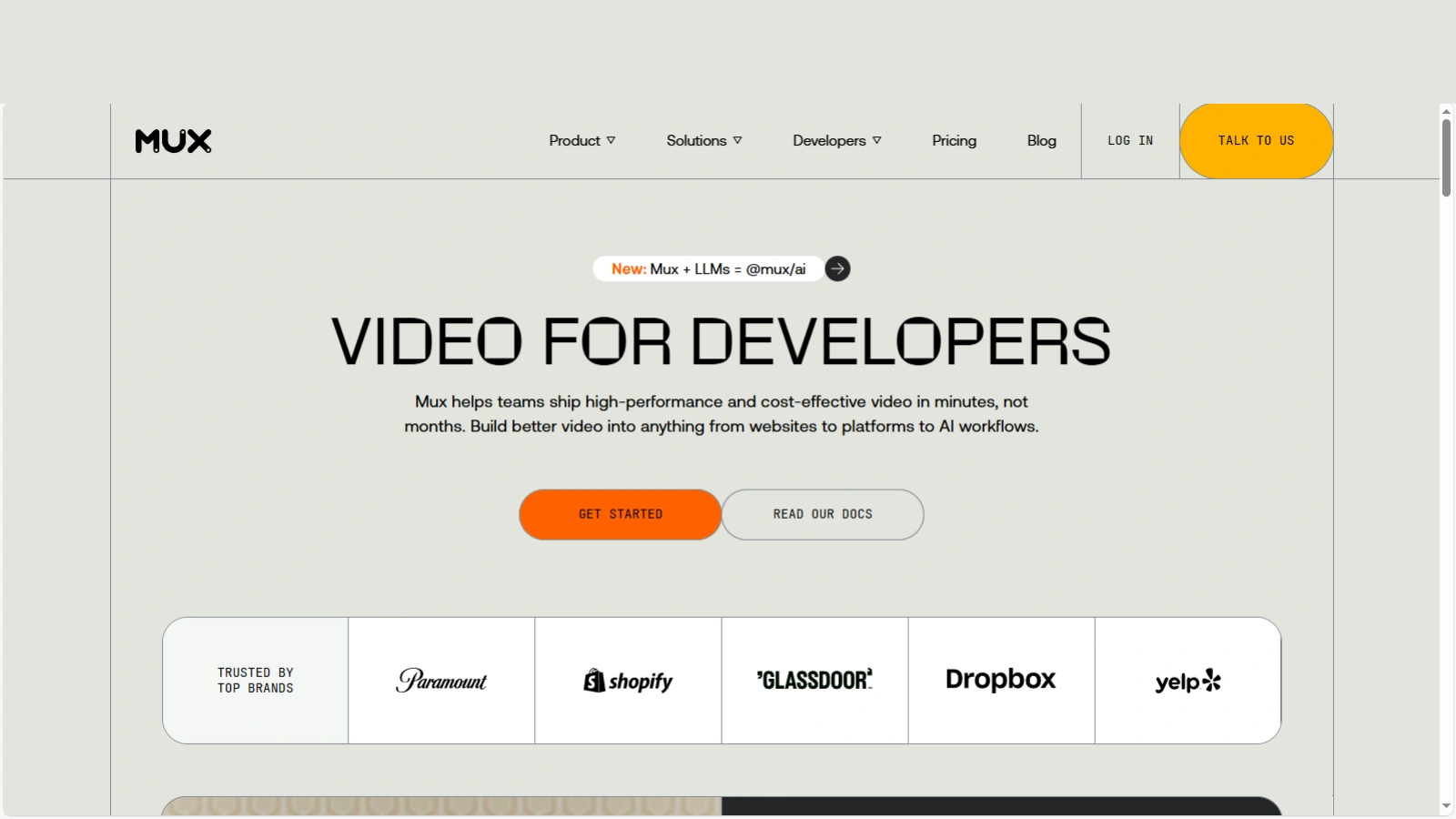 Mux stands out as a video infrastructure platform built specifically for developers. Healthcare providers value its quick processing capabilities and straightforward video API. The platform makes telehealth applications simple to implement, and videos are ready to play in under 2 seconds, 100 times faster than other options.
Mux Features
The platform delivers these essential capabilities for medical video applications:
- Encoding happens right when needed, which removes waiting time for transcoding
- The system works with H.264, H.265, VP8/VP9 input formats
- Speech recognition creates automatic captions
- Live streams run with delays as short as 5 seconds
- Users can upload directly without extra steps
- Teams can clip and share specific consultation segments
Mux Pros
The platform’s reliable privacy protection system follows major regulations like the Video Privacy Protection Act, CCPA, and GDPR. Medical facilities benefit from Data Privacy Framework certification and masked IP addresses. The system’s signed playback URLs need valid JSON Web Tokens that expire on their own.
Medical teams can integrate the platform smoothly with their existing systems. It works as the video foundation for AI tools and helps deliver processed videos to patients. Healthcare facilities get better results through multi-organization user access. The platform’s webhooks send immediate video event notifications.
Mux Best Use Case
Speed-critical healthcare environments showcase Mux’s true value. The system handles everything from sudden traffic spikes to internet problems. Medical teams spot technical issues quickly, which leads to better patient experiences with telehealth video conferencing API solutions.
The platform takes care of all video infrastructure technicalities. This lets healthcare providers put their energy into patient care instead of dealing with encoding problems.
Eyeson API
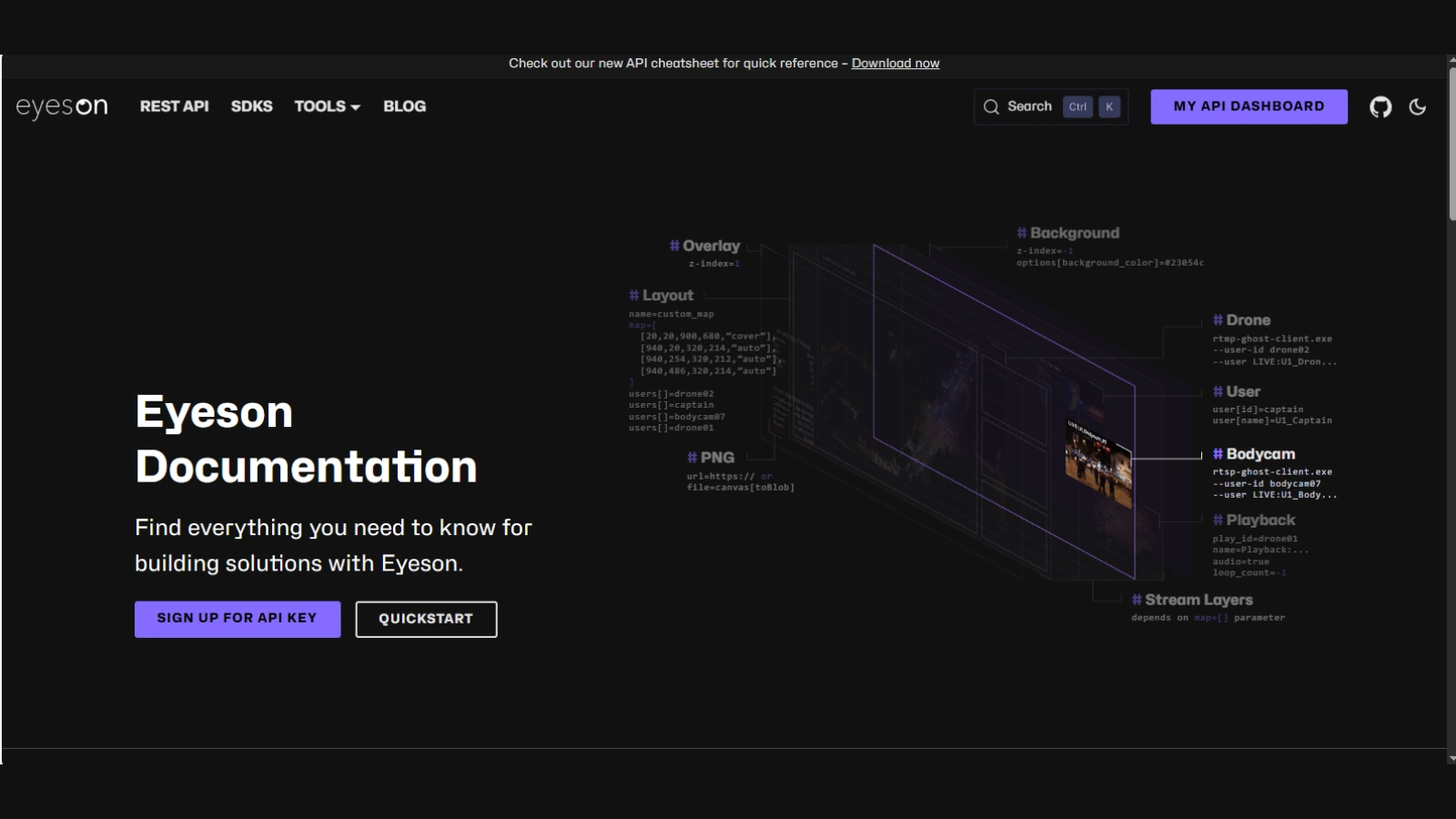 Eyeson API revolutionizes telehealth connections through its “just-in-time” meeting servers that operate only during active video calls, which minimizes security risks. Healthcare providers gain complete control over visual elements in video streams through this programmable foundation.
Features
It delivers powerful capabilities that enhance virtual care:
- One View Technology – Multiple source feeds synchronize with layout changes that happen in under 40ms
- Smart Bandwidth – Audio and video frame rates adjust automatically based on network conditions
- Content Integration – Videos, text, images, and other media integrate directly into live meetings
- Security Architecture – AES-256 encryption protects data while temporary servers remove all information after meetings end
Eyeson API Pros
Eyeson’s architecture offers multiple advantages to healthcare organizations. The platform complies with strict regulatory standards, including HIPAA, GDPR, and CCPA/CPRA. Its patented single-stream technology makes media routing and delivery simple without complex infrastructure requirements. The browser-based system eliminates any risks associated with software downloads.
Eyeson API Best Use Case
This telehealth video conferencing API shines in medical scenarios where secure virtual consultations need integrated patient data. SCOTTY Telemed demonstrates this by using Eyeson to combine 4-6 medical device outputs into one stream, which enables vital information to transmit smoothly even through limited satellite networks.
Final Words:
These seven tools address different parts of virtual care, so the best choice depends on your product and patient needs. iotum focuses on embedded visits with browser access, scheduling support, collaboration tools, and post-visit analytics. Sendbird Video fits secure 1:1 calls inside telemedicine apps.
Ziggeo stands out for compliant recording and async video workflows. QuickBlox supports full communication stacks with white-label control and flexible deployment. Livestorm suits education-heavy care settings and group sessions.
Mux is geared to developer-led video infrastructure where speed and reliability matter most. A clear fit reduces friction for clinicians, supports patients, and keeps remote care consistent at scale.